
Livraison le jour même ou le lendemain

Qualité garantie

Débloquez vos offres de bienvenue: Livraison GRATUITE | Jusqu'à -80 % | 30 jours d'essai gratuits à JoyPlus
Téléchargez l'application
Choosing the wrong pliers can damage a nut, slip on a pipe or harm a cable. For DIYers and tradespeople alike, buying pliers and plier sets is therefore not simply a matter of counting the pieces in a kit. The shape of the jaws, the material, the maximum opening and the comfort of the handles all have a direct impact on the quality of your work.
Before choosing a plier set, watch out for these three common pitfalls:
Each model is designed for a specific task:
Using universal pliers for every task can cause them to slip or deform the part. The right tool is the one whose jaws match the geometry of the material.
Chrome vanadium steel is widely used for tools intended for plumbing and mechanical work. Heat treatment can improve the hardness and strength of the jaws, while a coating or polished finish reduces exposure to moisture. This is not permanent protection against corrosion: wipe your pliers after use and store them in a dry place.
For diagonal cutters, also check the stated cutting capacity. In a product specification, a value of 2 mm should be understood as a usage limit, not as an invitation to cut harder materials.
Adjustable pliers should remain completely stable once positioned. Push-button mechanisms make adjustment quicker, but always check that the jaws are properly locked before applying force.
For regular use, choose ergonomic pliers with an anti-slip surface. PP and TPR or resin handles can improve comfort, but they are never a substitute for wearing safety goggles when cutting or extracting materials.
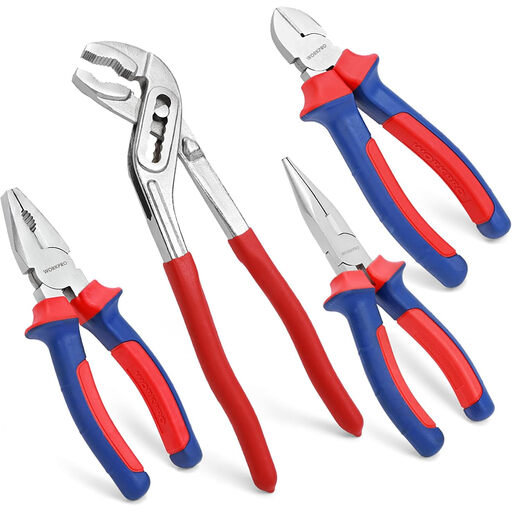
Why this choice suits this profile : This set includes combination pliers, long-nose pliers, diagonal cutters and water pump pliers for everyday repairs around the home.
The selection covers several uses without building up a collection of duplicate tools. The stated dimensions are 160 mm for three of the pliers and 244 mm for the water pump pliers.
Forged, heat-treated alloy steel, PP and TPR handles, and four complementary shapes.
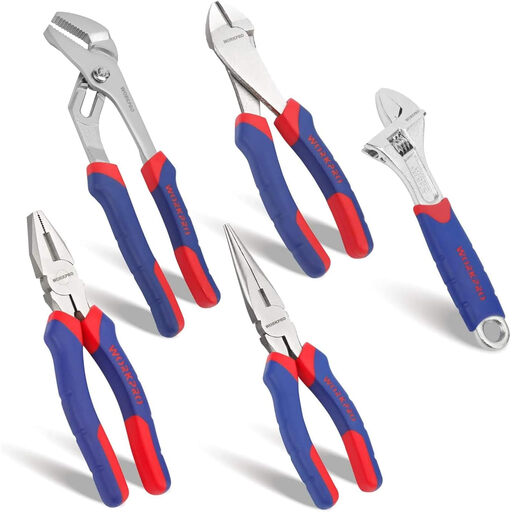
Why this choice suits this profile : This five-piece set is designed for those who want plumbing, electrical, mechanical and maintenance tools all together in one storage case.
Including an adjustable spanner means you do not have to force pliers onto nuts. Each tool has a clearly defined function.
Heat-treated alloy steel with nickel plating, TPR+PP handles, 250 mm water pump pliers and 190 mm wire cutters.
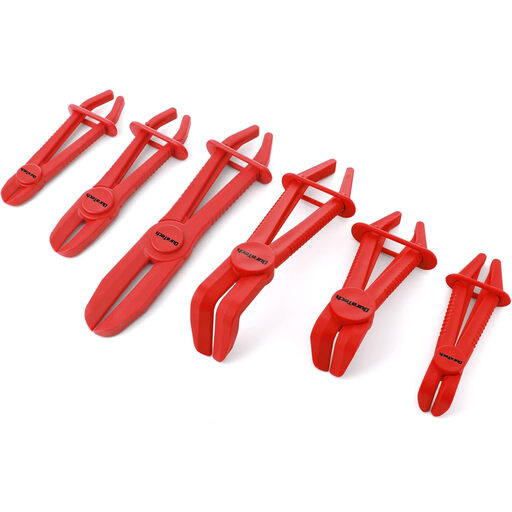
Why this choice suits this profile : This set is intended for automotive work and maintenance on flexible hoses, including those used in braking, fuel and cooling systems.
The reinforced nylon jaws have rounded ends designed to minimise marks on flexible hoses. They are not suitable for rigid pipes or high-pressure systems.
Six straight and angled formats, clamping ranges from 0 to 64 mm depending on the pliers, and a safety loop to hold the position.
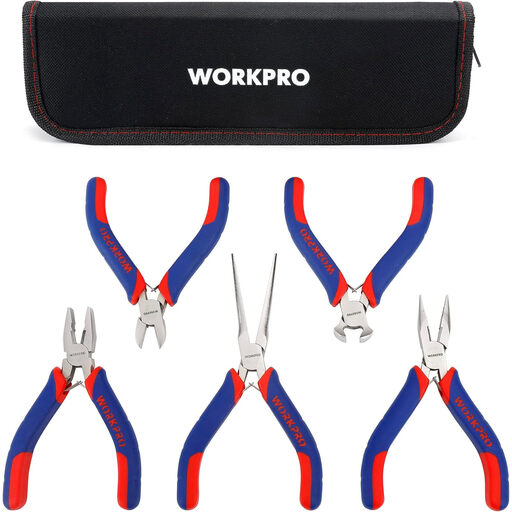
Why this choice suits this profile : Its compact design is ideal for jewellery making, electronics, model making and small assembly projects.
The five shapes help prevent you from bending a part with a tool that is too bulky. The specifications mention machined and hardened jaws, as well as a storage pouch.
Carbon steel with a Ni-Fe coating, anti-slip rubber handles, five pliers and a 600D nylon pouch.
We have put together a complete, real-time updated list of products that meet these demanding selection criteria and European safety requirements.
After each use, remove dust and moisture with a dry cloth. A drop of oil on the joint can help keep the mechanism moving smoothly. Regularly inspect the teeth, tips and cutting edges.
To work safely:
Both are used to grip parts of various sizes. Water pump pliers generally refer to a model with an adjustable joint, making them particularly useful for pipes and fittings. For every tool, however, check the maximum opening, tooth shape and adjustment stability.
A four-piece set covering gripping, cutting, access to narrow areas and tightening provides a good starting point. You can then add circlip pliers, precision pliers or hose clamp pliers according to the work you do.
Clean the tools, dry them before storing them and lubricate the joints occasionally. Avoid turning pliers into a hammer, lever or spanner if they were not designed for that purpose. A case or box also protects the tools from moisture and knocks.