
Livraison le jour même ou le lendemain

Qualité garantie

Débloquez vos offres de bienvenue: Livraison GRATUITE | Jusqu'à -80 % | 30 jours d'essai gratuits à JoyPlus
Téléchargez l'application
Piles of stuff cluttering the garage, seasonal clothes overflowing from closets, or archives gathering dust in the office... clutter can quickly become a source of stress. To fix this, a good set of plastic storage boxes with lids is the most practical solution. However, the wrong choice can quickly turn this smart purchase into a new source of frustration.
Before diving in headfirst, let's review the common pitfalls that make many boxes useless after just a few months.
To avoid these disappointments, simply focus on a few key technical points. These are the details that make all the difference between a purchase you'll regret and a storage solution that lasts.
The type of plastic is the primary indicator of durability. Most quality boxes are made of Polypropylene (PP), a material known for its resistance to impact, bending, and temperature changes. It's the ideal choice for storage in the garage or basement, where conditions are often harsher.
Beyond the material, check the wall thickness. A thickness of 2.5?mm or more, often reinforced with strengthening ribs, is a true sign of sturdiness. Such boxes will support heavier loads and withstand intensive use without warping.
The ability to stack boxes is crucial for optimising space. For stackable storage boxes to be truly effective, two points need to be checked:
A good storage bin with a lid should form a monolithic block once stacked, allowing you to utilise the full height of your closets or garage.
The choice between a transparent storage box and an opaque model depends entirely on your needs.
To help you make a clear choice, we have selected several models that meet specific needs, based on their technical features and design.
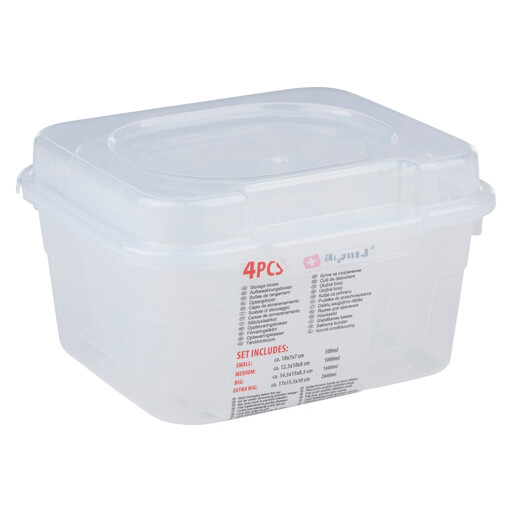
Why we chose it? This set of four boxes is a simple and budget-friendly solution for organising small everyday items, whether in the office, kitchen, or for creative hobbies. Their compact size allows them to be easily slid into drawers or placed on shelves.
The secure closure on each box directly addresses the problem of loose lids, ensuring the contents remain protected from dust.
Versatility and compact design. They stack easily for optimal space-saving on a desk or in a closet.
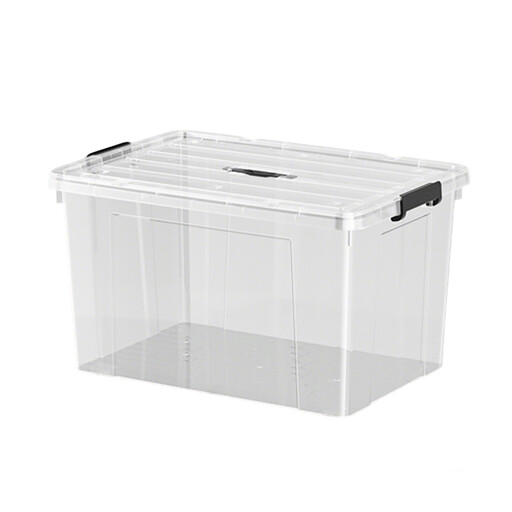
Why we chose it? Perfect for those looking for large-volume storage boxes. This model is designed for heavy-duty storage: tools, sports equipment, archives, or duvets. Its structure is built to support substantial loads.
With its 2.5 mm walls and reinforcing ribs, this plastic storage crate directly tackles the fragility trap and prevents any deformation under weight.
High load capacity and reinforced structure. Its flat lid and anti-slip base ensure stable and secure stacking.
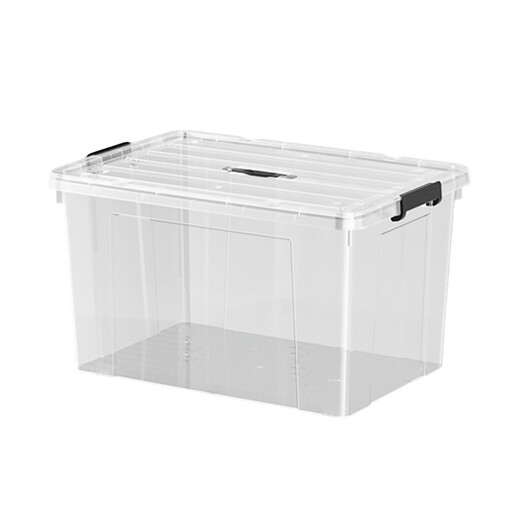
Why we chose it? Perfect for those who want to identify the contents of their boxes at a glance. This model combines the sturdiness of thick plastic with the practicality of a transparent storage box, making it an excellent closet organiser or workshop companion.
Its secure-clip lid and interlocking design neutralise the wobbly stack syndrome, guaranteeing reliable and safe vertical organisation.
Immediate content visibility and a solid structure. The integrated ergonomic handles make it easy to carry, even when the box is full.
Explore our complete, up-to-date selection of products that meet our quality criteria and current safety standards.
The lifespan of a plastic storage crate primarily depends on the quality of its material (polypropylene is an excellent indicator) and its usage conditions. To extend its life, avoid direct and prolonged exposure to sunlight, which can make the plastic brittle. Also, be sure to respect the maximum load capacity recommended by the manufacturer to prevent any warping. A high-quality box, used correctly, can serve you for many years.
No, and this is a critical point: you must verify that the box is certified for food contact. Look for the "BPA-free" (Bisphenol A) label or the international "glass and fork" symbol. Some products, like Bodum PRESSO containers, are specifically designed for this purpose. Never use a standard storage box, intended for the garage or DIY projects, to store unpackaged food.
To ensure stability, choose models where the lid and base are designed to interlock. Many quality boxes have grooves on the lid and a textured base or anti-slip feet. The golden rule remains the same: always place the heaviest boxes at the bottom of the stack and never build a tower so high that it becomes precarious.