
Livraison le jour même ou le lendemain

Qualité garantie

Débloquez vos offres de bienvenue: Livraison GRATUITE | Jusqu'à -80 % | 30 jours d'essai gratuits à JoyPlus
Téléchargez l'application
Is clutter piling up and you're looking for a simple fix? The plastic storage box with lid seems like the obvious solution. However, the wrong choice can quickly turn a good idea into a frustrating chore: lids that crack, wobbly stacks, and plastic that shatters at the first cold snap in the garage…
As product experts at Joybuy, our mission is to guide you through the jungle of options to find storage solutions that are both practical and durable. Let's skip the marketing jargon and focus on what really matters.
Before you fill your cart, watch out for these design flaws that can make a storage box almost useless in the long run.
To avoid these disappointments, here are the three technical points to check before you head to the checkout.
The type of plastic is the name of the game. Polypropylene (PP) is often the best choice for its robustness and resistance to both impact and chemicals. Pay close attention to the wall thickness: 2.5?mm or more, with reinforcing ribs and rounded corners, is an excellent guarantee of durability. This is a non-negotiable criterion for a plastic storage crate intended for heavy items.
A good lid should clip on firmly to ensure a nearly airtight seal. For secure stacking, its surface must be flat and feature deep rims or grooves that match the base of the box above it. Opting for a set of storage boxes from the same range is the key to perfect modularity and optimal vertical space-saving.
A transparent storage bin will save you precious time: no more opening everything to identify the contents at a glance. For items sensitive to light or for a cleaner visual aesthetic, opaque versions are a better choice. Finally, consider the capacity, expressed in litres. Assess your needs carefully: small boxes for paperwork or DIY supplies, large volumes for seasonal clothing or duvets.
Every storage project is unique. Here are a few solutions that meet specific needs, all selected according to the quality criteria we've just discussed.
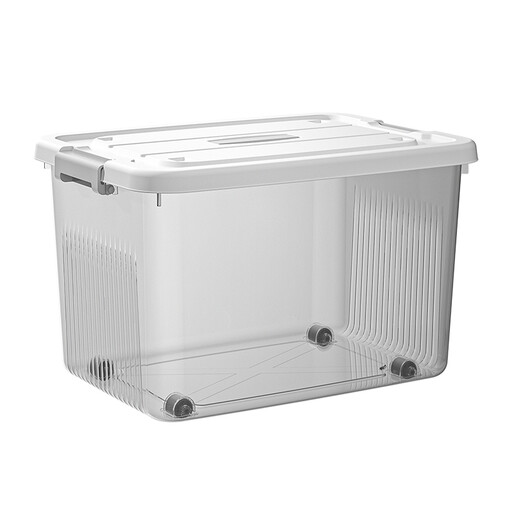
Why we chose it: Perfect for those embarking on a major organisation project. This set offers a uniform, transparent, and cost-effective solution for organising a basement, attic, or large cupboards.
The spec sheet makes it clear: a body with 2.5 mm thickness, reinforcing ribs, and a clip-on lid designed for stable stacking. This counters issues of fragility and instability.
The combination of sturdiness (reinforced polypropylene) and practicality (transparency, secure stacking) makes it a solid foundation for any storage system.
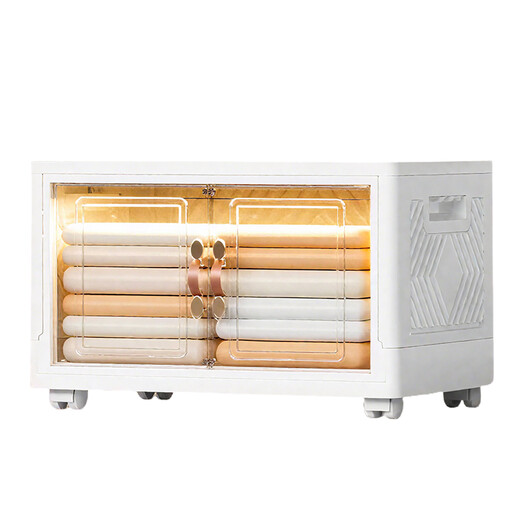
Why we chose it: For storing bulky items (duvets, winter coats) while keeping them easily accessible. Its clever design solves a classic problem: no more unstacking everything to get to the bottom box.
Its rigid, cabinet-like structure and front-opening door make the concept of unstable stacking obsolete. The stated load capacity (around 15-25 kg per level) is a testament to a design that isn't afraid of weight.
Total accessibility thanks to the front opening and a very large capacity of 84 litres. It's also foldable for flat storage when not in use.
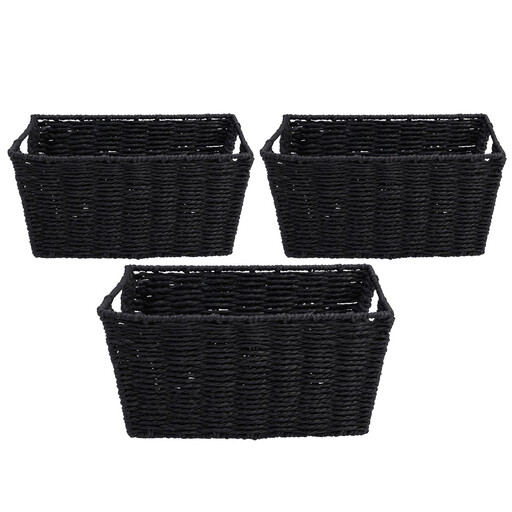
Why we chose it: For those who believe storage can also be part of the decor. These baskets are meant to be displayed in a living room, bedroom, or entryway, not hidden away.
It offers a refreshing alternative to the standard, impersonal "plastic box" by providing an aesthetic option. Its metal frame ensures rigidity and prevents the sagging typical of soft fabric baskets.
A modern design that combines the sturdiness of a steel structure with the elegance of woven paper. Perfect for organising while adding a touch of style.
We have put together a complete selection of products that meet our quality criteria and safety standards.
The longevity of a storage box with a lid depends on three key factors: the quality of the plastic (polypropylene is a champion of durability), its exposure to UV rays (direct sunlight weakens plastic), and the load it bears. A good PP box, used indoors and not overloaded, can last for many, many years.
Warping is almost always related to overloading. Respect the weight limits indicated by the manufacturer, especially if you are stacking them. To prevent yellowing and brittleness, do not leave them in direct sunlight for long periods, unless they are specifically UV-treated (which is often the case with garden storage chests).
It all depends on your use case.