
Livraison le jour même ou le lendemain

Qualité garantie

Débloquez vos offres de bienvenue: Livraison GRATUITE | Jusqu'à -80 % | 30 jours d'essai gratuits à JoyPlus
Téléchargez l'application
Is clutter taking over and space running out? Seasonal clothes overflowing from wardrobes, toys invading the living room, archives piling up in the office... It's time to take back control. For this, the transparent plastic storage box is often the simplest and most effective ally.
This guide is designed to help you see things more clearly by focusing on practical criteria. Our mission: to guide you to the solution that perfectly meets your needs, in a straightforward way.
Before you decide, here are the key points to check to ensure you make a smart and durable purchase.
A good storage box must be sturdy enough to support the weight of its contents and withstand frequent handling. Take a look at the quality of the plastic (often polypropylene, or PP) and its thickness. Tell-tale signs of good solidity include reinforcing ribs or rounded corners. These features prevent the box from warping under weight and protect against cracks on impact. A crucial feature for organising a garage or a cellar.
To optimise vertical space, stackable boxes are king. A well-thought-out design is recognisable by its flat lid and a textured or grooved non-slip base. This ensures stable and secure stacking, allowing you to create storage columns without worrying about them slipping. This is an essential feature for small flats, attics, or for outfitting an entire wall of your garage.
A good storage bin with a lid must, above all, be easy to use. Pay attention to the locking mechanism: clips that are both sturdy and easy to handle guarantee the lid will stay securely in place, protecting your belongings from dust and moisture. Don't underestimate the importance of integrated, ergonomic handles, especially if you need to carry heavy boxes filled with books, tools, or supplies.
To move from theory to practice, here is a selection of models that perfectly illustrate these criteria and meet different needs.
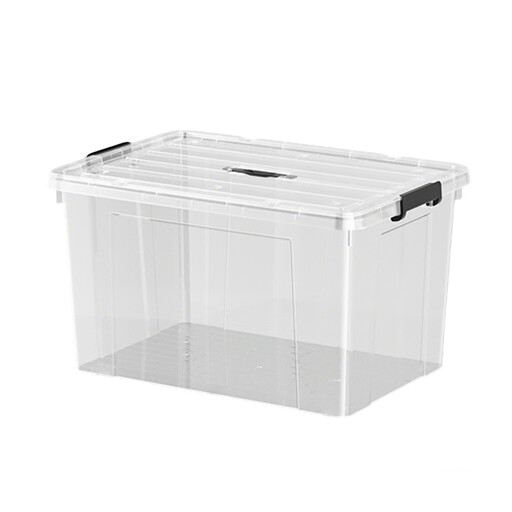
Why this model stands out
This set of 4 storage boxes stands out for its compact size and low profile. It is therefore particularly suitable for sliding under a bed, onto wardrobe shelves, or into a closet to store your accessories. It's designed for durability, thanks to a reinforced structure.
Advantages
Who is it for?
Ideal for organising medium-sized items like shoes, beauty products, office supplies, or baby items. Its format is perfect for optimising existing storage spaces without overcrowding them.
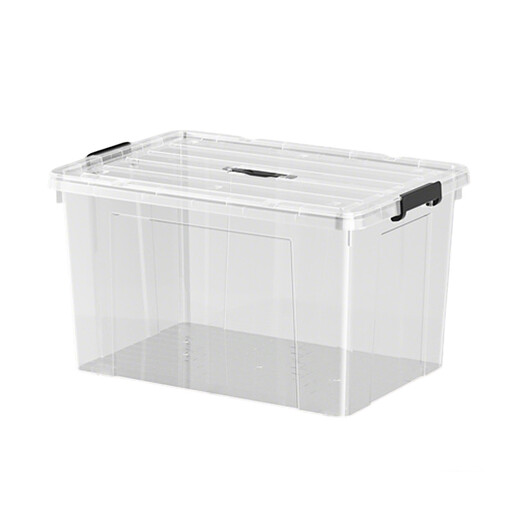
Why this model stands out
With its generous dimensions, this plastic storage crate is designed for bulky items. It's the ideal solution for storing seasonal clothing, duvets, blankets, or even sports equipment. Its robustness is up to the task, designed to support heavy loads.
Advantages
Who is it for?
Perfect for families looking to store bulky textiles, children's toys, or camping gear. It's also an excellent choice for professionals who need to archive files or store equipment.
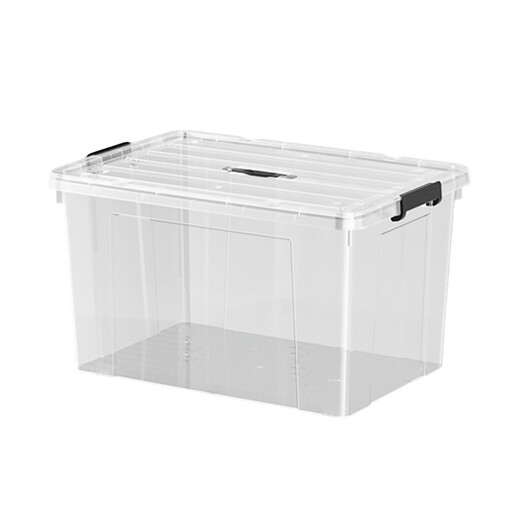
Why this model stands out
This model offers an excellent balance between capacity and footprint. Its 25?cm height makes it more versatile than flat boxes, while maintaining a reasonable footprint. It adapts to a multitude of uses, from the office to the laundry room.
Advantages
Who is it for?
This is the ultimate versatile choice. It's equally suitable for home organisation (cleaning products, canned goods, toys) and for professional use (archiving, storing supplies).
If you're looking for specific solutions for the kitchen, there are containers designed for food organisation, often compatible with food contact and the low temperatures of the fridge or freezer.
Explore our dedicated selection to find what you're looking for.
? Discover our kitchen storage solutions
1. How do you clean these plastic storage boxes?
Maintenance is a breeze. A simple wipe with a damp cloth and a mild detergent is all it takes. Just avoid abrasive sponges or sharp objects that could scratch the plastic. Be sure to dry the box thoroughly before storing textiles or paper documents inside.
2. Can you stack boxes of different sizes?
For perfect stability, it's best to stack boxes of the same dimensions. If you have no other choice, always place the largest and heaviest box at the bottom of the stack.
3. What is the maximum load capacity when stacking?
There's no hard and fast rule, as it all depends on the box's design and the weight distribution inside. As a precaution, avoid overloading the boxes and always place the heaviest ones at the bottom. A stack that is too high or unbalanced could tip over.