
Livraison le jour même ou le lendemain

Qualité garantie

Débloquez vos offres de bienvenue: Livraison GRATUITE | Jusqu'à -80 % | 30 jours d'essai gratuits à JoyPlus
Téléchargez l'application
Is clutter taking over and you're dreaming of a magic bullet solution to organise everything? The plastic storage box with a lid is often the first go-to. But beware of the impulse buy that turns into a disaster: plastic that cracks at the first knock, warped lids, and stacks that collapse like a house of cards. As experts in practical storage, our mission is to guide you towards a smart, long-lasting choice, so you can put an end to unpleasant surprises.
Before you take the plunge, keep an eye out for these three classic traps that turn a good idea into a purchase you'll regret:
To avoid these disappointments, a few simple technical points are worth checking. This is what separates a gimmicky storage solution from a long-term investment.
The first thing to do? Check the type of plastic. Polypropylene (PP) is the king of materials, and for good reason: it combines lightness with resistance to impacts, chemicals, and temperature changes. For a plastic storage crate destined for the garage or cellar, aim for a wall thickness of at least 2.5?mm. This robustness, often reinforced with ribs, prevents the crate from deforming or breaking under weight. And to spot your belongings in the blink of an eye, a quality large transparent storage box made of PP won't yellow over time.
A good stackable storage bin is first judged by its lid. It should have deep rims or grooves that fit snugly into the base of the box above it. This interlocking system is what guarantees stable and secure stacking. Lids with clips, on the other hand, ensure an airtight seal that will protect your belongings from dust and insects. This is a crucial detail for storing seasonal clothing or household linens.
Think "system" rather than "single box". Opting for a set of storage boxes from the same collection is often the best trick for creating a coherent setup and optimising vertical space in a cupboard, laundry room, or on a shelf. For small everyday items, whether on a desk or in a kitchen drawer, a compartmentalised desk organiser or a smaller model will be much more suitable.
Enough theory, let's get practical. Here are our targeted recommendations, chosen for their quality and everyday relevance.
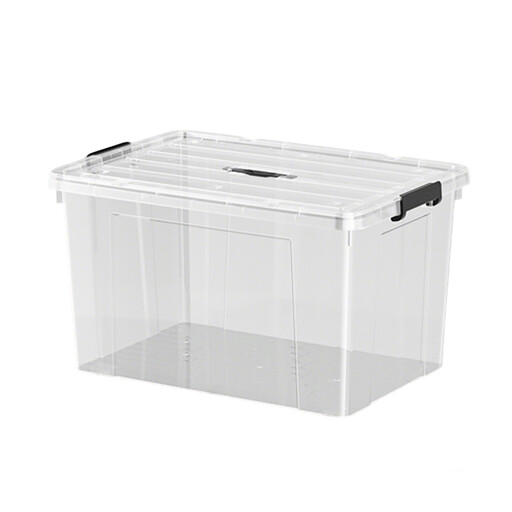
Why we chose it: Ideal for families juggling large volumes: toys, off-season clothing, Christmas decorations, DIY supplies... The set format is perfect for creating a uniform storage system without breaking the bank.
Its thick 2.5 mm plastic and reinforced ribs minimise the risk of cracking. The lid is designed for a perfect fit, ensuring stable and secure stacking.
Its large capacity and reinforced structure can handle heavy loads. The transparent plastic lets you identify the contents without having to unpack everything.
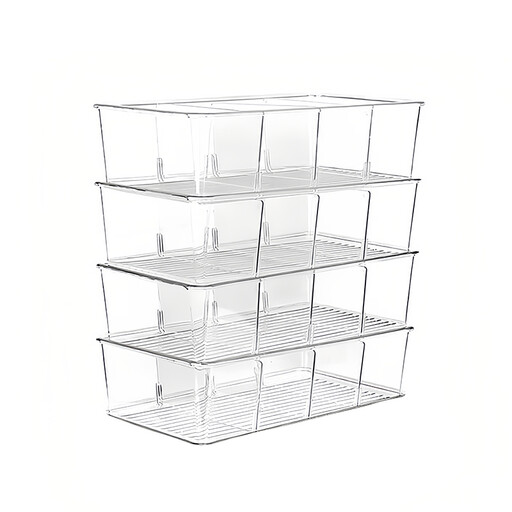
Why we chose it: Perfect for taming the chaos of small items that take over desks, kitchen drawers, and bathroom shelves. Transparent and compartmentalised, it's ideal for tea bags, coffee pods, cosmetics, or office supplies.
The PET material used is much more rigid and clear than standard plastic. Designed for organisation, not heavy-duty storage, the risk of overloading or breakage is virtually nil.
Its compartmentalised design allows for precise sorting and immediate visibility. As a bonus, PET is more aesthetically pleasing and can be wiped clean with a sponge.
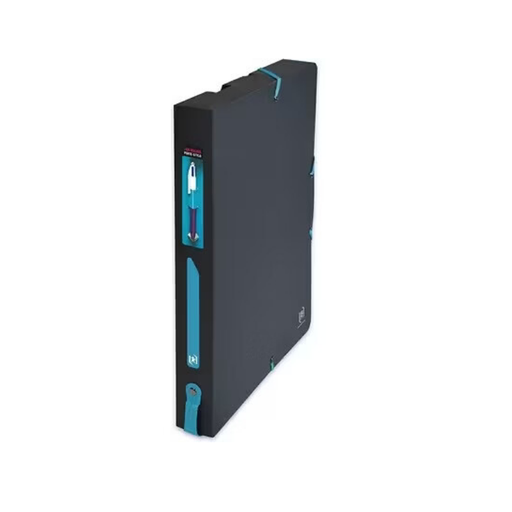
Why we chose it: Specifically designed for students and remote work, this box effectively protects A4 documents. Rigid and featuring a secure closure, it's perfect for transporting notes, reports, and files without damage.
Its rigid polypropylene won't crack like a conventional box. The elastic closure is far more reliable than a simple lid for keeping loose papers in place.
A format perfectly sized for A4 documents, with a handy identification label. Its design is entirely focused on portability and paper document filing.
Explore our full selection of products that meet all our criteria for quality and durability.
It all depends on the quality of the plastic (a thick PP will hold up much better), its exposure to UV light (direct sunlight weakens plastic), and the weight it supports. A good box, used normally indoors, can last for years. Pro tip: never overload it beyond the recommended weight to prevent it from warping.
Nothing could be simpler. A damp cloth and a little mild soap (like castile soap or washing-up liquid) are all you need. Rinse well with clean water and dry it completely before storing anything inside, especially textiles. Avoid abrasive products or solvents, which could damage the plastic.
Absolutely not! This is a mistake to avoid. Only boxes marked "food safe" or bearing the official pictogram (a glass and fork symbol) are designed to hold food safely. When in doubt, always check the product description or packaging.