
Livraison le jour même ou le lendemain

Qualité garantie

Débloquez vos offres de bienvenue: Livraison GRATUITE | Jusqu'à -80 % | 30 jours d'essai gratuits à JoyPlus
Téléchargez l'application
Moving house, storing winter clothes, decluttering the garage... the plastic storage box with a lid seems like the obvious solution. Yet, the wrong choice can quickly turn this miracle fix into a real headache?: lids that warp, plastic that cracks at the slightest impact, and stacks that threaten to collapse at any moment.
I'm the Head of Product Recommendations at Joybuy, and my job is to separate the wheat from the chaff. Let's forget the marketing jargon and focus on what truly makes a difference. Here is my guide to avoiding the common traps and investing in boxes that will stand the test of time.
Before you fall for a tempting price, keep an eye out for the deal-breaking flaws that plague most entry-level models.
To be confident in your investment, here are the few simple but crucial technical points to check.
The type of plastic is the first indicator of a box's true quality. Opt for models made of polypropylene (PP). This material is known for its flexibility and resistance to impact and wear, unlike other more brittle plastics. A heavy-duty storage box often has a substantial wall thickness (around 2.5?mm, for example) that ensures it holds up over time.
A good storage box is more than just its dimensions. Look at its design?:
A clear storage bin saves you from having to unpack everything to find what you're looking for—an obvious time-saver. If you plan to buy a set of plastic storage boxes, check that models of different sizes within the same range are designed to stack logically. This is the key to optimising vertical space, whether in a closet organiser or on a shelf.
To help you see these criteria in action, here are a few options that have proven their worth.

Why this model? This set is perfect for bulky items like duvets, winter coats, or archives. Its large capacity and four-pack format make it a cost-effective solution for those who need a lot of storage volume.
Its 2.5 mm thick polypropylene (PP) structure, reinforcing ribs, and clip-on lid are designed to prevent warping and ensure stable, secure stacking.
Its robustness and design are tailored for stacking. The transparency allows you to identify the contents at a glance.
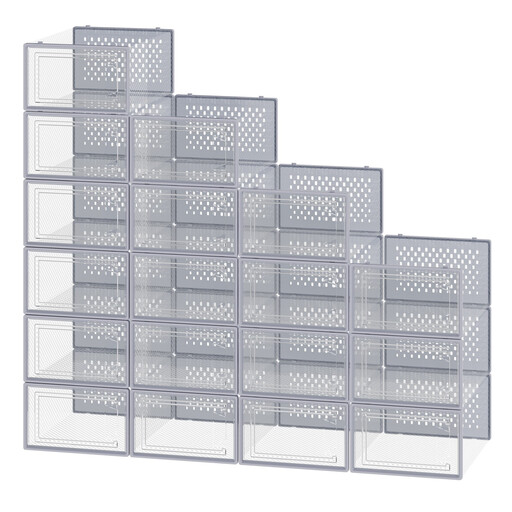
Why this model? Ideal for sneaker collectors or anyone wanting to protect their shoes from dust while keeping them visible. This modular system transforms a simple closet into a truly organised wardrobe.
The interlocking system is specifically designed for stable stacking. The transparent front door means you don't have to unstack everything to access a pair—a major flaw in classic boxes.
The ultra-practical front access and modular design. It allows you to create a custom storage wall for your shoes.
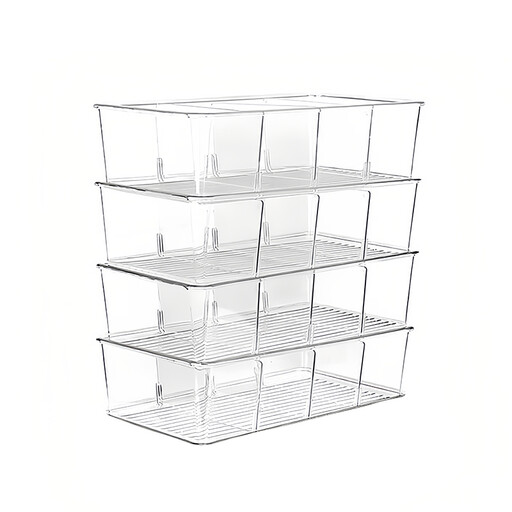
Why this model? Essential for bringing order to kitchen drawers, bathroom cabinets, or a desk. These bins allow you to sort tea bags, coffee pods, makeup, or office supplies.
Instead of piling everything into one large box, this system offers compartmentalised organisation. The transparent, food-grade PET plastic is sturdy and allows for immediate content identification.
Its versatility and visual clarity. Ideal for "micro-organisation" and for optimising small spaces.
Discover our full selection of products that meet our quality criteria and current safety standards.
Polypropylene (PP) is more flexible and resistant to fatigue and impact, making it the material of choice for large, stackable storage boxes that undergo heavy use (garage, moving). PET (polyethylene terephthalate) is often more rigid and highly transparent, making it excellent for organisers (kitchen, office) where clarity is key and the load is lighter.
The golden rule?: always place the heaviest boxes at the bottom. Check that each lid is securely clipped on and that the box on top fits perfectly into the recessed lid of the one below. Avoid stacks that are too high and unstable, especially in high-traffic areas. Finally, respect the maximum load capacity recommended by the manufacturer to prevent the bottom boxes from collapsing.
Yes, provided you choose the right plastic. Good-quality polypropylene (PP) boxes handle the temperature variations and humidity of a cellar or garage well. Steer clear of low-grade plastics that become brittle in the cold. For maximum protection against moisture, make sure the lid provides a tight, secure seal.