
Livraison le jour même ou le lendemain

Qualité garantie

Débloquez vos offres de bienvenue: Livraison GRATUITE | Jusqu'à -80 % | 30 jours d'essai gratuits à JoyPlus
Téléchargez l'application
Is clutter piling up? Do you dream of a simple solution to get organized? The transparent plastic storage box seems like the obvious answer. But be careful—behind this apparent simplicity lie numerous pitfalls. Plastic that cracks, a lid that won't close properly, or boxes that collapse when stacked... a good deal can quickly turn into a nightmare.
As a product selection expert at Joybuy, my mission is to help you navigate the jungle of options. Let's skip the marketing jargon and get straight to the point. Here are the mistakes to avoid and the essential criteria for finding the storage box that will truly meet your needs.
Before you check out, watch out for these design flaws that too often turn a good idea into a purchase you'll regret.
To choose a plastic storage crate that is both durable and practical, carefully examine these three technical criteria.
Understanding the difference between these two plastics is the first step toward a successful purchase.
A good stackable storage box is more than just a flat lid. Look for these design elements:
Carefully assess your needs. There's no need to go for 60-litre boxes to store a few pairs of shoes. Take the time to measure the available space (height, width, depth) in your closets, on your shelves, or under the bed. Opting for a set of storage boxes from the same range is not only more cost-effective but also ensures perfect compatibility for stacking. The result? A cohesive and more visually appealing storage system.
Because every need is different, here is our selection of products tailored to specific uses.
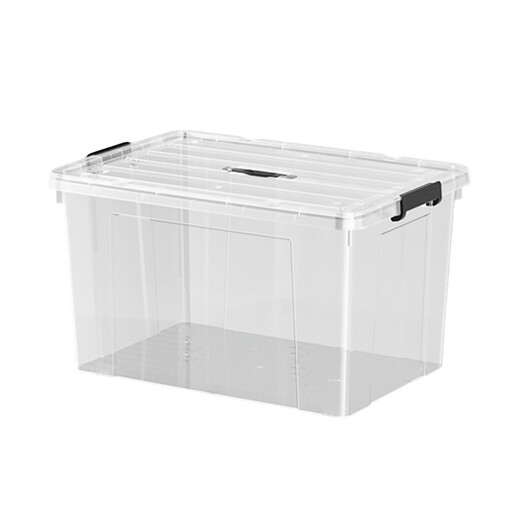
Why we chose it: Ideal for storing off-season clothing, children's toys, or archives in the basement. This set allows you to create a uniform and sturdy storage system for bulky items.
Made from thick 2.5 mm polypropylene (PP) with reinforcing ribs, it won't warp. The clip-on lid and non-slip base ensure stable and secure stacking.
Its reinforced structure and integrated handles can handle a significant load while making it easy to move. The set of 4 offers an excellent volume-to-price ratio.
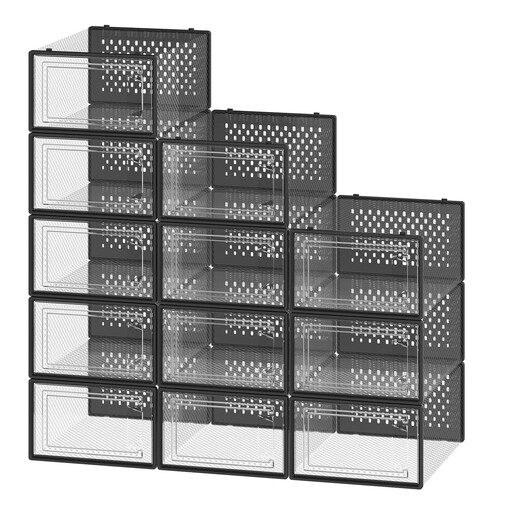
Why we chose it: Designed for sneakerheads who want to protect their collection while displaying it and keeping it accessible. Perfect for an entryway or a walk-in closet.
The interlocking system is designed for stable vertical stacking. The front door, made of transparent PS plastic, provides direct access to the pair without having to unstack everything—the main flaw of classic boxes.
The transparent front door and ventilation holes. They allow you to pick your pair at a glance and ensure good airflow to preserve the materials.
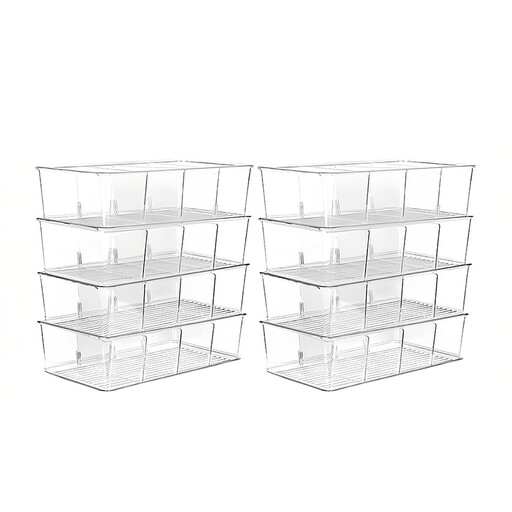
Why we chose it: Perfect for organizing kitchen drawers, bathroom cabinets, or a desk. These lidless bins allow you to sort small items (tea bags, cosmetics, supplies) and keep everything within reach.
By focusing on a specific use: internal organization. The transparent PET material is sturdy for its size and offers perfect clarity, avoiding the trap of brittle plastic for this type of application.
Modularity. The set of 8 allows you to create a custom layout in your drawers and cabinets. The total transparency helps you find what you're looking for at a glance.
Discover our full selection of products that meet our quality criteria and current standards.
The easiest way: use a soft microfibre cloth, warm water, and a drop of soap (dish soap or castile soap). Rinse well and dry. Above all, never use an abrasive sponge or harsh chemical products, which would undoubtedly scratch more fragile plastics like polystyrene (PS) or acrylic.
It all depends on its quality, material, and design. A good reinforced PP model can support between 15 and 25 kg. In any case, consult the maximum load recommended by the manufacturer and follow the golden rule of stacking: always place the heaviest boxes at the bottom of the pile for optimal stability.
Yes, prolonged exposure to the sun's UV rays can cause lower-quality plastics to yellow. To keep their transparency intact, it's best to store them away from direct light, such as in a closet, basement, or garage. Higher-quality plastics (PP, PET) are often treated to better resist this aging process.