
Livraison le jour même ou le lendemain

Qualité garantie

Débloquez vos offres de bienvenue: Livraison GRATUITE | Jusqu'à -80 % | 30 jours d'essai gratuits à JoyPlus
Téléchargez l'application
Creating space at home is a joy! Yet, the quest for the ideal storage solution often turns into a headache. A plastic storage box that cracks under pressure, a lid that refuses to close after just a few uses, a tower of bins threatening to collapse at the slightest touch… We've all been there.
Instead of being swayed by marketing, it's better to rely on objective criteria to find truly durable and functional products. As a Product Expert at Joybuy, my mission is to give you the keys to distinguish a reliable storage solution from a purchase you'll regret.
Before you check out, it's essential to know the most common design flaws that can ruin your investment in the long run.
To make an informed choice, forget the advertising slogans and focus on the spec sheet. Here are the three fundamental points to scrutinize.
The durability of a plastic storage bin primarily depends on its material. Polypropylene (PP) is generally the best choice for its impact resistance, flexibility, and longevity. Unlike other more rigid and brittle plastics, it handles temperature variations (ideal for the basement or garage) and heavy loads better.
Also, check the plastic's thickness. A wall of 2.5?mm or more, often reinforced with support ribs, is an excellent sign of sturdiness. This is what prevents the box from deforming once it's filled and stacked.
A storage crate is rarely used alone. Stacking is therefore key to optimized storage. Examine the lid and base closely:
The choice between a transparent storage box and an opaque model depends on your use case.
For every organization project, there's a solution. Here is a selection of products suited for specific uses, taking into account the quality criteria we've just discussed.
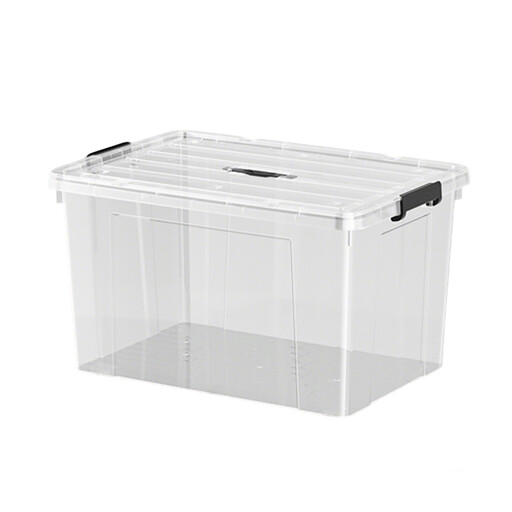
Why this choice: This set is perfect for those embarking on a major organization project, like storing duvets, winter coats, or organizing the garage. The format as a set of storage boxes ensures stable stacking and a uniform visual appearance.
The PP body, 2.5 mm thick with three-dimensional reinforcing ribs, prevents any sagging. The clip-on lid and non-slip bottom ensure stable and secure stacking.
The reinforced structure and integrated handles allow it to support heavy loads, which is essential for storing tools, books, or archives.
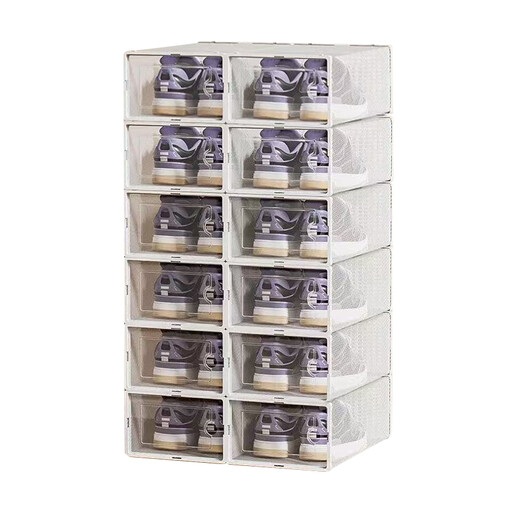
Why this choice: For enthusiasts who want to do more than just store: they want to display their collection. This storage organizer transforms simple storage into a true showcase.
Unlike classic boxes, this model is designed for shoes. Its magnetic, transparent front door allows you to grab a pair without having to unstack everything.
The high-transparency, anti-oxidation plastic protects your pairs' materials while showcasing them. The magnetic closure is the premium touch that makes all the difference.
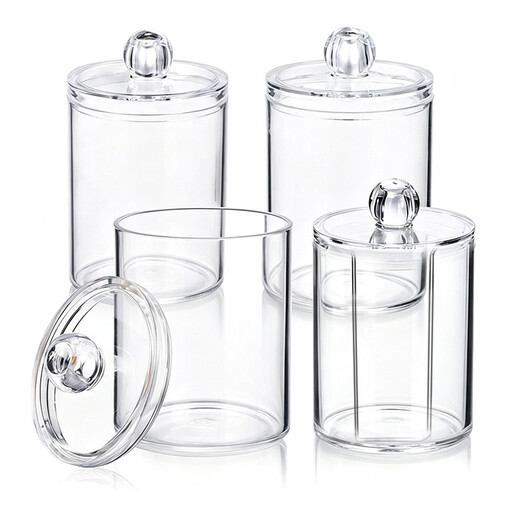
Why this choice: Perfect for organizing small accessories in the bathroom or on a vanity. Its compact size and elegant design keep your essentials handy, with style and hygiene.
This is a specialized organizer, not an unsuitable, large catch-all box. For this purpose, the more rigid and chic acrylic plastic offers glass-like transparency, without the fragility.
Its stackable design and different versions (with or without a side opening) make it highly modular to adapt to your space and what you want to store inside.
Discover our full selection of products that meet our quality criteria and current safety standards.
A box that warps is often a sign of overloading or low-quality plastic. Always respect the maximum load capacity indicated by the manufacturer. Opt for models made of polypropylene (PP) with thick walls and reinforcements. Also, be sure to distribute the weight evenly inside and always place the heaviest boxes at the bottom of the stack.
Yes, most plastics will eventually yellow and become brittle if continuously exposed to UV rays. If your boxes are intended for a very sunny location (near a window, on a balcony, etc.), it's better to choose opaque or specifically UV-treated models. Otherwise, make sure to keep them out of direct sunlight.
For bulky items like duvets or winter coats, aim for a capacity of 50 to 70 liters. For everyday clothes (sweaters, jeans, t-shirts), 30 to 40-liter bins are more practical and make sorting easier. Finally, for lingerie or accessories, opt for smaller organizers, which can possibly be placed inside a larger box.