
Livraison le jour même ou le lendemain

Qualité garantie

Débloquez vos offres de bienvenue: Livraison GRATUITE | Jusqu'à -80 % | 30 jours d'essai gratuits à JoyPlus
Téléchargez l'application
Finding the right storage solution can transform a chaotic space into a haven of peace. Yet, buying a simple plastic storage box with a lid often turns into a nightmare. Who hasn't cursed at a lid that warps, plastic that cracks at the slightest impact, or a stack of boxes that threatens to collapse at any moment??
To avoid throwing your money away, here are the common pitfalls to avoid and the key points to keep in mind to make the right choice.
To avoid falling into the same trap, you just need to check a few technical criteria that never lie. This is what separates a purchase you'll immediately regret from a storage solution that will last for years.
The material is the first indicator of your plastic storage crate's longevity. Polypropylene (PP) is your best bet for its impact resistance and flexibility. Pay close attention to the thickness: a wall that's 2.5?mm thick, for example, guarantees far greater rigidity and load capacity than a standard model. For storing heavy items or for heavy-duty use, the presence of reinforcing ribs on the structure is a true sign of durability.
A good stackable storage box should allow you to safely optimise vertical space. Two key points to inspect?:
Pro tip? Choose a transparent plastic box. It's a huge time-saver that prevents you from having to unpack everything just to find what you're looking for.
There's a right box for every purpose. For sorting clothes, toys, or papers, a standard but sturdy storage bin with a lid will do the trick. However, for storing food, it is essential to opt for a dedicated food storage container. These are made from food-grade materials (look for the fork and glass logo!) and often feature silicone seals for a perfectly airtight closure, which is crucial for preserving freshness.
To help you see how these criteria apply in practice, here are a few options tailored to specific needs.
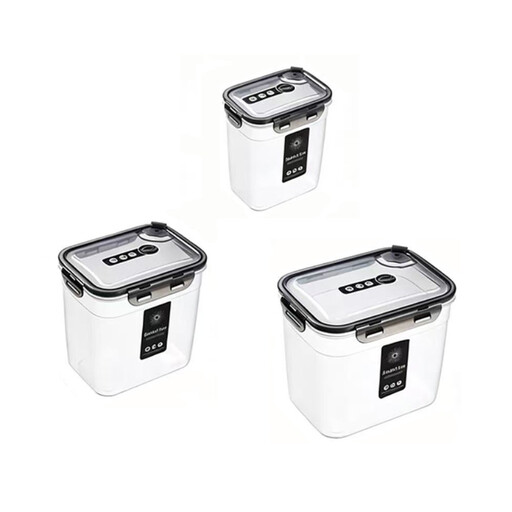
Why we chose it: Perfect for tidying up the pantry with reliable, food-grade certified containers. This set effectively protects grains, pasta, and legumes from moisture and air.
Unlike a standard box, its airtight lids ensure optimal preservation and prevent any risk of spills.
The set of 3 sizes (1.4 L, 2.5 L, 3.8 L) allows for modular organisation. Made of transparent, food-grade plastic.
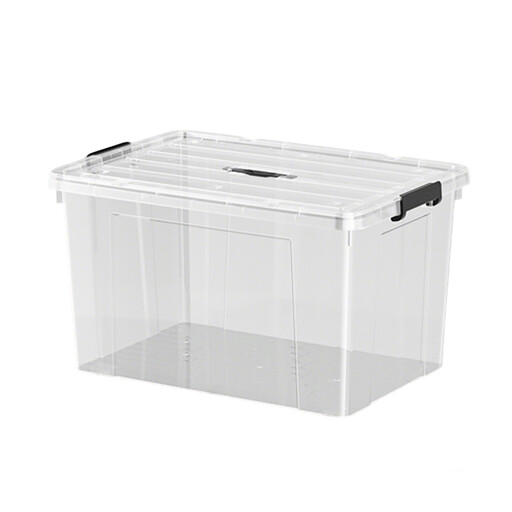
Why we chose it: The ideal solution for storing heavy or bulky equipment in the garage, cellar, or attic. Its large capacity and reinforced structure make it a reliable choice for long-term storage.
Its thick structure and reinforcing ribs make it resistant to warping, even when loaded or stored in an unheated room. The handles are designed not to give way under weight.
Extra-large capacity and a reinforced structure for maximum durability. Its flat lid and textured bottom ensure perfectly stable stacking.
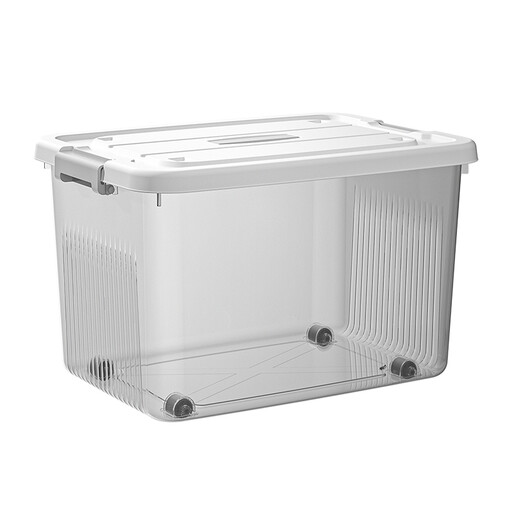
Why we chose it: An ultra-versatile size for organising the whole family's belongings: off-season clothes, toys, office supplies... Its transparency is a real bonus for busy parents.
Its design is made for stacking: the flat lid and non-slip bottom guarantee a stable and secure column, optimising closet space without the risk of tipping over.
Its versatile size and transparency let you spot the contents at a glance. Sold as a set, it's perfect for creating a cohesive storage system.
Explore our full selection of storage boxes that meet all our criteria for quality and durability.
Start by measuring the destination space (shelf, closet, etc.). Then, estimate the volume of items you need to store. Our advice: opt for several medium-sized boxes over a single, very large one, which will quickly become too heavy and difficult to handle. And most importantly, think vertically! Stackable models are your best friends for optimising space.
No, absolutely not! A standard storage box is not designed for food contact. To store food, it is imperative to choose a specific food storage container, identifiable by the official logo (a glass and fork) and guaranteed to be BPA-free. It's a matter of safety.
Maintenance is very simple. A wipe with a damp cloth and a mild detergent is all it takes. Avoid harsh chemicals and abrasive sponges. To maximise their lifespan, do not overload them and protect them from prolonged exposure to sunlight, as UV rays can weaken the plastic over time.