
Livraison le jour même ou le lendemain

Qualité garantie

Débloquez vos offres de bienvenue: Livraison GRATUITE | Jusqu'à -80 % | 30 jours d'essai gratuits à JoyPlus
Téléchargez l'application
Plastic netting is a smart, versatile solution for many outdoor projects: securing a balcony, marking out a vegetable garden, or creating an enclosure. But be warned, not all models are created equal. An unsuitable choice can quickly become a poor investment, with a product that falls apart after a single winter or proves to be completely ineffective. To save you from this disappointment and help you make the right choice, we've broken down the key criteria and pitfalls to avoid.
The market offers a vast array of options, but some products hide flaws that only become apparent after installation. Here's a rundown of common mistakes.
To be certain of the quality and suitability of a plastic netting, here are the three technical points to check before you buy.
The lifespan of your installation depends above all on its composition. There are two main families of plastics:
Regardless of the polymer, a UV-resistant treatment is non-negotiable. This chemical stabilisation protects the material from sun degradation; it's the guarantee that its colour and strength will last over time. This is the secret to a UV-resistant net and anti-corrosion netting that will never rust—a major advantage over its metal counterparts.
The geometry of the mesh (square, rectangular, hexagonal) affects the final look, but also its function. Its size, however, is simply crucial:
Remember to check the roll dimensions (height and length) to cover your area with minimal waste. A lightweight and flexible product will make your life easier, from transport to installation. The game-changing detail: smooth, reinforced edges. They guarantee a clean, hassle-free, and safe installation.
To move from theory to practice, here are a few models that tick all the right boxes for specific needs.
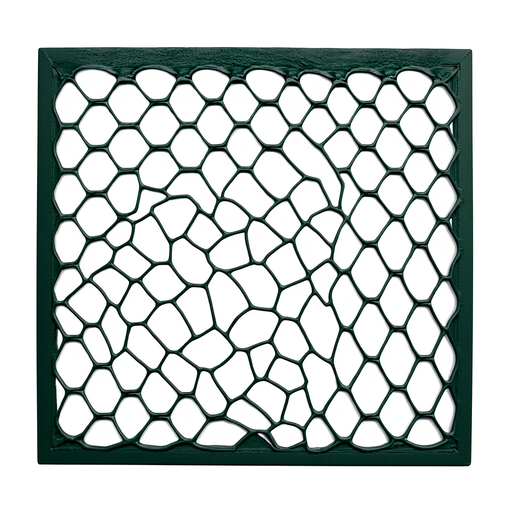
Why we chose it : The perfect solution for city dwellers with pets who want to secure their balcony without turning it into a fortress. The 20 mm hexagonal mesh is fine enough to prevent an overly curious cat from making a great escape.
Its 5-year guaranteed UV-resistant treatment protects you from rapid degradation. The smooth, reinforced edges promise a pain-free installation.
It combines safety (suitable mesh, non-cutting edges) with discretion, thanks to its green colour that blends into the background and a hexagonal shape that's more appealing than a simple square.
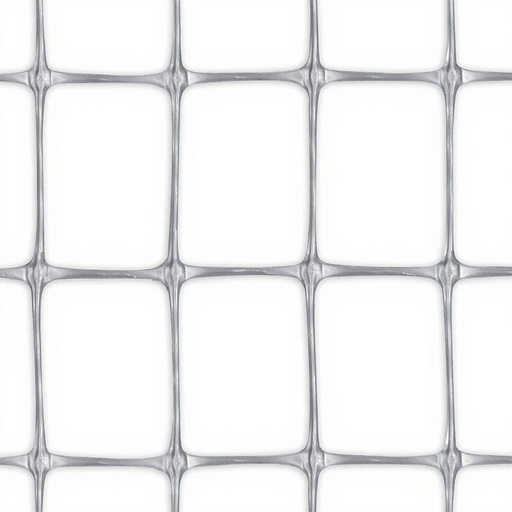
Why we chose it : For those who want the benefits of metal fencing without the drawbacks (rust, maintenance...). Its resistance to tension and tearing makes it an excellent candidate for a garden fence built to last.
Made from high-density polypropylene with a top-tier UV-resistant treatment, it's guaranteed for 10 years. It's impervious to rust and moisture, even in coastal areas.
The strength of metal with the lightness of plastic. It offers impressive durability without the weight and rust. A real plus for transporting and installing it without breaking your back.

Why we chose it : The Swiss Army knife of plastic netting. Perfect for the DIYer who always has a small project in mind: protecting a vent, fitting a gutter, or covering a low wall...
Its UV-treated polyethylene composition is a guarantee of longevity. Ultra-flexible, it can be cut and shaped with a simple pair of scissors, and its edges are never sharp.
Its versatility and ease of cutting are its greatest strengths. With 30 metres on the roll, it offers an unbeatable quantity-to-price ratio for tackling multiple small jobs.
Discover our full selection of products that meet our strict standards for quality and safety.
It all depends on the quality of the UV-resistant treatment and the thickness of the plastic. A budget model will barely last one or two winters. In contrast, a good HDPE or PP netting with proper UV treatment, like those in our selection, can easily last 5 to 10 years, or even longer, without becoming brittle or losing its colour.
Good news: installation is a breeze and doesn't require special tools. Simply attach it to posts, a railing, or an existing support using cable ties, coated wire, or staples. The trick for a flawless finish: stretch it tightly during installation and use plenty of attachment points (every 30 to 50 cm) to prevent it from sagging.
It all depends on the size and energy level of your dog! A lightweight net for a balcony or chicken coop won't last long against a medium or large dog. For this purpose, you must opt for reinforced garden fence models with thick mesh and excellent tensile strength, like the Tenax Cintoflex or Millennium ranges. Also, make sure the support structure (posts, wall...) is strong enough to withstand the impact.