
Livraison le jour même ou le lendemain

Qualité garantie

Débloquez vos offres de bienvenue: Livraison GRATUITE | Jusqu'à -80 % | 30 jours d'essai gratuits à JoyPlus
Téléchargez l'application
Versatile, easy to install, and cost-effective—plastic mesh fencing seems to have it all. Ideal for enclosing a garden, securing a balcony, or protecting a vegetable patch, it stands out as the go-to, hassle-free solution. But be warned?: behind this apparent simplicity lies a market flooded with products of wildly inconsistent quality. The wrong choice can quickly turn your DIY project into a frustrating ordeal. To ensure you don't regret your purchase, here are the pitfalls to avoid and the criteria you need to know to invest in a product that will truly deliver on its promises.
Low-cost mesh rolls often hide flaws that are invisible at the time of purchase. Knowing how to spot them is the best way to make an informed decision.
To avoid making a mistake, rely on objective technical specifications rather than marketing claims. Here are the three key points to check.
The choice of plastic is the starting point. HDPE (High-Density Polyethylene) is the material of choice. Unlike standard polypropylene (PP) or other low-grade plastics, HDPE offers far superior resistance to tension, tearing, and chemical agents. It's the guarantee of unbeatable durability for a plastic fence exposed to the elements. An HDPE product will retain its flexibility and strength for much longer.
A true anti-UV treatment is integrated "in-mass" into the polymer during manufacturing, not just sprayed onto the surface. This stabilisation ensures the material will retain its mechanical properties and colour over the long term. Look for clear statements about the product's stabilisation, ideally accompanied by a manufacturer's warranty on colourfastness and structural integrity.
The design of the mesh directly impacts the strength and functionality of the fencing.
Always check the mesh dimensions (e.g., 10x10?mm, 30x30?mm) to ensure they match your project's needs, whether it's to block small animals, serve as bird netting, or simply define a space.
To put theory into practice, here are some products that check all the boxes, selected for their specific uses and smart design.
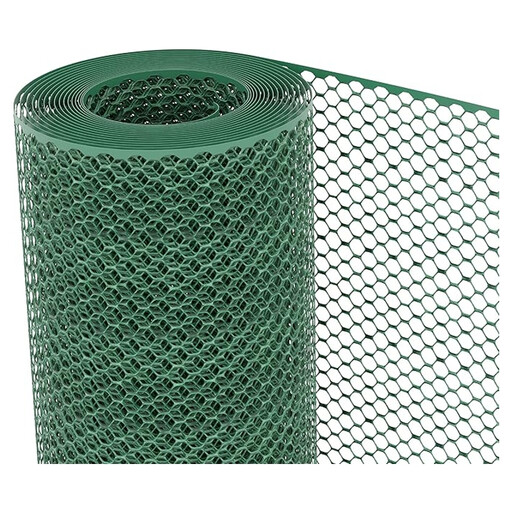
Why it's a great choice : Perfect for pet owners or families with young children. Its 0.8 m height is ideal for railings, and its non-toxic HDPE design with smooth, reinforced edges ensures maximum safety.
Made from UV-stabilised HDPE, it won't become brittle in the sun, ensuring a reliable protective barrier over time. Its reinforced edges prevent tearing at the attachment points.
The hexagonal mesh and smooth edges provide safety without the risk of cuts, a crucial feature for a family living space.
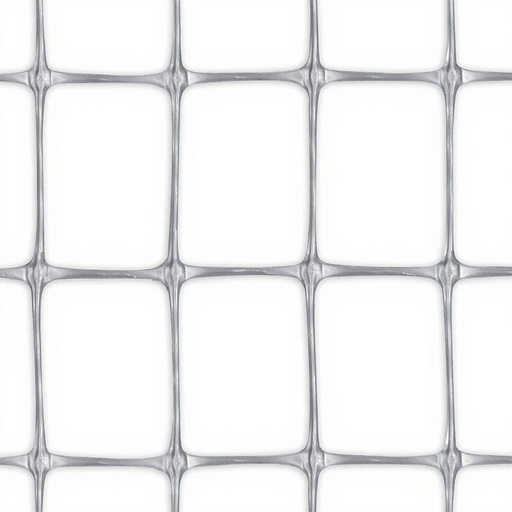
Why it's a great choice : For those seeking a robust, maintenance-free alternative to metal fencing. Its silver finish offers a modern aesthetic, and its design is built to last.
The manufacturer highlights a high-density polypropylene, created through a special molecular process, which gives it tensile and tear resistance far superior to standard mesh. It does not rust or rot.
The manufacturer's 10-year warranty and superior UV resistance make it a long-term investment, saving you from the annual replacement cycle of low-end solutions.
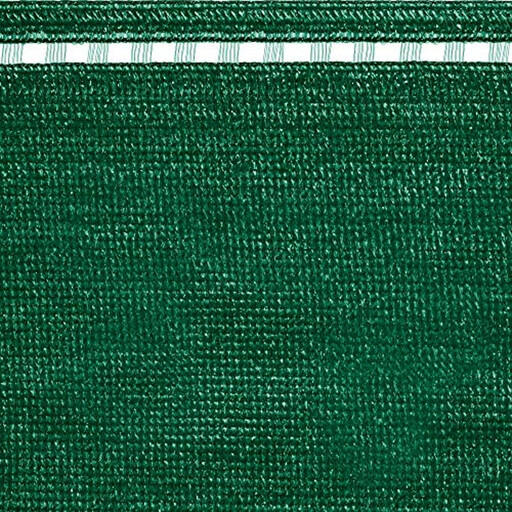
Why it's a great choice : Designed specifically for screening, this dense woven net is perfect for protecting the privacy of a garden, terrace, or balcony from prying eyes and wind.
Unlike lightweight screens that tear at the first gust of wind, its woven structure (230 g/m?) provides 100% block-out and high resistance. The UV treatment ensures that the colour and structure will not degrade prematurely.
Its versatility is a key asset : it can be installed vertically as a screen or horizontally as a shade sail. The integrated eyelets greatly simplify fitting for a quick and sturdy installation.
We have selected a full range of products that meet these criteria for quality and safety.
1. How do you properly tension and attach plastic mesh fencing?? For a professional installation, unroll the mesh roll and attach it to posts or an existing structure (railing, fence) using cable ties, coated wire, or staples. Start at one end and gradually tension the mesh before securing it every 30 to 50?cm. Perfect tension is key to a flawless finish and preventing the mesh from warping in the wind.
2. What is the lifespan of quality plastic mesh fencing?? Its lifespan depends directly on the quality of the material (with HDPE being the benchmark) and the effectiveness of the UV treatment. A budget model will barely last one or two seasons. In contrast, a high-quality product with proper UV stabilisation can easily last 5 to 10 years, or even longer, under normal conditions of use.
3. Can plastic mesh be used as a fence for a dog?? It all depends on the size and temperament of your dog. For small, calm dogs, a sturdy and well-secured HDPE mesh can be sufficient to define their area. However, for a larger, more energetic dog, or a known escape artist, plastic mesh will quickly show its limitations and will not be a reliable safety barrier. In that case, it's better to opt for a rigid panel fence or plastic-coated welded wire mesh, which is a much more suitable and secure solution.