
Livraison le jour même ou le lendemain

Qualité garantie

Débloquez vos offres de bienvenue: Livraison GRATUITE | Jusqu'à -80 % | 30 jours d'essai gratuits à JoyPlus
Téléchargez l'application
Whether you're fencing off a vegetable garden, securing a balcony, or creating an enclosure for your pets, plastic mesh often seems like the go-to solution: it's easy to install and cost-effective. But looks can be deceiving. Behind this simplicity lie huge differences in quality that can turn a good idea into a real headache. Between products that degrade after the first summer and those that are simply not suited for their intended use, it's easy to make the wrong choice.
Our mission? To help you see things more clearly. Let's forget the marketing jargon and focus on the practical details to make a truly informed decision. Here are the pitfalls to avoid and the essential criteria to check before you buy.
Before you start, keep these common and costly mistakes in mind:
To make the right choice, ignore the slogans and focus on these three technical specifications. They are what determine the performance and lifespan of your installation.
The type of plastic is the number one quality criterion.
The size of the openings (the mesh) is your second checkpoint, as it is directly linked to the intended use:
A good plastic mesh must, above all, be safe to handle. Check that the edges are smooth and not sharp—a crucial detail if the installation is in a high-traffic area or within reach of children. Finally, high-quality UV stabilisation is non-negotiable to ensure the product doesn't disintegrate and retains its colour and strength for several years.
To help you visualise how these criteria apply in practice, here are a few options tailored to specific needs.
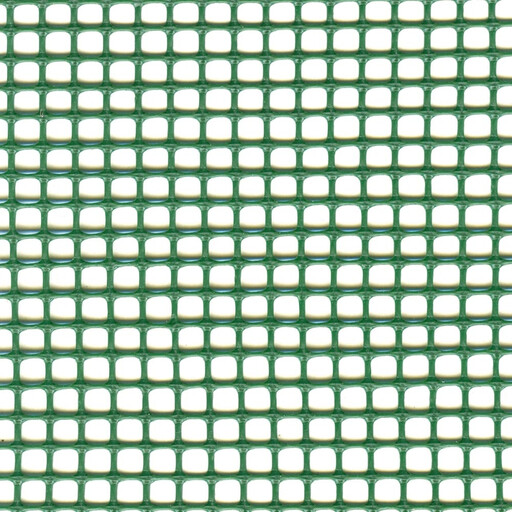
Why we chose it: Ideal for families and pet owners in apartments. This net is specifically designed to prevent small items (toys, flower pots) from falling off a balcony or terrace. It provides real peace of mind without obstructing the view.
This product doesn't fall into the "multi-purpose" trap. Its very fine 4x4 mm mesh is designed for a single purpose: protecting against falling objects, where a large-mesh fence would be completely useless.
Its tight mesh and pure polymer construction make it perfect for its role as a balcony safety net. Bonus: it's very easy to cut and install with simple zip ties.
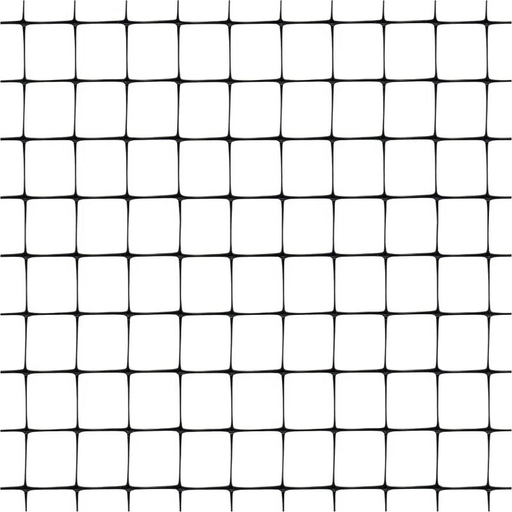
Why we chose it: For owners of chickens, birds, or anyone looking for agricultural fencing that is both lightweight and strong. This polypropylene net is designed to offer high tensile and tear resistance, making it reliable for building enclosures and aviaries.
It doesn't just settle for a vague "durable" claim. Its technical sheet mentions a "molecular biorientation" process, a guarantee of performance and longevity that is far more concrete than a simple marketing promise.
Its light weight and flexibility make it much easier to transport and install than traditional metal fencing, while still providing the necessary strength for poultry netting or an aviary net.
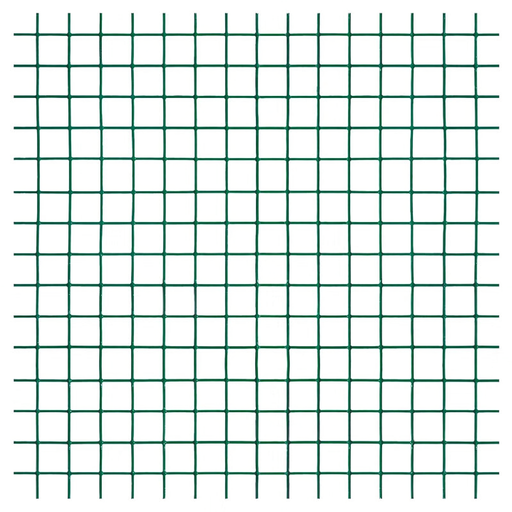
Why we chose it: For those who require extra rigidity and strength for their garden fence. It's perfect for reinforcing an existing barrier, creating a low but sturdy border, or protecting plants from medium-sized animals.
It clears up the confusion between "plastic" and "plastic-coated." This product is indeed a galvanised steel wire mesh coated in plastic, which gives it corrosion resistance and rigidity far superior to a 100% plastic mesh.
Its galvanised steel core guarantees durability and structural rigidity where a simple plastic net would be insufficient, while still benefiting from the rust-proof protection of the plastic coating.
We have selected a full range of products that meet our quality and safety standards.
Q1: How do I install flexible plastic mesh? Installation is generally very simple. Unroll the mesh along the area you want to fence, then attach it to posts (wood, metal, plastic) or an existing structure using zip ties, galvanised wire, or staples. Be sure to pull it taut for a cleaner look and better strength. For long runs, a tension wire at the top and bottom will prevent it from sagging over time.
Q2: What is the lifespan of a good-quality plastic mesh? It all depends on the quality of the polymer and the UV treatment. An entry-level product will barely last one or two seasons. In contrast, a high-quality HDPE or PP mesh with effective UV stabilisation can last from 5 to 10 years, sometimes even longer, without losing its colour or strength.
Q3: Can plastic mesh be used as a privacy screen for a balcony? No, standard plastic mesh is not a good balcony privacy screen, as its openings are far too large to ensure privacy. To shield yourself from view, it's better to opt for dedicated solutions like reed screening, shade cloths, or specific privacy screens. However, it is possible to attach a shade cloth directly to a plastic mesh to combine boundary marking with privacy.