
Livraison le jour même ou le lendemain

Qualité garantie

Débloquez vos offres de bienvenue: Livraison GRATUITE | Jusqu'à -80 % | 30 jours d'essai gratuits à JoyPlus
Téléchargez l'application
Plastic mesh is a valuable asset in the garden, on the balcony, or even in agricultural settings. But be careful—choosing the right model can quickly become a headache. An unsuitable product can degrade in a single season or fail to do its job. The result: wasted time and money. To help you make a clear choice, we've broken down the pitfalls to avoid and the essential criteria to check before you buy.
At first glance, all plastic meshes look the same. However, their performance can vary dramatically. Here are the 3 most common mistakes that can render your installation useless in record time.
To avoid making a mistake, closely examine three technical points. These are what determine the longevity and effectiveness of your installation.
The longevity of your mesh primarily depends on its composition. The two main materials are:
Regardless of the material, the "UV-treated" label is non-negotiable. This treatment protects the plastic from sun degradation, ensuring it retains its flexibility and strength for several years.
The size of the mesh determines the use of your netting.
The manufacturing method has a direct impact on the mesh's durability. A net woven from monofilament, like the Tenax Defender garden net, is often non-unraveling, ensuring it won't fray when cut. For uses requiring high tension (like anti-hail netting stretched over a large area), check for reinforced selvedges (edges). These thicker bands on the sides ensure a solid attachment and uniform tension distribution, preventing tears caused by wind.
Rather than a simple product list, we've matched specific models to concrete use cases, always keeping our criteria of durability and effectiveness in mind.
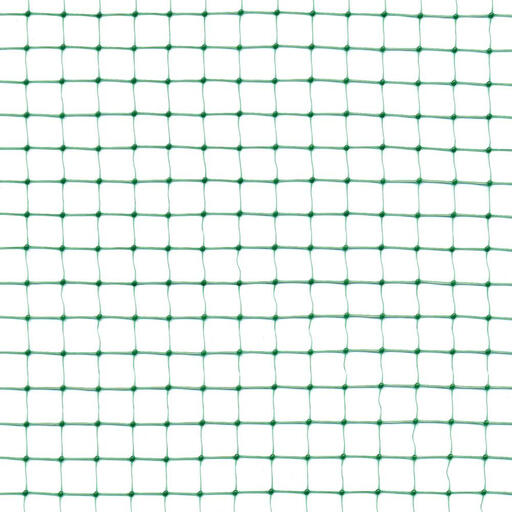
Why we chose it: The perfect solution for protecting a vegetable patch or fruit bushes. Its light weight and dimensions make it very easy to handle and install without a complex structure. Simply lay it directly over the crops.
With its 10x10 mm mesh, it's perfectly sized to block birds (pitfall #2 avoided). Made from UV-treated polypropylene, it isn't afraid of the sun and will last for seasons to come (pitfall #1 avoided).
Lightweight and reusable, it can be cut without fraying and is easy to store once the harvest is over.
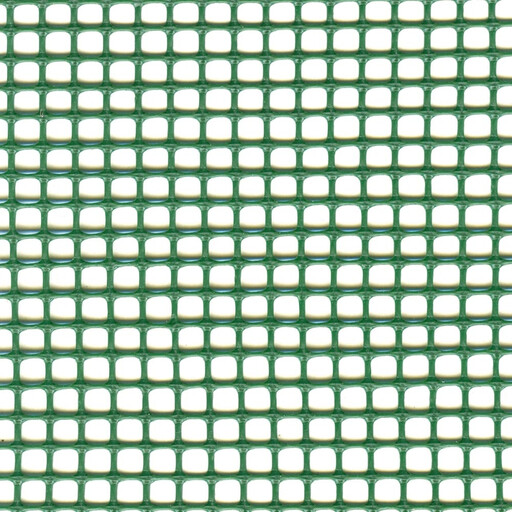
Why we chose it: Essential for securing a balcony or railing. Its very fine mesh prevents small objects (toys, pots) from falling, while remaining discreet enough not to spoil the view.
Its very tight square mesh (4x4 mm) is designed to retain objects (pitfall #2 avoided). Its virgin polymer construction gives it the necessary rigidity for a taut, durable installation without sagging (pitfall #3 avoided).
Easy to cut to size and attach with simple zip ties. Its green color blends into the background and can even serve as a light green privacy screen.
Why we chose it: The professional solution for large-scale protection of orchards, vineyards, or large crops. Its dimensions and robust structure are designed to cover vast areas and withstand the worst weather conditions.
Woven from HDPE monofilament and equipped with reinforced selvedges, it offers outstanding mechanical resistance to tension and wind (pitfall #3 avoided). This is a true professional-grade anti-hail net.
While protecting crops, it remains permeable to air and water, not hindering their growth. Its structure is optimized for permanent installation on tunnels or cable structures.
Discover our complete selection of products that meet our quality criteria and current standards.
Its lifespan is directly linked to the quality of the UV treatment. An untreated mesh can become unusable in less than one season. Conversely, a quality product like those in the Tenax range, when properly installed, can easily last 3 to 7 years, or even longer, depending on its sun exposure and the stresses it endures.
The easiest way is to use plastic zip ties (like Cable Ties), plastic-coated wire, or suitable staples. The golden rule: an attachment to a solid anchor point (post, railing) every 30 to 50 cm. Remember to stretch the net tightly: it will be more resistant and won't flap in the wind.
Absolutely. Most plastic meshes and nets can be easily cut with a good pair of scissors or cutting pliers. Opt for quality, often non-unraveling models: their woven mesh will not fray when cut, ensuring a clean finish.