
Livraison le jour même ou le lendemain

Qualité garantie

Débloquez vos offres de bienvenue: Livraison GRATUITE | Jusqu'à -80 % | 30 jours d'essai gratuits à JoyPlus
Téléchargez l'application
Whether you're securing a balcony, marking out a vegetable garden, or building a DIY chicken coop, plastic fencing seems like a simple, cost-effective solution. But be warned: the market is flooded with products of wildly inconsistent quality. Make the wrong choice, and you're guaranteed disappointment with a net that tears in the first gust of wind, fades, and turns brittle after just one summer.
I'm the Head of Product Curation at Joybuy, and my role is to help you navigate this landscape. Together, let's break down the common pitfalls and focus on the criteria that truly matter, so you can choose a plastic fence that lives up to its promises—well beyond the marketing hype.
The old adage "buy cheap, buy twice" often holds true for plastic fencing. Frequent replacements, installation nightmares... here are the flaws to watch out for:
To avoid these setbacks, it's best to rely on objective technical specifications. These are the true arbiters of the quality and durability of your future plastic fencing.
The choice of plastic is crucial. There are two main polymers on the market:
The shape and design of the mesh directly impact the fencing's strength:
Rather than an endless list, here are targeted picks for specific uses. Each selected product meets the quality criteria we've just detailed.
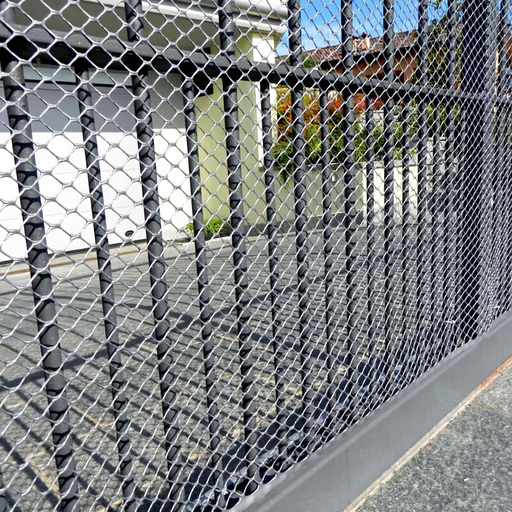
Why we recommend it : Perfect for families and pet owners who want to secure a balcony or railing without major construction. Its 0.5 m height is ideal for guardrails, and the 50 m roll offers excellent value for covering long distances.
Made from UV-treated HDPE, it won't fade or become brittle. Its smooth, reinforced edges prevent tearing during installation, countering the pitfalls of low resistance and complicated setup.
Easy installation with simple cable ties (zip ties). 100% recyclable and non-toxic material.
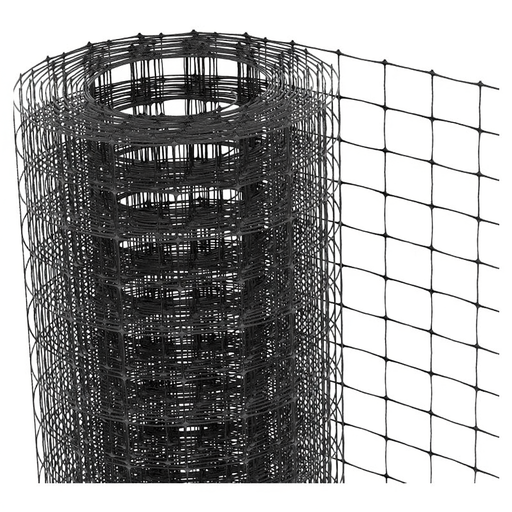
Why we recommend it : The perfect solution for poultry or small animal owners who need to create a large chicken coop or fence in a yard. Its 100 m length makes it a very economical choice for large-scale projects.
Its manufacturing process, using molecular bi-orientation, gives it exceptional tensile and tear resistance, overcoming the pitfall of fragility. It is also UV-stabilised for excellent long-term durability.
As strong as it is lightweight, it is easy to handle and cut, unlike heavy metal mesh.
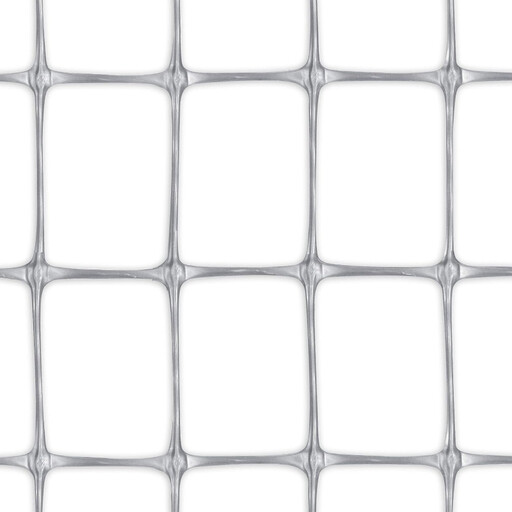
Why we recommend it : For those who want a plastic garden fence with style. Its silver finish mimics brushed aluminium and adds a contemporary touch to elegantly define a flowerbed or area.
Made from high-quality Polypropylene (PP), it won't rust or corrode like low-grade metal. Its feather-light weight makes it very easy to handle and install, avoiding the pitfall of a complicated setup.
It combines the look of metal with the benefits of plastic : lightweight, durable, maintenance-free, and weather-resistant.
Explore our complete, up-to-date selection of products that meet our strict selection criteria and current safety standards.
It all depends on the quality of the plastic and its UV treatment. An entry-level model can become brittle in a single season. Conversely, a virgin HDPE fence with a quality UV treatment, like those in our selection, can retain its colour and flexibility for many years, even in direct sunlight.
Installation is usually straightforward and doesn't require special tools. The easiest method is to unroll the fencing along the railing and secure it firmly with plastic cable ties (like zip ties) every 15 to 20?cm, at the top, bottom, and on the vertical posts. Be sure to pull it taut to prevent it from flapping in the wind.
It depends on the animal. For chickens, rabbits, or small, calm dogs, a durable HDPE fence like the Tenax Cintoflex is perfectly suitable for creating an enclosure. However, for large, powerful, or escape-prone dogs, plastic fencing will not be a sufficient barrier. In that case, you'll need to opt for a much more robust metal fence.