
Livraison le jour même ou le lendemain

Qualité garantie

Débloquez vos offres de bienvenue: Livraison GRATUITE | Jusqu'à -80 % | 30 jours d'essai gratuits à JoyPlus
Téléchargez l'application
A peg that flies off at the first gust of wind, a spring that rusts, or plastic that cracks after just a few weeks can turn a simple chore into a repeat purchase. For a family, a student in halls, a camper or a traveller, choosing plastic clothes pegs is worth a bit of careful thought.
The packs available on the market vary widely in quantity, size and design. Here are the key factors to check so you can avoid nasty surprises and pick pegs for drying laundry that suit your needs, whether indoors or outdoors.
A pack of 100 pieces might look like great value, but the number alone tells you nothing about the spring’s tension or the plastic’s durability. Pegs that are too flimsy are likely to slip on a washing line, especially with towels or clothes that are still heavy with moisture.
On the other hand, a peg that is too tight can leave marks on delicate fabrics. So you need to weigh up the number of pegs against the volume of laundry you dry and how often you use them.
Windproof clothes pegs need to hold the fabric firmly while staying properly attached to the drying rack. This label doesn’t let you off checking the mechanism: look for a jaw that is wide enough, a stable spring and a shape that works with your line or airer.
On an exposed balcony, a light, shallow peg can be shifted by gusts, even if its packaging suggests it’s suitable for outdoor use.
Plastic that isn’t designed for the outdoors can become brittle after repeated exposure to sun, cold and rain. Exposed metal can also corrode in a damp environment. Weather-resistant clothes pegs are the ones to go for if your laundry regularly dries on an outdoor line.
Polypropylene, often listed as PP, is widely used for drying accessories. It’s lightweight and won’t rust. However, the “PP” label doesn’t guarantee a specific lifespan – the quality of manufacture, the thickness of the parts and exposure to the elements all play a part.
For everyday use, also check that the product clearly states its material and dimensions. A plastic peg should have no sharp edges that could snag a garment.
Dimensions affect how easy the peg is to handle and how well it holds the laundry. Models measuring around 68 to 78 mm suit most household needs. A wide enough opening makes it easy to secure jeans, sheets or towels, while a gentler jaw is better for shirts and fine fabrics.
The stated dimensions should apply to each individual peg, not just the packaging. That way, you can compare two packs of pegs for your airer more accurately.
A spring should be properly fitted and return to position without excessive play. On a balcony or in a garden, a firm grip is welcome, but it’s best to avoid too much pressure on delicate textiles.
The number of pegs depends on your setup:
Multicoloured clothes pegs can also make sorting easier – one colour for light clothes, another for towels, for example.
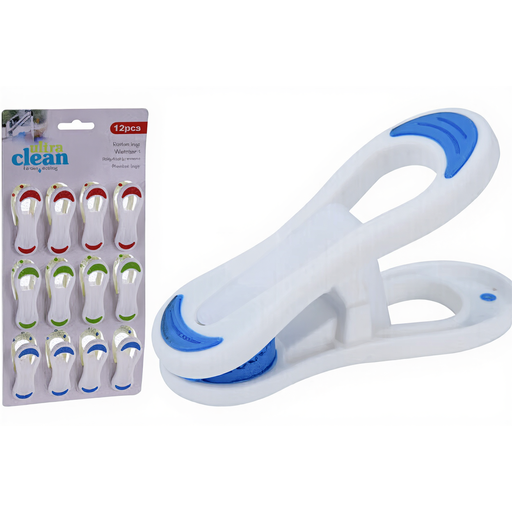
Why this choice suits this profile: This pack of 12 PP pegs is ideal for a small home, a compact drying rack or a first set, without paying for pegs you won’t use.
The listing states a length of 68 mm and a spring designed to hold clothes on the line. The limited quantity stops you paying for too large a stock.
PP plastic, 68 mm size and a spring with a firm grip according to the product description.
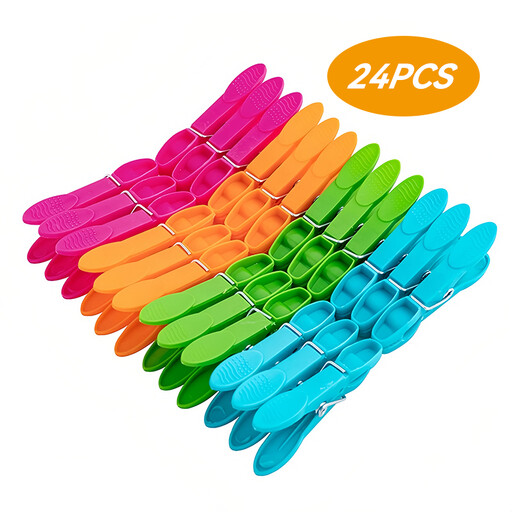
Why this choice suits this profile: This pack of 24 combines several colours, a compact size and a design described as windproof, suitable for both home use and on the go.
The listing specifies a spring mechanism and dimensions of 3 × 7.3 × 1.4 cm. This information lets you check the size before buying.
24 pieces, assorted colours, plastic design and intended for both indoor and outdoor drying.
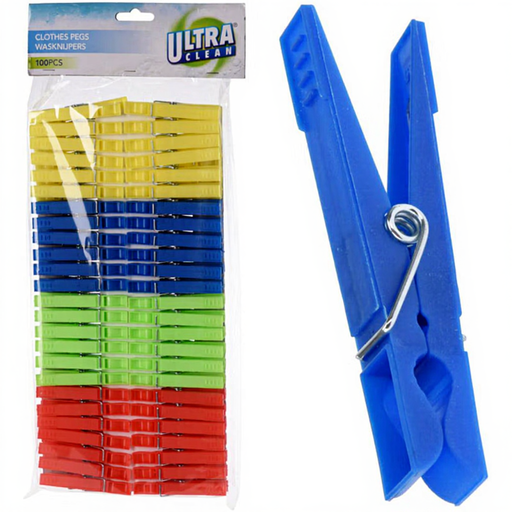
Why this choice suits this profile: A pack of 100 pegs is ideal for families, setups with several washing lines and users who always want a spare supply on hand.
The listing states it is made from PP, with dimensions of 78 × 14 × 10 mm and intended for use against sun, rain and wind.
100 pieces, assorted colours, PP plastic and intended for both indoor airers and outdoor lines.
We’ve put together a full, real-time list of products that fully meet these strict selection criteria and European safety regulations.
To extend the life of your outdoor clothes pegs, avoid leaving them on the line permanently once you’ve taken the laundry down. A quick rinse in clean water is enough to remove detergent residue and dust. Let them dry before storing them in a dry place.
Do not expose the pegs to intense heat or a naked flame. For travel and camping, keep them in a separate bag to stop the springs or jaws catching on other items. Small parts should be kept out of reach of children under 3 years old.
A pack of 24 is usually enough for a regular wash load or a small drying rack. For a family, multiple lines or frequent washes, a pack of 100 reduces the need for replacements and lets you hang more clothes at once.
PP doesn’t rust and is commonly used for drying pegs. For outdoor use, however, check that the listing mentions resistance to sun, rain or changing weather conditions. Store the pegs when not in use to limit prolonged exposure.
Place the peg on a seam or an inconspicuous part of the garment, without squeezing delicate fabrics too tightly. For heavy items, use a peg whose jaws provide a good grip, then remove it as soon as the laundry is dry.