
Same-day & Next-day Delivery

Quality Guaranteed

Unlock Your Welcome Offers: FREE Delivery | Up to 80% OFF | Free 30-day JoyPlus trial
Download the APP
Choosing a new planter or flower pot? It seems simple enough. Yet, marketing promises often hide flaws that can turn a simple purchase into a real disappointment. A material that cracks at the first frost, an elegant design that's completely unsuitable for your plants' survival... As the head of product selection at Joybuy, I spend my days hunting down these bad ideas disguised as good ones. My mission: to give you the keys to an informed choice that will be a lasting enhancement to your spaces.
Before you fall for a colour or shape, beware of these three common mistakes that prove costly for gardeners, beginners and experts alike.
To ensure you never make a mistake again, focus on these three fundamental aspects. They are the guarantee of your planter's longevity and your plants' health.
The choice of material is crucial. Each option has its advantages and constraints, whether for an outdoor flower pot or indoor use.
Good drainage is non-negotiable. Here are the options you should know:
Here, size really does matter, and not just for looks. A cramped plant can never thrive.
Here are a few options that meet specific needs, taking into account the criteria we've just discussed.
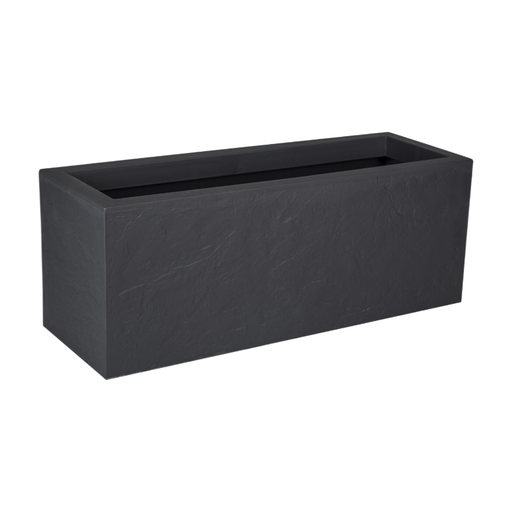
Best for: Perfect for adding greenery to a small space without the hassle. Its design is focused on practicality in urban environments, where watering needs to be optimised.
Its integrated water retention area is the perfect answer to the watering and drainage puzzle. Its double-walled construction provides far better insulation against heat and cold than basic plastics.
Its double wall insulates roots from temperature shocks. The stone-effect finish adds a very successful aesthetic touch, all in a feather-light package.
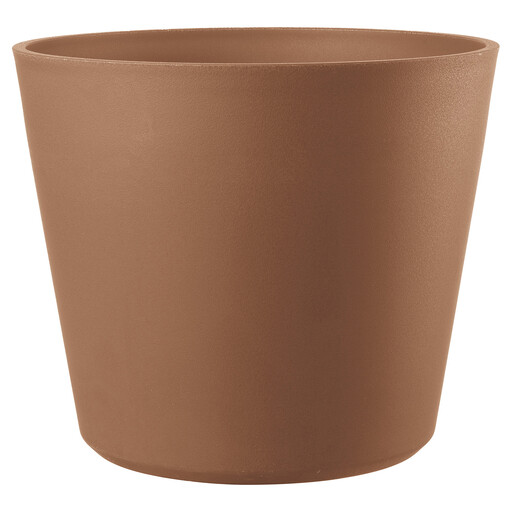
Best for: Designed for those who want to feature large plants (shrubs, small trees) on a terrace without sacrificing mobility for cleaning or overwintering.
It avoids the pitfall of a stylish but impractical pot: its large volume is offset by very handy integrated wheels. Furthermore, its removable plug offers indoor/outdoor versatility, preventing drainage issues.
Made from recycled and recyclable materials, it is resistant to both frost and UV rays. Its mobility is its real asset, a major bonus for a pot of this size.
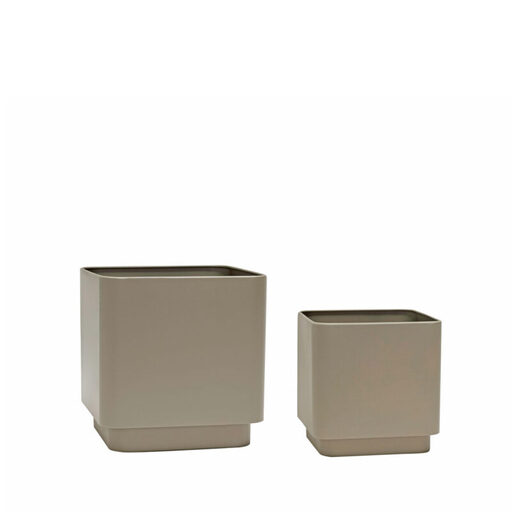
Best for: Anyone who sees a flower pot as a true decorative object. The industrial-chic style and geometric shape fit perfectly into modern interiors, offices, or entryways.
It is clearly designed for indoor use only, which prevents any unpleasant surprises (rust, frost) and guarantees its durability. No false promises.
The set of two sizes allows you to create a dynamic and harmonious arrangement. The iron gives it excellent stability and a very distinct industrial look.
We have compiled a comprehensive list of products that meet these strict selection criteria and current regulations.
How can I be sure a planter is truly frost-resistant? Trust the technical specifications, not the marketing slogans. Look for terms like "injection-moulded polypropylene", "double-walled", or explicit manufacturer warranties (for example, a 7-year warranty like on some EDA products). Materials like high-quality resin or specifically treated recycled plastics are generally more reliable than standard ceramic.
Is a water reservoir a good idea for all plants? It's an excellent solution for most ornamental and vegetable plants that appreciate consistent moisture. It is less recommended for plants that require very dry soil between waterings, such as succulents, cacti, or certain Mediterranean plants. For them, a terracotta pot with excellent drainage remains the safest option.
Can you drill drainage holes yourself? It's possible on plastic pots with a drill and a suitable bit. Go slowly to avoid cracking the material. However, it's very risky on ceramic, terracotta, or metal: you could easily crack the pot or damage its coating. It's better to choose a model with integrated drainage or a removable plug from the start.