
Livraison le jour même ou le lendemain

Qualité garantie

Débloquez vos offres de bienvenue: Livraison GRATUITE | Jusqu'à -80 % | 30 jours d'essai gratuits à JoyPlus
Téléchargez l'application
Watching your plants thrive and climb is truly satisfying. But choosing the right plant support can quickly become a headache. It's easy to get caught between marketing promises and reality, ending up with a product that damages walls, doesn't survive the first season, or worse, harms our beloved plants.
To avoid falling into these common traps, let's review the most frequent pitfalls.
Making the right choice isn't a matter of luck, but of method. Here are the essential criteria to scrutinise.
To invest in gardening accessories that will last and truly care for your plants, focus on two fundamental aspects: the material and the mounting system.
The choice of material primarily depends on its use: indoor or outdoor, purely functional or also decorative.
The mounting system is a crucial point, especially if you're a renter or dislike the idea of drilling into your walls.
Rather than just a long list, we've matched specific solutions to user profiles to help you find the one that truly fits your needs.
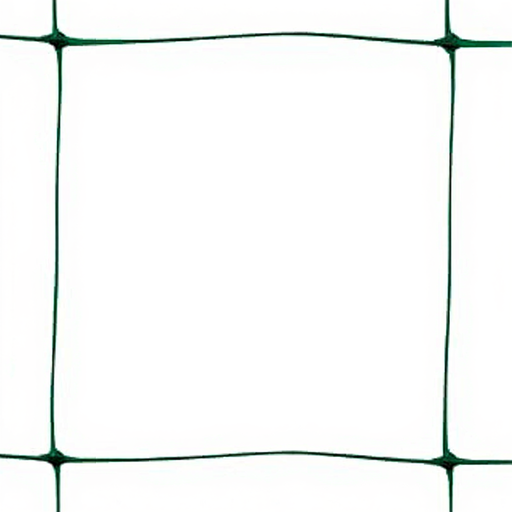
Why we chose it: Ideal for the vegetable garden, this netting is designed to optimise the growth and yield of climbing vegetables (tomatoes, beans, cucumbers). Its large size allows you to cover a significant area at a low cost.
It avoids the trap of using materials unsuitable for the outdoors. Made of polypropylene, it's designed to resist mould, bacteria, and chemicals, and it won't rust, ensuring excellent longevity in the garden.
It improves sun exposure and air circulation, promoting photosynthesis and reducing the risk of disease. It also elevates crops to prevent contact with damp soil.
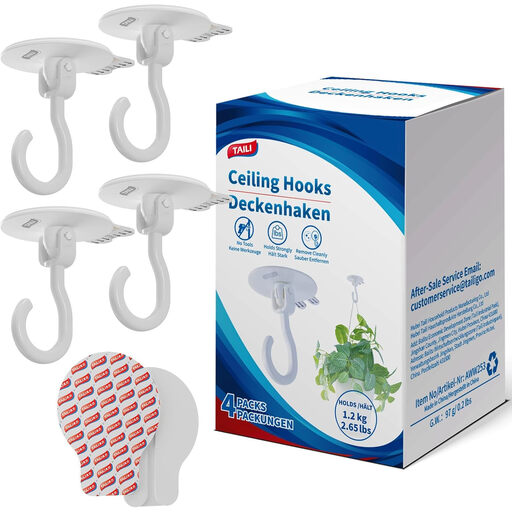
Why we chose it: This is the ultimate no-drill plant hanger solution. Perfect for renters or those who love to rearrange their decor, this hook lets you hang lightweight plants, string lights, or other items without any tools.
It directly tackles the trap of adhesives that ruin walls. Its patented technology is designed for damage-free removal: simply pull the tab, and the hook detaches cleanly, leaving no holes or residue behind.
2-in-1 versatility: The hook swivels 360° and tilts 180°, allowing for both ceiling and wall mounting. Each hook supports up to 1.18 kg (2.6 lbs) on a smooth, clean surface.
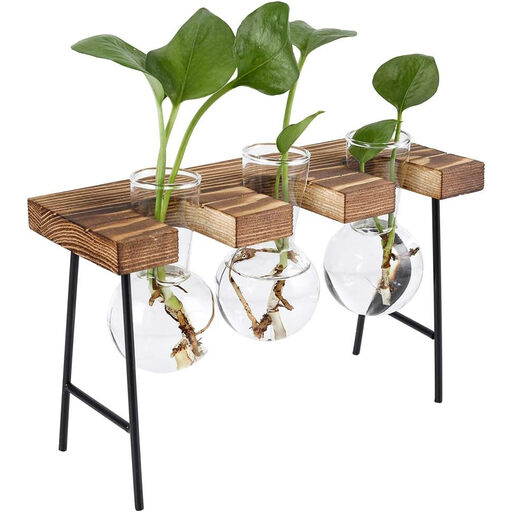
Why we chose it: This item combines aesthetics with functionality. It's perfect for showcasing cuttings, air plants, or small succulents, while adding an elegant and natural touch of plant decor to a desk, shelf, or windowsill.
It avoids the trap of design at the expense of the plant. As a propagation station, its transparent glass vases allow you to monitor root development in water at a glance—an essential condition for successful cuttings.
A complete, ready-to-use set. The combination of retro-inspired wood and clear glass creates a compact, warm, and stylish object that will fit into any decor.
We have selected a full range of products that meet our requirements for quality and safety.
The weight capacity depends on three factors: the quality of the adhesive, the surface type, and following the instructions. A hook like the TAILI model is rated for 1.18 kg (2.6 lbs). It is crucial never to exceed this limit and to install it on a perfectly smooth, clean, and dry surface (tile, glass, smooth painted wall...). Avoid using it for valuable items or above a walkway or bed.
For lightweight plants (under 1.5 kg / 3.3 lbs), a good adhesive plant hook is the simplest solution. For slightly heavier weights (up to 3-4 kg / 6.6-8.8 lbs), you can use self-drilling drywall anchors that only require a small screwdriver hole. For heavy loads, an expansion anchor (like a Molly bolt) remains the most secure option, although it requires drilling.
A Monstera Deliciosa develops aerial roots and loves having a support to cling to. A sphagnum or coir moss pole is an excellent option, as it retains moisture and encourages the roots to attach. Make sure the pole is tall enough to accommodate the plant's future growth and is stable in the pot to support its eventual weight. For more vining plants like a Pothos, a small wall trellis or discreet clips will be enough to guide their growth.