
Livraison le jour même ou le lendemain

Qualité garantie

Débloquez vos offres de bienvenue: Livraison GRATUITE | Jusqu'à -80 % | 30 jours d'essai gratuits à JoyPlus
Téléchargez l'application
Furnishing a balcony, patio, garden or living space with indoor and outdoor plant pots and planters involves more than simply choosing a colour. A planter that is too lightweight may tip over in the first strong gust, a poorly designed water reservoir can retain too much water, and a material that is unsuitable for outdoor conditions may crack after just a few seasons.
To avoid unpleasant surprises, it is best to compare capacity, drainage, material durability and ease of movement. Here are the criteria to check before buying, along with a selection of models suited to different uses.
A self-watering plant pot can reduce how often you need to water, but it does not replace a proper drainage system. If water collects directly in the growing medium, the roots may remain permanently waterlogged. Check for a drainage hole, a separate compartment or a system that allows excess water to escape.
For indoor use, also provide a saucer or watertight tray, even if the manufacturer states that the container is suitable for living spaces.
A stone effect, matt finish or bright colour says nothing about the product’s stability. A large-capacity planter filled with damp soil quickly becomes very heavy. It should rest on a sufficiently wide base and be placed on a flat surface.
The total weight includes the container, compost, water and mature plant. On a balcony, also remember to check the building regulations and the maximum load permitted for the area concerned.
Claims such as “frost- and UV-resistant” should be considered in relation to the intended use. The container’s resistance does not protect the plant from sub-zero temperatures. Similarly, prolonged exposure to sunlight, wind or standing water can accelerate the ageing of certain materials.
Check the information relating to the material, protection against ultraviolet rays, supported temperatures and precautions to take during winter storage.
Choose the container according to the plant’s root development and the available space. A 23-litre outdoor flower pot is suitable for many ornamental plants, culinary herbs and small shrubs. For a large shrub, an impressive floral arrangement or a small fruit tree, a capacity close to 100 litres will provide the roots with more soil.
Also measure the width of passageways, doors and lifts. A large planter installed on a patio can become very difficult to move once it has been filled.
A water-retention area can be useful during a short absence or in hot weather. However, it does not remove the need to adapt watering to the plant species’ requirements. To avoid mistakes, check:
Depending on its design, a double-walled planter can also improve stability and provide better thermal insulation around the roots.
Polypropylene and other recycled or recyclable polymers are easy to clean and are generally lighter than ceramic. A recyclable plastic flower pot is particularly practical on a balcony or patio when the container needs to be moved regularly. Ceramic offers a different decorative look, but requires greater care during transport.
For outdoor use, look for precise information on UV and frost resistance. With ceramic, the claim “frost-resistant” applies to the container: good drainage remains essential to prevent frozen water from creating stress within the material.
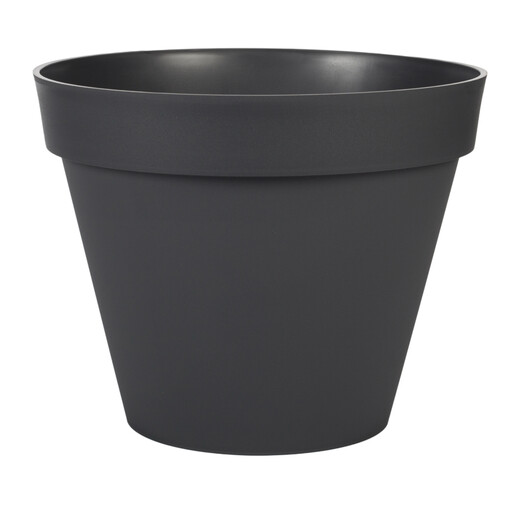
Why it suits this profile : with a diameter of approximately 40 cm, this pot fits easily on a patio, balcony or in an entrance hall, with no special installation required.
Its water-retention area and perforation beneath the base address the two common watering problems, provided the outlet is kept completely clear.
100 % recyclable polypropylene, stated UV protection and a 7-year guarantee in mainland France.
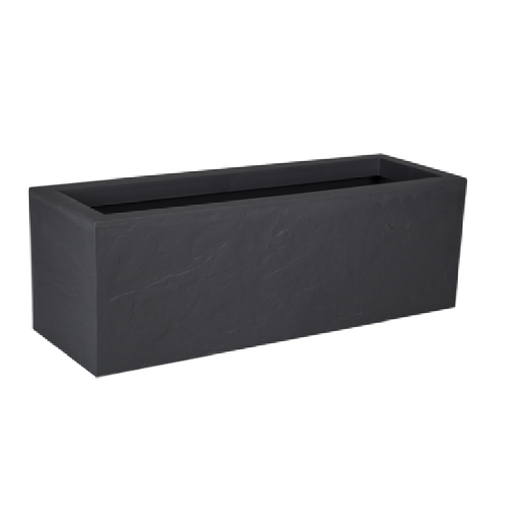
Why it suits this profile : measuring 99.5 × 39.5 × 43.5 cm, it creates structure on a patio and helps visually separate different areas of the garden.
The double wall improves the stated stability and thermal insulation, while the pre-drilled system helps reduce the risks associated with standing water.
Double-walled planter, water-retention area, UV protection, frost resistance and material stated to be 100 % recyclable.
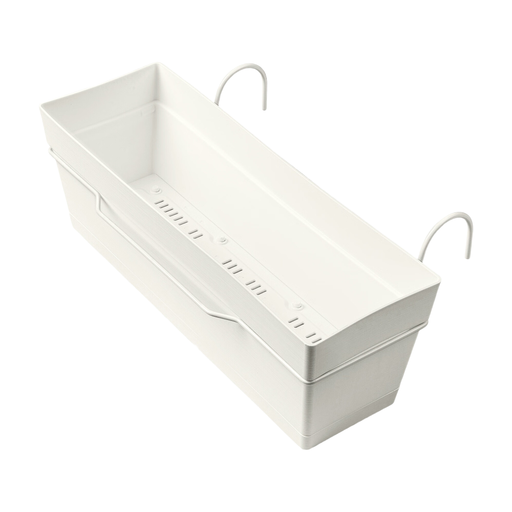
Why it suits this profile : its versatile format and design, suitable for both indoor and outdoor use, work equally well for seasonal planting and permanent installations.
The frost- and UV-resistance claims indicate a container designed to remain outdoors, provided effective drainage is maintained.
Stated recycled and fully recyclable materials, frost and UV resistance, with no special installation required.
If the container needs to be brought indoors for winter, moved to clean the patio or simply turned towards the light, a plant pot trolley can save you considerable effort. Choose a model whose diameter or shape matches the base of the pot. Lockable castors are particularly useful for preventing it from rolling away on a smooth floor.
Before placing a full planter on it, check the maximum supported load and the stability of the complete setup. For an artificial plant, this type of stand also makes storage or regularly refreshing your décor easier.
A ceramic pot is well suited to indoor arrangements, succulents and culinary herbs. Hübsch’s Up Pots Yellow model is sold as a set of two, in approximate sizes of 21 cm and 17 cm. Its handmade construction and stated frost resistance make it an attractive decorative feature, but ceramic remains more susceptible to knocks than plastic.
Artificial plants and artificial outdoor flowers can complement a planter without requiring any watering. For an outdoor installation, check the information on resistance to water, UV rays and fading. Regular cleaning with water or a damp cloth is generally enough to limit the build-up of dust.
Choose a container whose product details mention UV protection and frost resistance. Also check the drainage and stability, as wind and temperature fluctuations can put considerable strain on a planter. These features apply to the container, not to the plant’s resistance.
It can reduce the frequency of some watering, but this depends on the species, season, exposure and temperature. Check the moisture level of the compost regularly and avoid keeping the reservoir permanently full if the growing medium remains waterlogged.
Position it in its final location first, then fill it. For occasional moves, use a plant pot trolley capable of supporting the total weight. A double-walled plastic planter may also be easier to handle when empty than a heavy ceramic or stone model.