
Livraison le jour même ou le lendemain

Qualité garantie

Débloquez vos offres de bienvenue: Livraison GRATUITE | Jusqu'à -80 % | 30 jours d'essai gratuits à JoyPlus
Téléchargez l'application
Choosing the right cat litter is a serious matter. It's a decision that impacts your companion's well-being, the cleanliness of your home, and even your environmental footprint. Plant-based cat litter is on the rise, but navigating the marketing claims to find real effectiveness can quickly become a headache. Between "natural" options that disappoint in practice and those with hidden deal-breakers, it's easy to make the wrong choice.
This guide has one mission: to give you the keys to a smart purchase and help you sidestep the three classic mistakes that could make you regret your eco-friendly switch.
The market is flooded with options, but not all are created equal. Here are the most common pitfalls for cat owners switching to plant-based alternatives.
To ensure you choose a litter that is practical, healthy, and environmentally friendly, focus on these three fundamental parameters.
A good clumping litter forms compact, solid clumps on contact with urine. The benefits are twofold:
Plant-based fibres, such as those from tofu or certain grains, can offer excellent clumping power. Always check that this feature is explicitly mentioned and confirmed by user reviews.
The term "plant-based" covers a wide variety of materials. Here are the most common:
The choice of material will depend on your priorities: softness for a kitten's paws, maximum absorption capacity, or ease of disposal.
A dust-free litter is a non-negotiable criterion for respiratory health. Low-quality litters can release fine particles that accumulate in your home. Superior quality plant-based litters undergo de-dusting processes to minimize this risk. This is a particularly important point if your cat (or a family member) suffers from asthma or allergies.
To put theory into practice, here's how these criteria translate into real products suited for different needs.
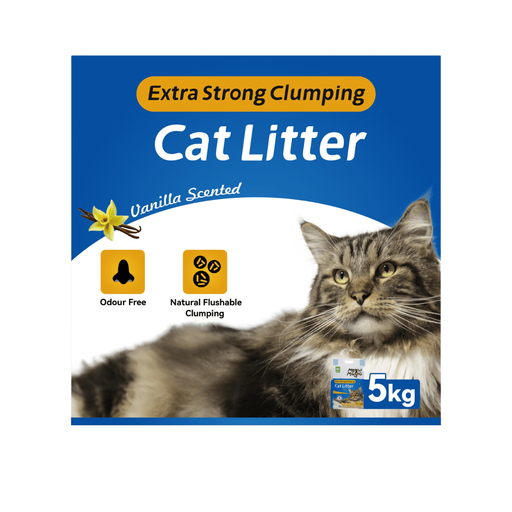
The Editor's Take: Perfect for those looking to combine ecological awareness with convenience. Its tofu-fibre composition makes it a biodegradable and compostable solution, while also being designed to be flushed (respecting local regulations), which is a daily game-changer.
It ends the "biodegradable vs. flushable" confusion with a formula designed to dissolve. Its low dust level and powerful clumping make it an all-in-one solution.
The combination of ultra-effective clumping, which simplifies cleaning, and a plant-based composition that allows for simple, sustainable disposal.
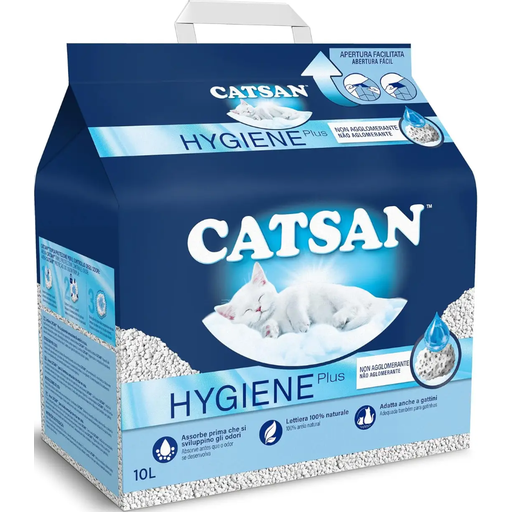
The Editor's Take: A reliable choice for those not yet ready for plant-based options who prioritize absorption and odour control above all else. This mineral litter is composed of natural lime and quartz sand, materials renowned for their very high absorption capacity.
It neutralizes the main weakness of low-end litters: odours. The manufacturer claims an ammonia reduction of up to 93% thanks to a mineral salt treatment. The promise of a 99.7% dust-free formula is also a major asset.
Near-instant liquid absorption. Its porous micro-granules act like sponges to trap moisture and odours at the source.
Discover our full selection of litters that meet our criteria for performance, health, and ecology.
1. Does plant-based litter really work against odours? Yes, provided you choose a high-quality model. High-performance plant-based litters, especially those made from wood, tofu, or certain grains, contain natural agents that neutralize ammonia. Clumping power is also crucial: by quickly isolating urine, it prevents odours from spreading.
2. Can I really flush plant-based litter down the toilet? Only, and we mean only, if the manufacturer clearly states it on the packaging. Litters designed for this purpose, like some tofu-based models, are formulated to break down quickly in water. For all others, including many plant-based litters, this practice should be avoided to prevent clogging your pipes. Always flush very small amounts at a time and check your local regulations.
3. Does a bag of plant-based litter last as long as a bag of mineral litter? It all depends on its quality and clumping power. A good quality clumping plant-based litter can last as long as, or even longer than, a conventional mineral litter. Since you only remove the soiled parts, the rest of the box stays clean for longer. Plant-based litters are often lighter for the same volume, but it's important to compare the weight (in kg) to evaluate the quantity-to-price ratio.