
Livraison le jour même ou le lendemain

Qualité garantie

Débloquez vos offres de bienvenue: Livraison GRATUITE | Jusqu'à -80 % | 30 jours d'essai gratuits à JoyPlus
Téléchargez l'application
Choosing a litter for your cat can quickly become a headache. Between marketing promises and the reality of daily life, it's easy to feel lost. As the Head of Product Recommendations at Joybuy, my mission is to help you see things more clearly. The goal: to find a plant-based cat litter that is effective, healthy for your pet, and convenient for you. Let's break down the key points and essential criteria together.
The market is flooded with options, but not all are created equal. Here are two common pitfalls that can lead to a purchase you might regret.
1. The Myth of "100% Natural" and Dust-Free A litter labelled "natural" or "plant-based" is not guaranteed to be dust-free. Some types, made from lower-quality wood or paper, can release fine dust when handled or when your cat digs. This dust can not only make a mess in your home but also irritate your pet's respiratory system, as well as your own.
2. The "Flushable" Promise Should Be Taken with a Grain of Salt The convenience of a flushable litter is certainly appealing. However, you must be cautious: not all plumbing systems are designed to handle anything other than toilet paper, and local regulations may sometimes prohibit it. Flushing large clumps at once can lead to clogs that are expensive to repair. Our advice: always check the manufacturer's recommendations and start with very small amounts.
To make an informed choice, focus on these three fundamental parameters.
A good clumping litter forms solid, compact blocks on contact with urine. Ideally, these clumps should not fall apart when you scoop them out.
The raw material is crucial for the product's performance and safety. Here's an overview of the main options:
An eco-friendly cat litter offers several disposal methods.
The perfect litter doesn't exist. The key is to find the one that suits your situation, your habits, and your cat's preferences. Here are a few profiles and the options we recommend.
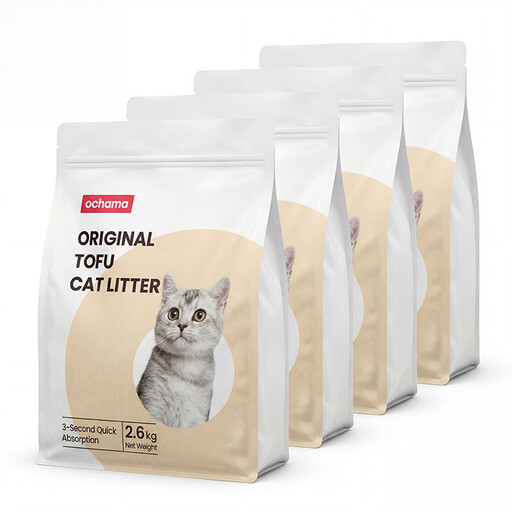
Why we chose it: Ideal for cat owners in apartments looking for a simple and hygienic solution. The ability to flush it (with caution) and its dust-free formula greatly simplify daily maintenance.
Its composition, based on tofu fibres and 2.0mm pellets, is designed to minimise dust. Its water-soluble formula, as indicated by the manufacturer, makes it compatible with careful flushing.
The combination of a dust-free formula and strong clumping power ensures a clean environment for both the cat and its owner.
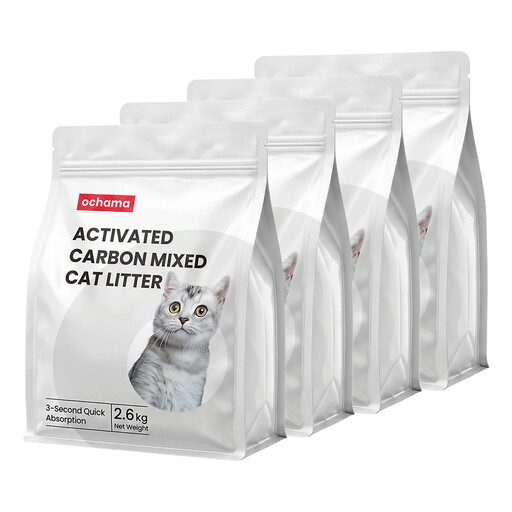
Why we chose it: Perfect for multi-cat households or for those whose top priority is odour control. Its mixed formula is designed for maximum performance.
It doesn't just mask odours. Its formula combines 67% tofu litter, 27% bentonite, and 3% activated charcoal to absorb and neutralise odours at the source. A formidable and long-lasting anti-odour solution.
The combination of these materials allows for ultra-fast absorption (the manufacturer promises 3 seconds) and very solid clumping, which makes cleanup easier and reduces waste.
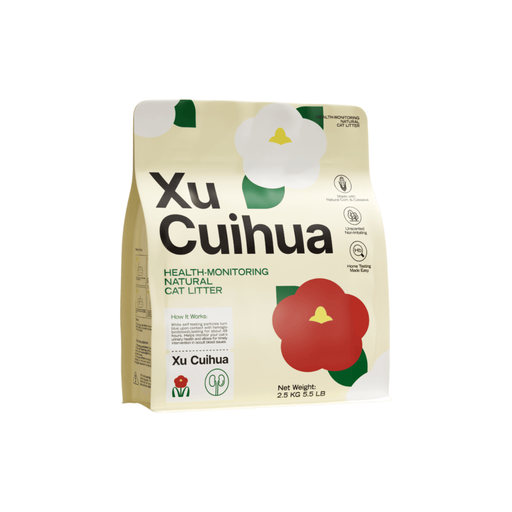
Why we chose it: Designed for owners who want to closely monitor their companion's urinary health, especially for older cats or those with a history of medical issues. A true at-home prevention tool.
Much more than just a litter, it incorporates technology that causes the pellets to react to traces of blood in the urine. It's not a diagnosis, but a valuable indicator that can provide an early warning and prompt a visit to the vet.
The occult blood detection feature provides real peace of mind by enabling proactive monitoring of urinary health, while still offering the qualities of a classic plant-based litter (low-dust, clumping).
We have selected a complete range of products for you that meet our quality criteria and current regulations.
The duration depends on several factors: the size of the bag, the number of cats, the frequency of cleaning, and the litter's absorbency. On average, for a single cat, a 5-6 kg bag of good quality clumping litter can last between 3 and 5 weeks, provided you remove the clumps daily.
Cats are creatures of habit; a sudden change can upset them. For a smooth transition, gradually mix the new litter with the old one over one to two weeks. Start with one-quarter new litter, then increase the proportion every two or three days until the old litter is completely replaced.
Absolutely, and for several reasons. Firstly, plant-based litter is made from renewable resources (corn, soy, wood, etc.), unlike mineral litter (clay, silica), whose extraction has a much heavier environmental impact. Secondly, it is biodegradable, which is not the case for mineral litter that adds to the volume of our landfills.