
Livraison le jour même ou le lendemain

Qualité garantie

Débloquez vos offres de bienvenue: Livraison GRATUITE | Jusqu'à -80 % | 30 jours d'essai gratuits à JoyPlus
Téléchargez l'application
Choosing a planner or notebook may seem straightforward. Yet an unsuitable format, ink that bleeds through the pages or a cover that is too fragile can quickly turn an appealing purchase into a cumbersome accessory. Whether you want to organise your days, plan your work or keep a personal journal, a few easy-to-check criteria can help you avoid unpleasant surprises.
A dated planner covers a predefined period. If you buy one late in the year or your habits change, pages left blank at the beginning or end can amount to wasted space. An undated planner, on the other hand, requires you to enter the dates manually, but can be started at any time.
The label “18 months” does not necessarily mean that the product is dated. Before ordering, check that the days, weeks and months are actually printed.
An elegant cover does not guarantee lasting everyday durability. If your notebook will travel in a bag, a hardcover will provide better protection for the pages. A softcover, by contrast, will be lighter and easier to store. Also check the elastic closure, binding and whether the notebook stays open comfortably while you write.
Thicker paper is generally more pleasant to use with liquid-ink pens, but it also increases the notebook’s thickness and weight. The layout is just as important: a weekly planner with a dedicated notes area works well for general organisation, while a daily planner offers more room for detailed tasks and appointments.
The A5 format, measuring approximately 14.8 × 21 cm, provides enough room for appointments, lists and goals. It is particularly well suited to students, professionals and anyone who writes regularly at a desk.
The A6 pocket notebook, measuring approximately 10.5 × 14.8 cm, slips more easily into a bag or a large pocket. It is ideal for quick notes, ideas, shopping lists or personal journalling, although its writing area is more limited.
Paper weight is measured in g/m². At 100 g/m², the paper used in the Jubiluu notebooks featured here feels denser and more comfortable than 70 g/m² paper. This does not guarantee complete opacity with every type of ink, but it provides a useful benchmark when comparing two models.
A lined notebook makes it easier to maintain neat, well-structured writing. Ivory or off-white pages create a different level of contrast depending on the ambient light. For drawing, diagrams or sketches, subtle ruling or blank pages will often be more suitable.
A bookmark helps you quickly return to the page you are using. An elastic closure keeps the notebook shut in your bag and prevents it from opening accidentally. A pen holder means you will not have to search for your pen at the bottom of a pocket, while an inner pocket can hold tickets, sheets of paper or small documents.
Also check the care instructions: paper remains sensitive to moisture, while faux-leather or polyurethane covers should be cleaned carefully. Small components such as elastics, ribbons and stickers should be kept out of reach of children under 3 years of age.
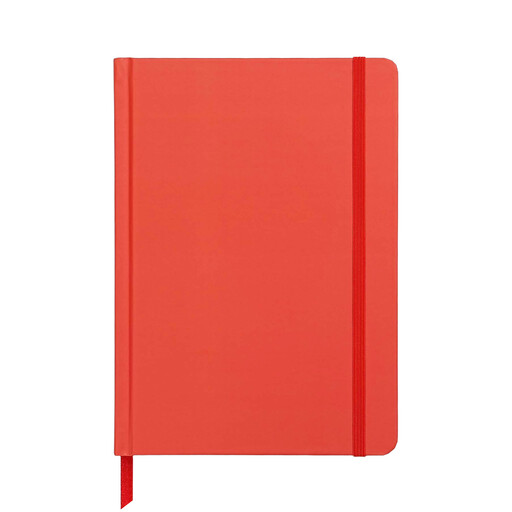
Why this choice suits this profile: its A5 format and undated design let you get started immediately, without waiting for the beginning of a new academic or calendar year, whether for work, study or personal projects.
The monthly and weekly views are undated, so you do not pay for dates that have already passed and can start organising whenever you choose.
224 pages, 100 g/m² lined offset paper, hardcover, bookmark and elastic closure.
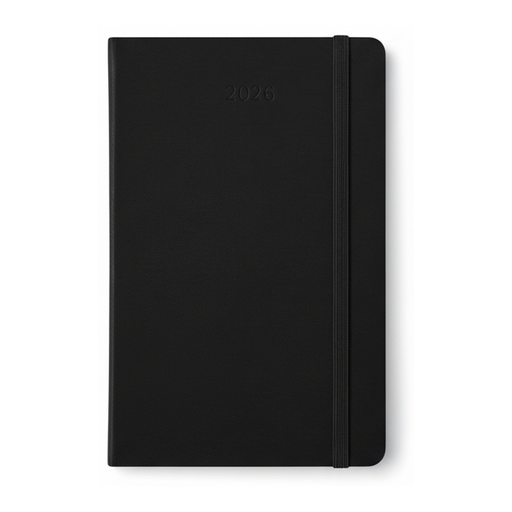
Why this choice suits this profile: the horizontal layout and additional sections support structured organisation, with particular attention to the finishing details.
The covered period and weekly layout are clearly indicated, avoiding the confusion sometimes associated with undated planners.
Faux-leather cover, 70 g/m² ivory paper from FSC-certified sources, elastic closure, ribbon bookmark and inner pocket.
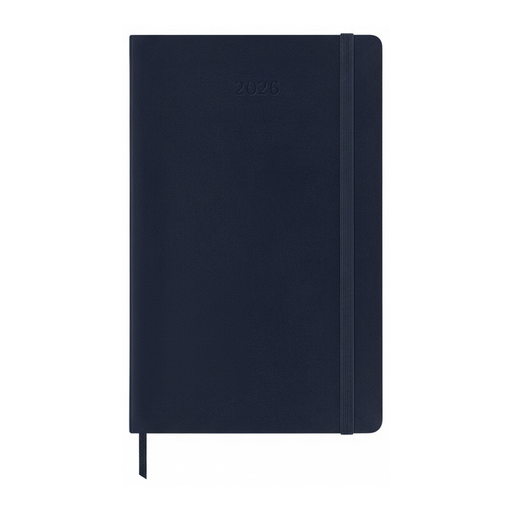
Why this choice suits this profile: with one page per day, you have ample space for appointments, detailed lists, goal tracking and notes taken on the go.
The daily structure prevents you from having to squeeze multiple tasks into an overly restricted weekly space.
Daily pages, sections for calendars, travel, ideas and goals, elastic closure, bookmark and inner pocket.

Why this choice suits this profile: its compact format is easy to take along on journeys, to meetings and during note-taking sessions without taking up valuable space.
The essential accessories are built in: the ribbon, elastic closure and pen holder help prevent you from misplacing what you need while travelling.
A6 format, 160 pages, 100 g/m² lined offset paper, polyurethane cover, bookmark, elastic closure and pen holder.
We have put together a comprehensive, real-time selection of products that meet these demanding criteria and European safety requirements.
It offers greater flexibility, particularly if you are starting partway through the year or juggling several projects. A dated planner requires less preparation and is better suited to those who want to go straight to the date and week they need.
The A5 format generally allows you to record more detail while retaining a monthly or weekly overview. If you have a large number of appointments, a daily layout will often be more comfortable. A6 is best suited to short notes and reminders that you want to take everywhere.
It depends on how frequently you use it, the number of pages and how you carry it. A hardcover, elastic closure and 100 g/m² paper can support regular use, but no paper notebook will withstand prolonged exposure to water or excessive moisture.