
Livraison le jour même ou le lendemain

Qualité garantie

Débloquez vos offres de bienvenue: Livraison GRATUITE | Jusqu'à -80 % | 30 jours d'essai gratuits à JoyPlus
Téléchargez l'application
Choosing a planner or calendar might seem straightforward. Yet the wrong format often ends up at the back of a drawer after just a few weeks. Pages that are too small, fixed dates, fiddly syncing or unnecessary extras – some details matter far more than how the cover looks.
Here are the most common pitfalls and the criteria to consider before you buy, whether you’re after a paper planner, a digital family calendar or a creative Advent calendar.
A beautiful cover doesn’t guarantee a pleasant organising experience day in, day out. A hardcover planner will withstand repeated handling better, but its size still needs to fit your bag and your workspace. On the other hand, a model that’s too compact may leave you short of space for jotting down appointments, tasks and ideas.
Take the time to check the dimensions, weight, binding type, and whether it includes a bookmark or an elastic closure.
A dated planner works perfectly for those who plan their days regularly. However, if you start getting organised partway through the year or only use your planner occasionally, many pages are likely to stay blank.
An A5 undated planner or an 18-month model lets you start whenever you like. This type of format is also great for tracking goals, studying, freelance work and managing personal projects.
In a household, a digital family calendar needs to be easy to view and update. Make sure to check its compatibility with the smartphones you use, the Wi-Fi connection, sharing options and screen readability.
A family planning board in a shared room can complement individual planners. However, it won’t necessarily replace a mobile tool when a family member is often on the go.
For a weekly school planner, look closely at the space given to each day. One page per week may be enough for lessons and appointments, while a separate notes section will come in handy for homework and lists.
Paper weight gives an indication of thickness, but it isn’t enough to determine writing comfort. The Jubiluu featured here uses 100 g/m² offset paper, with lined pages and a hard cover. Its product listing also mentions 224 pages, which is 112 sheets.
For daily use, look for:
A Moleskine 2026 planner, for example, might appeal to stationery lovers looking for a dated format with notes pages, stickers, an inner pocket and lay-flat opening. Just be sure to check its exact dimensions before ordering.
Advent calendars containing small parts should be chosen according to the manufacturer’s recommended age. The LEGO models shown here are intended for children aged 6 and over and carry a warning about small parts. The Theo Klein calendar, meanwhile, is recommended from age 3, with use under adult supervision and a choking hazard from detachable elements.
For a creative Advent calendar, also check whether the contents are ready-to-use items or a kit to assemble. The Clairefontaine Discovery Kit includes printed sheets, stickers, double-sided tape and jute twine – so expect a proper crafting activity.
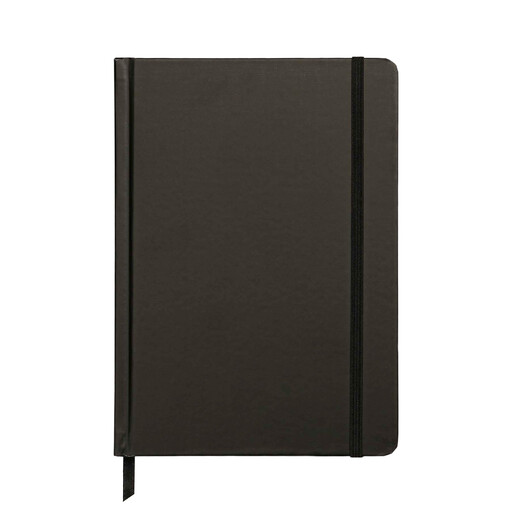
Why this choice suits this profile: Its A5 size and undated layout mean you can start without waiting for a specific date, whether for study, work or personal life.
The undated format means you don’t pay for unused pages when your organising is occasional or starts partway through the year.
224 pages, 100 g/m² offset paper, hard cover, bookmark and elastic closure.
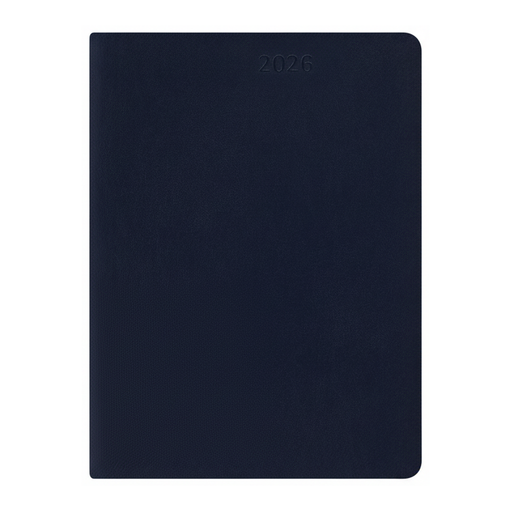
Why this choice suits this profile: This large dated planner is for those who want to combine calendar, goals, travel and notes in a single format.
The sections for calendars, travel, goals and notes mean you don’t have to juggle between several notebooks.
XL format, elastic closure, expandable inner pocket, stickers and 70 g/m² acid-free ivory paper.
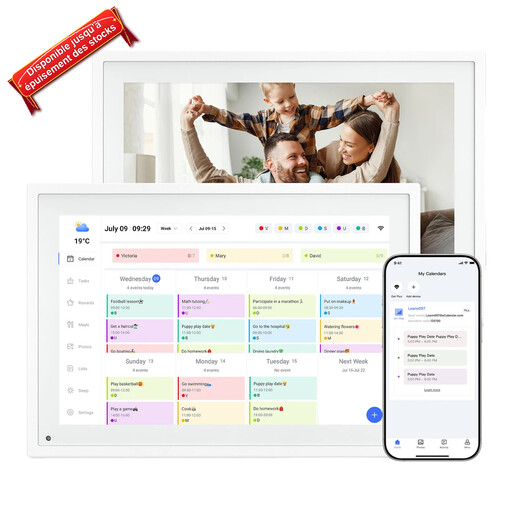
Why this choice suits this profile: Its 10.1-inch screen and two-way syncing via a mobile app meet the needs of a household or team sharing the same schedule.
Managing it from an app reduces the risk of leaving a family schedule on display that’s no longer up to date.
Wi-Fi connection, digital calendar display and syncing with a mobile phone.
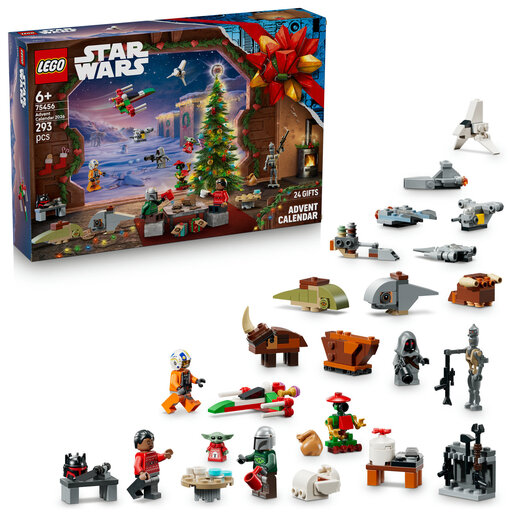
Why this choice suits this profile: This calendar will appeal to children and collectors who enjoy building a new Star Wars-themed item each day.
The listing details the contents: 293 pieces, characters and eight mini-vehicles. That makes it easy to compare the product before buying.
One opening each day, hands-on building, compatibility with other LEGO Star Wars sets and a recommended age of 6 and over.
We’ve put together a comprehensive, real-time updated selection of products that meet these exacting criteria, while complying with European safety regulations.
A5 is a good fit for most people who want comfortable writing space without sacrificing portability. A larger model will be better for a detailed work schedule or if you mainly use it at the office. For school, a 21 × 27 cm weekly planner offers more room for lessons, homework and appointments.
It all depends on the quality of the cover, binding and paper, as well as how the planner is carried. A hard cover, an elastic band and storing it away from moisture will help limit wear and tear. For more flexible use, an undated 18-month planner lets you adjust its actual lifespan to your own pace.
Energy consumption depends on the type of screen, its brightness, the connection and how long it’s running. Before buying, check the technical specifications and plan a spot near a power socket. To keep consumption down, enable standby mode or the automatic scheduling feature if the device offers it.