
Livraison le jour même ou le lendemain

Qualité garantie

Débloquez vos offres de bienvenue: Livraison GRATUITE | Jusqu'à -80 % | 30 jours d'essai gratuits à JoyPlus
Téléchargez l'application
A 2026 planner agenda should adapt to the way you work, study or manage your personal activities. However, product descriptions often focus on the cover, stickers or page count without specifying the features that truly matter in everyday use.
Before buying a 2026 weekly planner, a 2026 daily planner or an undated model, check three points: the period covered, the layout and the durability of the materials. This will allow you to compare models based on practical criteria rather than being guided solely by appearance.
A dated agenda running from January to December 2026 is suited to a schedule aligned with the calendar year. It allows you to see appointments and deadlines at a glance, but any unused pages are lost if you start using it partway through the year.
By contrast, an undated A5 planner can be started at any time. You will, however, need to fill in the dates and days yourself. The undated Jubiluu A5, presented as an 18-month agenda, includes monthly and weekly views to complete. It is a practical choice for accompanying a career change, a personal project or a schedule that does not follow the traditional calendar.
A weekly view works well for appointments, classes and everyday tasks. However, it may not provide enough room when your days are packed. A page-per-day layout offers more space for lists, notes and schedules, but makes the agenda bulkier.
For an agenda dedicated to goals and notes, focus on how the space is actually distributed: a separate notes area, dedicated pages for ideas or projects and, where relevant, a travel-planning section will be more useful than purely decorative elements.
An agenda with a hardcover will generally withstand repeated handling in a bag better. In return, it may be heavier and less flexible. A softcover is easier to carry, but provides a different level of protection for the pages.
An elastic closure, bookmark and inner pocket are genuinely useful features in everyday use. Stickers allow you to personalise your agenda, but they cannot make up for an unsuitable layout. Also check that the binding opens sufficiently flat for comfortable writing.
The A5 format, measuring approximately 14.8 × 21 cm, offers a good balance between readability and portability. It is equally suitable for studying, working and taking notes. A larger format provides more room, but consider the thickness and weight if you regularly carry your agenda between home, the office and university.
If you travel frequently, an expandable pocket can hold tickets or a few papers. Avoid filling it to the point where it distorts the binding.
Paper weight refers to the weight of the paper per square metre. 100 g/m² paper, such as that used in the Jubiluu, is thicker than 70 g/m² paper, which is used in several Moleskine models featured here. However, this figure alone cannot predict how the paper will perform with every pen: the nib, ink and writing pressure also play a role.
Ivory or off-white paper provides a softer contrast than a bright white finish. If you write extensively, check photos of the inside pages and the manufacturer’s technical specifications rather than relying solely on the word “premium”.
A dated 12-month agenda generally covers the period from January to December 2026. A 2026–2027 academic planner follows the rhythm of the school or university year instead. The L’Etudiant model featured below covers this period and provides one page per day.
An undated agenda advertised for 18 months offers a flexible usage period. However, the number of months actually covered depends on how much space you allocate to the daily, weekly and monthly sections. For a personal organiser used throughout the year, choose a cover that is easy to clean and a closure that keeps the pages securely in place.
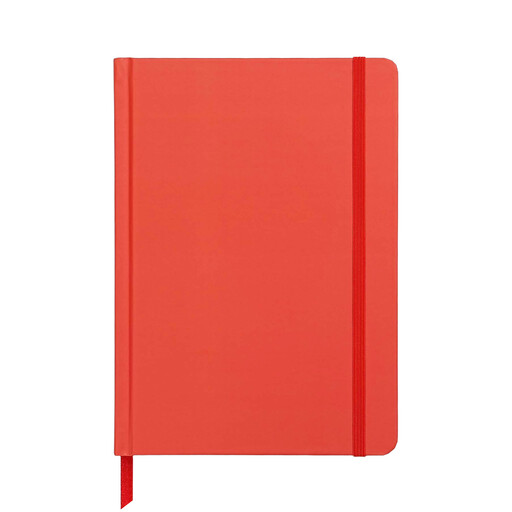
Why this model is a good fit: its A5 format suits students, employees and individuals who want to start getting organised without waiting until January.
The monthly and weekly pages are undated, so unused weeks are not left printed for no reason.
Hardcover, 224 pages, 100 g/m² lined offset paper, bookmark and elastic closure.
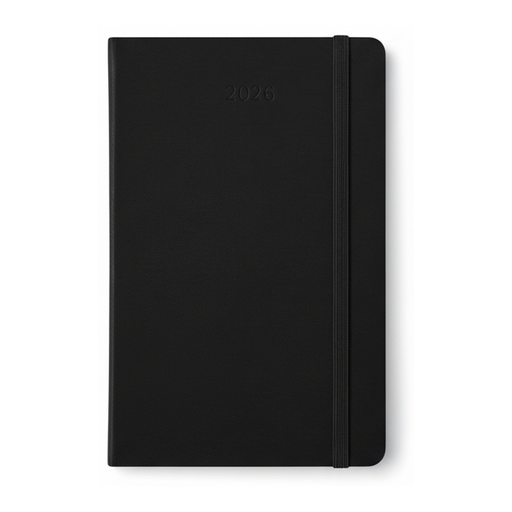
Why this model is a good fit: professionals and creatives benefit from a horizontal two-page spread for arranging appointments, tasks and ideas.
The description clearly explains how the days are arranged instead of implying that every day has a full page.
Soft and hard faux-leather covers, elastic closure, bookmark, inner pocket and 180° lay-flat opening.
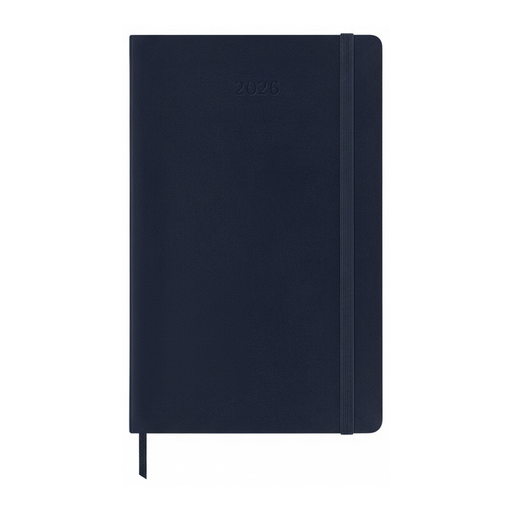
Why this model is a good fit: one page per day leaves plenty of room for appointments, to-do lists, meeting notes and personal thoughts.
The daily layout is clearly specified, helping you avoid buying a weekly planner when your schedule requires more detail.
Pages dated from January to December 2026, elastic closure, bookmark, inner pocket and sections dedicated to goals, ideas and travel.
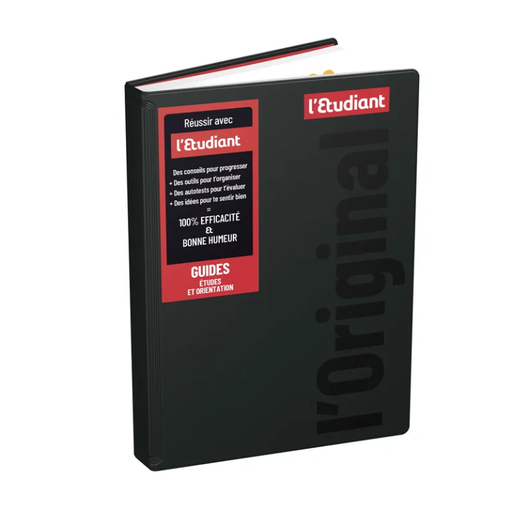
Why this model is a good fit: its academic calendar and 15 × 21 cm format are designed for classes, assignments, exams and student activities.
The 2026-2027 period is clearly stated, unlike calendar-year agendas that end in December.
352 pages, one day per page, spiral binding, semi-rigid cover and simple ruled pages.
Explore an up-to-date selection of planners and agendas suited to different formats, periods and uses.
It depends on how frequently you use it. The Jubiluu includes 224 pages as well as undated monthly and weekly sections. You can start using it at any time, but the number of months covered varies depending on how much space you dedicate to notes and daily planning.
A weekly planner displays several days across the same two-page spread: it offers a useful overview and is generally more compact. A daily planner reserves one page for each date: it suits busy schedules, detailed lists and journalling, but takes up more space.
Store it in a dry place, away from humidity and direct heat. Clean the cover with a soft, dry cloth, fasten the elastic during transport and avoid overloading the inner pocket. Stickers and small parts should be kept out of reach of children under 3 years of age.