
Livraison le jour même ou le lendemain

Qualité garantie

Débloquez vos offres de bienvenue: Livraison GRATUITE | Jusqu'à -80 % | 30 jours d'essai gratuits à JoyPlus
Téléchargez l'application
Choosing the right PLA filament can be the difference between a mundane 3D print and a true masterpiece. But with a jungle of available options, from basic materials to iridescent and technical variants, it's hard to know where to start. Whether you're a figurine designer, an engineer prototyping a part, or simply a passionate maker, finding the perfect PLA spool for your project is crucial.
This guide is here to demystify the different types of 3D printer filament and introduce you to a selection of products that stand out from the crowd. The goal: to help you make the right choice for your 2026 prints.
Before you buy, here are a few essential criteria to consider. They will help you better understand the specifics of each filament.
PLA (Polylactic Acid) is the star material of FDM 3D printing. It's loved for its ease of use and low risk of warping. However, it comes in several variations:
One of the great strengths of PLA is its nearly infinite color palette. Beyond solid shades, some more complex filaments allow for unique visual results:
The biodegradable PLA argument is often highlighted. Be aware, this term refers to its ability to decompose under industrial composting conditions (high temperature and controlled humidity), not in your garden composter. Nevertheless, it remains an interesting option as it is produced from renewable resources like corn starch.
Finally, one last crucial point: make sure the filament diameter (usually 1.75 mm) is compatible with your 3D printer.
Here are a few gems from the CAILAB filament brand that meet different needs, whether aesthetic or functional.
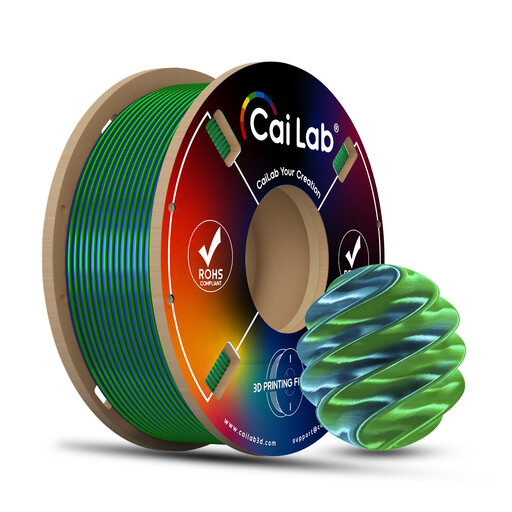
What makes it stand out This dual-color PLA filament blends a vibrant blue and green within a single strand. The "silk" effect enhances the shine and fluidity of the colors, giving objects a shifting, almost magical appearance depending on the viewing angle.
Advantages
Who is it for? Ideal for creators who want to bring decorative objects, toys, or figurines to life with a stunning visual effect. It's perfect for fantasy creatures, vases, or any model where color is king.
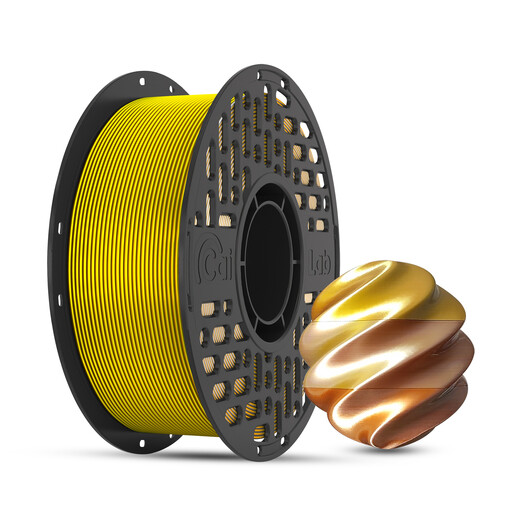
What makes it stand out This tri-color PLA filament is a premium choice for prints with a high-end metallic finish. It fuses three colors (gold, silver, and copper) to create a finish that subtly shifts with the object's geometry. The result is as luxurious as it is complex.
Advantages
Who is it for? Perfect for makers creating trophies, display models, costume jewelry, or decorative pieces that deserve a precious metallic appearance. An excellent choice to stand out from the crowd.
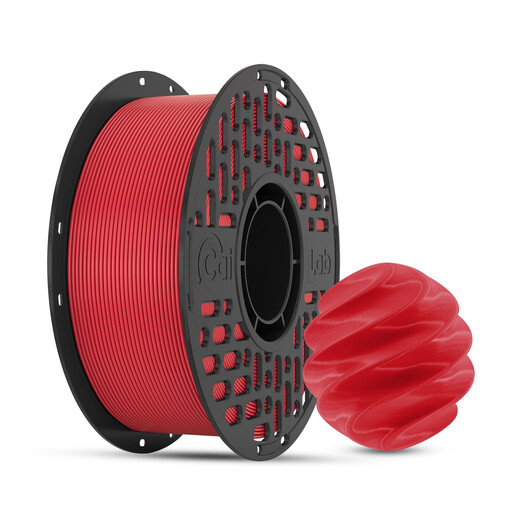
What makes it stand out This bright red PLA+ filament is designed to combine aesthetics with durability. Its PLA+ formulation aims to improve the material's toughness and strength compared to standard PLA, making it better suited to withstand stress for mechanical parts or functional prototypes.
Advantages
Who is it for? For engineers, designers, and hobbyists who need to print stronger parts: enclosures, brackets, simple gears, or prototypes intended for handling. It's the ultimate all-rounder filament for practical applications.
The filaments featured here are just a taste of the creative possibilities available to you. If you're looking for a specific shade or want to explore other visual effects, a wide range of choices awaits.
? Discover our complete collection of color filaments on Joybuy.fr
PLA+ filament is, as its name suggests, an improved version of classic PLA. Manufacturers generally formulate it to be less brittle and more impact-resistant. Although the exact performance varies from one brand to another, PLA+ is often recommended for functional parts that require better durability.
Biodegradable PLA is derived from renewable resources (like corn starch) and can indeed decompose, but be warned: only under industrial composting conditions (temperature above 60°C, specific humidity, and microorganisms). It will not break down in a garden composter or in nature. Its true environmental advantage, therefore, lies in its plant-based origin rather than being fossil-fuel-based.
PLA is a hygroscopic material. Simply put, it absorbs moisture from the air. A filament that has absorbed moisture is a recipe for a failed print (bubbles, popping sounds during extrusion, poor surface quality). To preserve your PLA spool, it is imperative to store it in an airtight bag with a desiccant packet (silica gel) when not in use. Dry storage is crucial.