
Livraison le jour même ou le lendemain

Qualité garantie

Débloquez vos offres de bienvenue: Livraison GRATUITE | Jusqu'à -80 % | 30 jours d'essai gratuits à JoyPlus
Téléchargez l'application
Choosing the right PLA filament can be a daunting task given the overwhelming number of options available. Standard or "high-speed," PLA+, bio-based... it's easy to get lost in the marketing claims and technical specs. This guide is here to cut through the clutter and help you find the perfect spool for your projects, whether you're a passionate maker, a demanding professional, or an educational institution.
Before diving into our selection, let's review the key factors that will make all the difference.
Print speed is now a major criterion. A standard filament is sufficient for most projects, offering an excellent balance between quality and print time. However, to optimise production or rapidly iterate through prototypes, a high-speed PLA is almost essential. Their special formulation ensures stable extrusion and perfect adhesion even at breakneck speeds (often exceeding 300 mm/s). The time savings are significant, without sacrificing the final part's strength.
Polylactic acid (PLA) remains the star material of 3D printing, praised for its ease of use and plant-based origin. PLA+ (sometimes sold as PLA Pro or Tough PLA) is an enhanced version. In theory, its additives give it better mechanical properties: increased impact resistance and greater flexibility than standard PLA. This makes it a relevant choice for functional parts or objects that will undergo light mechanical stress.
The vast majority of consumer-grade FDM 3D printers use 1.75 mm diameter filament. The real challenge is dimensional accuracy. A tight tolerance (e.g., +/- 0.02 mm) is the guarantee of a consistent material flow. In practical terms, this means a lower risk of nozzle clogging (the dreaded "clogging") and a much cleaner surface finish. The 1 kg PLA spool remains the standard format, offering the best quantity-to-price ratio and simplified inventory management.
Let's move on to our selection. We've chosen a few standout products that meet very specific needs.
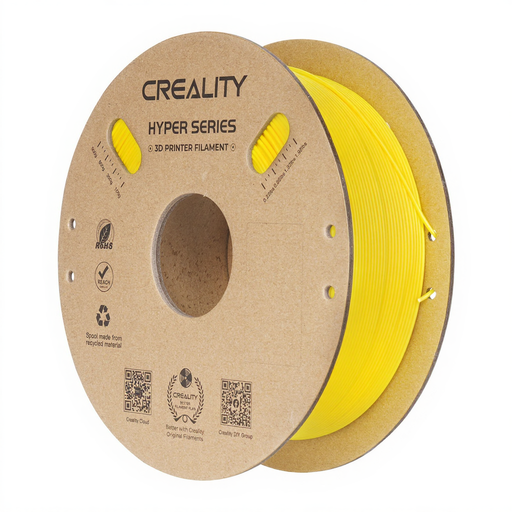
Why it stands out: This filament was designed for the new generation of ultra-fast 3D printers. Its formulation allows it to handle print speeds up to 600 mm/s, making it a powerful ally for productivity.
Key features:
Who is it for? For owners of high-speed 3D printers who want to slash their print times, whether for prototyping or small-batch production.
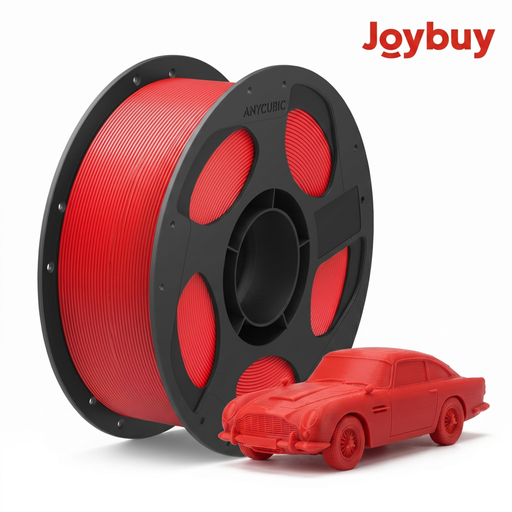
Why it stands out: This filament is the sensible choice: a reliable and versatile workhorse for everyday use. Born from a collaboration between ANYCUBIC and Joybuy, it was designed to offer a simple, no-fuss printing experience.
Key features:
Who is it for? For beginners, makers, and educational institutions looking for a reliable PLA filament for consistent, hassle-free printing.
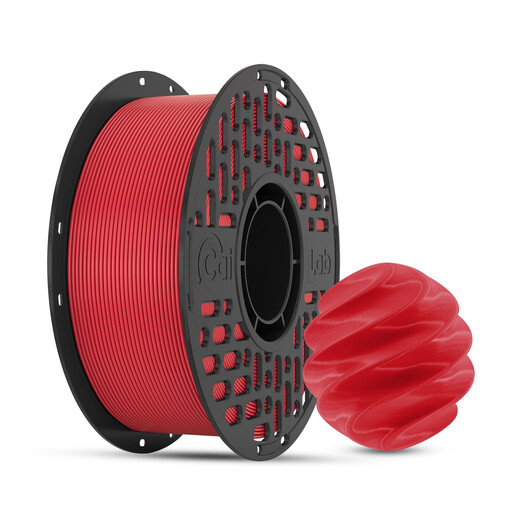
Why it stands out: This filament is marketed as a PLA+, which suggests enhanced mechanical properties. Its vibrant colour and formulation make it a smart choice for parts that need to combine aesthetics with improved durability.
Key features:
Who is it for? For creators printing mechanical parts, enclosures, or objects that require durability a notch above that of standard PLA.
Our selection covers the most common needs, but every project is unique. Whether you're looking for a specific colour, another material (PETG, ABS, TPU...), or simply more options, feel free to explore our full catalogue.
? Discover our full range of 3D printer filaments
PLA+ is a "boosted" version of standard PLA. Manufacturers incorporate additives to improve certain properties. Generally, PLA+ is advertised as being less brittle, more impact-resistant, and sometimes slightly more flexible. It's a good alternative for functional parts, as long as they are not exposed to heat (both PLA and PLA+ have poor heat resistance).
PLA is hygroscopic, meaning it absorbs moisture from the air. Filament that has absorbed moisture will cause bubbling during extrusion ("popping"), degrade the surface finish, and weaken the final part. To prevent this, the golden rule is to store your 1 kg spool in an airtight bag or box, along with a silica gel packet (desiccant) to trap any residual moisture.
Yes, absolutely. A high-speed PLA will work on a standard printer, but with no performance benefit. These filaments are formulated to melt and solidify very quickly at high material flow rates. On a slower machine, it will behave like a good quality standard PLA, but you'll be paying a premium for a speed you can't leverage. To take advantage of it, you absolutely need a printer capable of reaching high speeds and accelerations.
By the Joybuy Product Selection Manager