
Livraison le jour même ou le lendemain

Qualité garantie

Débloquez vos offres de bienvenue: Livraison GRATUITE | Jusqu'à -80 % | 30 jours d'essai gratuits à JoyPlus
Téléchargez l'application
3D printing opens up a world of possibilities, but choosing the right material can quickly become a headache. Between the various product lines and manufacturer promises, it's hard to know where to start. Whether you're a passionate maker, a professional churning out prototypes, or a school, finding the perfect PLA filament shouldn't hold you back.
This guide is here to demystify the subtleties of PLA and introduce our selection of the best filaments on the market. The goal? To help you make the right choice—one that truly matches your projects and your 3D printer.
Before you jump on the first spool you see, let's review the key points.
PLA (Polylactic Acid) is the star of the filament world, and for good reason: it's easy to print and is virtually warp-free (warping). It's the default choice for getting started. But PLA comes in several flavours for more specific needs:
Forget monochrome spools! Special filaments like rainbow PLA filament are a game-changer, offering a colour gradient along the entire length of the PLA spool. Each print becomes a unique piece, without having to juggle multiple filaments. It's the makers' secret for large-format decorative objects with a stunning visual effect.
Make sure the filament diameter (most commonly 1.75?mm) matches your 3D printer. Each spool also has its own preferred settings (extrusion temperature, heated bed, etc.). Following these recommendations to the letter is the key to a first layer that sticks and flawless print quality. In fact, a good filament is recognisable by its consistent diameter, a guarantee of reliability and snag-free prints.
To help you turn ideas into objects, we've selected a few gems from the CAILAB filament brand, each with its own specialty.
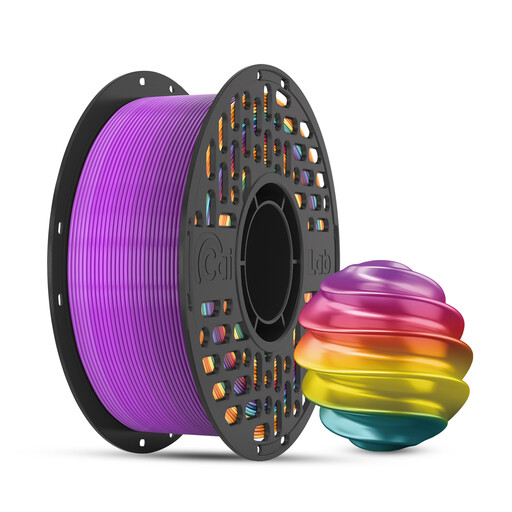
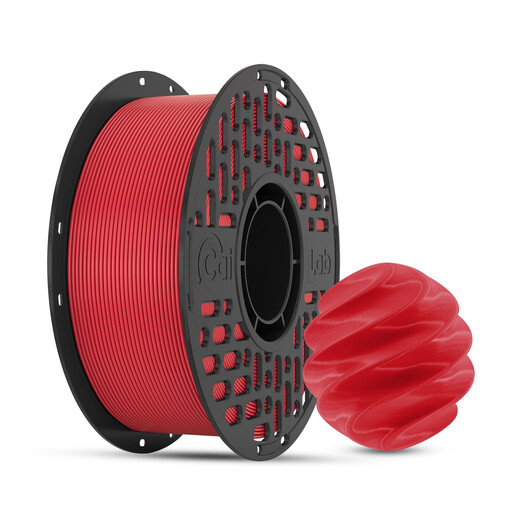
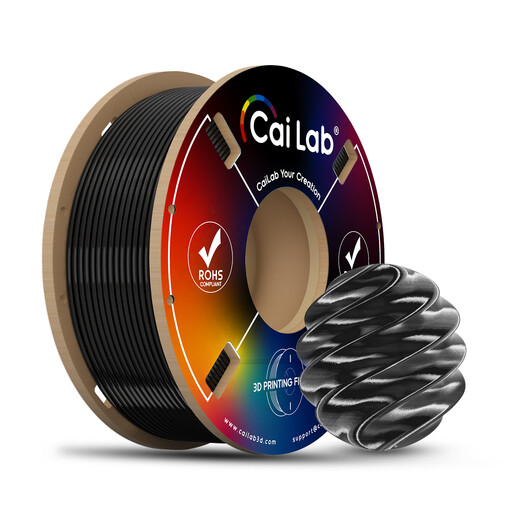
This selection is just a taste of the possibilities offered by PLA filament. Do your projects require other colours or special effects, or do you simply want to explore other materials?
To discover more shades and finishes, explore our complete collection of coloured filament.
In short, PLA+ is an enhanced, tougher version of PLA. Thanks to additives, it's less brittle, more impact-resistant, and offers better layer adhesion. This makes it ideal for functional parts. Standard PLA remains perfect for rapid prototyping and decorative objects.
PLA is a bioplastic, derived from renewable resources like corn starch. It is considered "biodegradable," but be careful: this only applies under industrial composting conditions (high temperature, controlled humidity). Don't expect it to disappear in your garden compost or in nature. However, it remains a much better alternative to petroleum-based plastics.
PLA is humidity's worst enemy (it's described as hygroscopic). A spool of PLA that has absorbed moisture will lead to failed prints (bubbles, grainy surface, brittle filament). The best practice? Always store your spools in an airtight bag or box with the provided silica gel packets. If the damage is already done, a filament dryer or a short time in an oven at a very low temperature can save your spool (follow the manufacturer's instructions to the letter to avoid melting it!).