
Livraison le jour même ou le lendemain

Qualité garantie

Débloquez vos offres de bienvenue: Livraison GRATUITE | Jusqu'à -80 % | 30 jours d'essai gratuits à JoyPlus
Téléchargez l'application
The PLA filament market can feel like a jungle. Between aesthetic finishes like matte PLA filament or silk PLA filament, and performance versions like high-speed filament, it's hard to navigate. Yet, choosing the right spool for your 3D printer is crucial for the success of your projects.
This guide is here to shed some light. Our mission at Joybuy is to give you the keys to a smart, informed purchase. Follow along as we break down the selection criteria and unveil our picks for the best filaments available today.
Before you click "?Buy?", there are several points to check. They will ensure you choose a filament that is perfectly suited to your projects and your machine.
The vast majority of consumer FDM 3D printers use a filament with a 1.75?mm diameter. It's the de facto standard, offering an ideal combination of precision and ease of extrusion. A quick look at your machine's spec sheet will confirm compatibility, but with few exceptions, this is the diameter you'll need. Another mark of quality? Dimensional tolerance. A low value (e.g., ±?0.02?mm) ensures a consistent flow rate and greatly reduces the risk of nozzle clogs.
While standard PLA offers a slightly glossy finish, new formulations have opened up a world of possibilities with radically different results:
New-generation 3D printers are incredibly fast, and high-speed filament was created to keep up the pace. Where a standard PLA struggles and causes defects (underextrusion) above 150?mm/s, these newcomers are designed to remain fluid even at very high temperatures. Filaments like Creality's Hyper PLA allow for reliable printing up to 600?mm/s on compatible machines.
We've selected three filaments that stand out from the crowd, each meeting a specific need: spectacular visual effects, maximum printing speed, or an artistic finish.
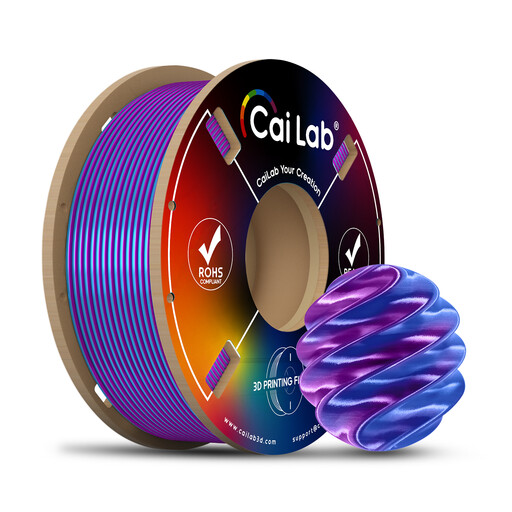
Why it stands out: Its dual-colour effect is simply stunning. The purple and blue are co-extruded into a single strand. The result? The colour of the printed object subtly changes depending on the viewing angle, creating a dynamic gradient and a unique look with no post-processing required.
Advantages:
Who is it for?: For creators, artists, and makers who want decorative pieces, toys, or art objects with a captivating finish right off the print bed.
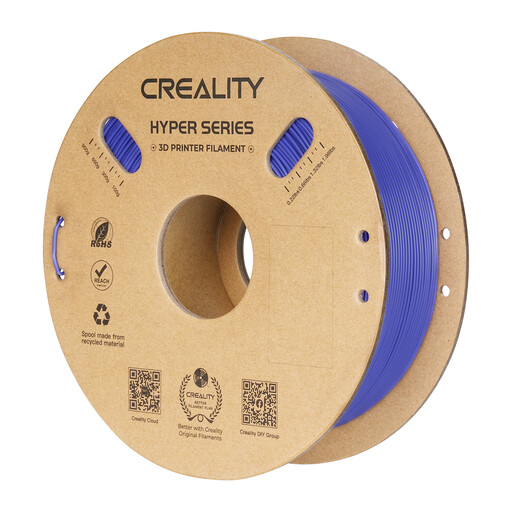
Why it stands out: Built for speed. This Creality filament is optimised for the fastest 3D printers on the market. Its high-fluidity formula handles printing speeds of up to 600?mm/s without breaking a sweat, slashing production times without compromising on quality.
Advantages:
Who is it for?: For owners of high-speed printers (Creality K1 series, Ender V3, etc.) who churn out prototypes, run small production batches, or simply want to print faster.
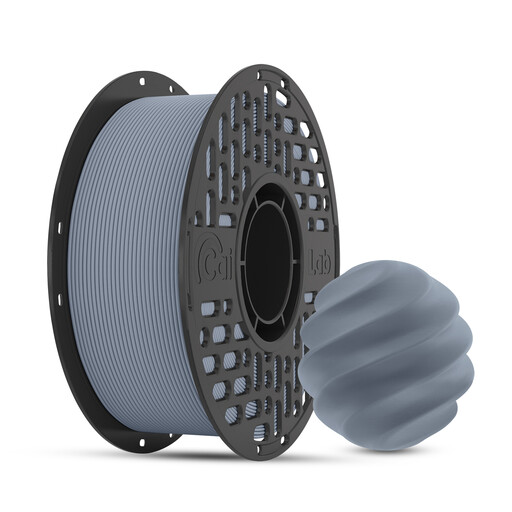
Why it stands out: This matte PLA filament is recognisable by its elegant, non-reflective surface finish. Its key advantage? It wonderfully conceals layer lines, giving objects a smooth and professional look that's almost worthy of injection moulding.
Advantages:
Who is it for?: For designers, architects, and makers creating presentation models, electronics enclosures, or any part where finish quality is non-negotiable.
Our selection highlights filaments with distinct properties. If you're looking for a specific colour or simply want to explore more options, take a look at our full range.
Discover all our blue PLA 3D filaments.
PLA+ (sometimes called PLA Pro or Tough) is an improved version of standard PLA. Manufacturers incorporate additives to boost some of its properties, particularly impact resistance and flexibility. The result: it's less brittle than classic PLA, making it a better candidate for mechanical parts that need to withstand moderate stress.
PLA is hygroscopic: it readily absorbs moisture from the air. A filament that has absorbed moisture leads to failed prints: bubbles during extrusion, grainy surfaces, and brittle parts. The best practice? Always store it in an airtight bag with a desiccant packet (silica gel), away from light and heat.
Yes, in the vast majority of cases. As long as you use the diameter required by your machine (most often 1.75?mm), you are free to switch between brands. Be aware, however, that recommended extrusion temperatures can vary from one manufacturer to another (usually between 190°C and 220°C). The pro tip: print a small "temperature tower" with each new spool to find the perfect setting.