
Livraison le jour même ou le lendemain

Qualité garantie

Débloquez vos offres de bienvenue: Livraison GRATUITE | Jusqu'à -80 % | 30 jours d'essai gratuits à JoyPlus
Téléchargez l'application
3D printing has democratised creation, opening up an infinite field of possibilities for makers, designers, and the simply curious. The reigning material in this universe is PLA filament, praised for its ease of use and versatility. But the market is a jungle. Faced with an overwhelming number of options, how can you avoid the classic pitfalls that turn a printing session into a nightmare? Failed prints, lost time, wasted money... it's a familiar story. As the Head of Product Recommendations at Joybuy, my mission is to guide you through this jungle so that your next purchase is the right one.
This guide gets straight to the point: we'll break down the criteria that really matter and reveal the beginner mistakes you need to stop making. So that every spool turns into a creation you can be proud of.
Before we get into the technical details, let's review the three most common traps. Knowing them is the first step to ensuring much smoother prints.
To be sure of your print quality, don't compromise on certain technical points. These are the true markers of a spool's performance.
The market standard for consumer 3D printers is 1.75 mm PLA filament. But this nominal diameter doesn't tell the whole story. The real heart of the matter is dimensional tolerance. A tight tolerance, around ±0.02 mm, guarantees a perfectly consistent flow of material through the extruder. A wider variation opens the door to under-extrusion (not enough material) or nozzle clogs, two scourges that can ruin hours of printing.
PLA is no longer just about solid colours and a glossy finish. New variants multiply the creative possibilities, each with its own set of rules:
The CaiLab brand, for example, has made a speciality of these unique filaments, with a well-stocked catalogue for all creative projects.
Forget the myth of the 'one-size-fits-all' filament. The right choice is the one that matches your project and your creative goals. Here is our selection to guide you.
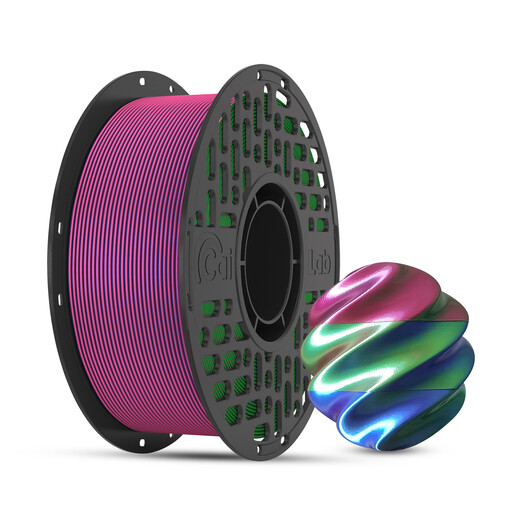
Why we chose it: Ideal for artists and makers who want parts with a spectacular finish. The colour-shifting effect, which changes depending on the viewing angle, guarantees a truly unique object.
This tri-colour filament is formulated for a controlled result. Once you understand that the effect depends on the geometry, you sidestep the "disappointing colours" trap and can even design your models to make the most of it.
Getting objects with a complex multicolour look from a simple single-extruder 3D printer becomes child's play.
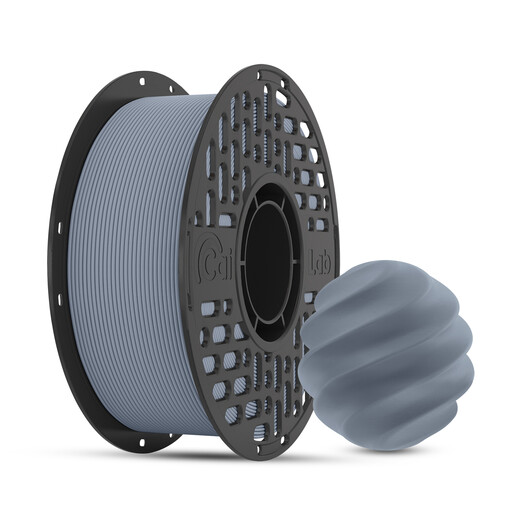
Why we chose it: Essential for designers and engineers creating functional prototypes or models. Its matte finish is incredibly effective at hiding layer lines, ensuring a clean, professional look.
This matte PLA's formula is optimised for a consistent flow, limiting the risk of clogging that is common with additive-heavy filaments. Its vacuum-sealed packaging protects it from the humidity trap.
An impeccable surface finish that significantly reduces post-processing (sanding, priming, etc.) and provides an instant premium look.
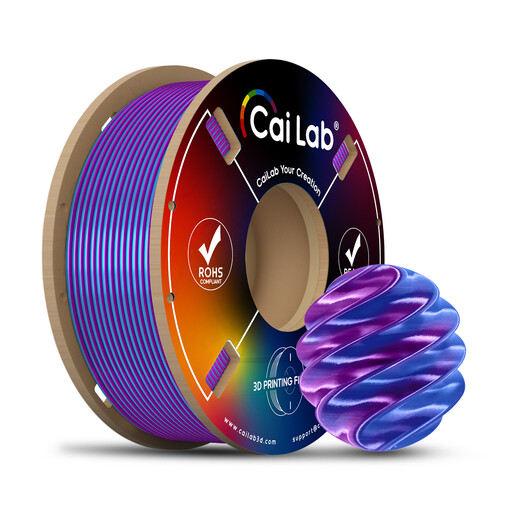
Why we chose it: For anyone who wants to breathe a little magic into their creations. The co-extruded dual-colour effect produces a subtle gradient that plays with the light, ideal for decorative objects or gifts that are out of the ordinary.
This "silk" filament rewards patience. By sticking to a moderate print speed (between 30 and 60 mm/s), you sidestep the "high-speed mirage" trap to achieve a spectacular satin finish.
Creates a colour-shifting effect and a deep shine for an instant premium look.
We have put together a complete selection of filaments that meet our demanding specifications. If you're inspired by shades of blue, our range should have what you're looking for.
1. How do I properly store my PLA filament to prevent it from becoming brittle? Storage is key. Always keep your spools of PLA filament in a cool, dry place. The ideal solution? A zip-top bag or an airtight storage box, with a few packets of silica gel (desiccant) to trap moisture. It's the best insurance for preserving its properties between prints.
2. What is the recommended print speed for silk PLA filament? To get that famous glossy finish unique to silk PLA filament, the secret is to slow down. Aim for a speed between 30 and 60 mm/s. By slowing down, you give the material time to cool evenly, which enhances the surface's shine.
3. Is PLA filament suitable for food-contact objects? The short answer is no. Although PLA is plant-based, Fused Deposition Modeling (FDM) printing creates a porous surface with micro-gaps where bacteria love to grow. Furthermore, the pigments and additives that give the filament its colour and texture are rarely certified for food use. For this type of application, it is imperative to use filaments specifically certified as "food-safe" and to follow an extremely rigorous printing and post-processing protocol.