
Livraison le jour même ou le lendemain

Qualité garantie

Débloquez vos offres de bienvenue: Livraison GRATUITE | Jusqu'à -80 % | 30 jours d'essai gratuits à JoyPlus
Téléchargez l'application
Choosing the right 1.75?mm PLA filament can be the difference between a frustrating 3D printing session and a seamless creative experience. The problem? The market is saturated with options, and marketing promises often hide flaws that can cost you dearly. As the head of product recommendations at Joybuy, my mission is to guide you through this maze to find the 3D printing consumable that truly meets your needs, without letting you get fooled by misleading technical jargon.
Before you start, here are three classic pitfalls that can ruin your prints and burn through your budget:
To avoid these setbacks, focus on a few technical indicators that don't lie. These are the true guarantors of a quality filament for your 3D printer.
This is the fundamental criterion. A good filament must maintain a perfectly consistent diameter throughout its entire length.
PLA (Polylactic Acid) is the go-to material for beginners, but its variants cater to more specific needs.
Moisture is filament's worst enemy. Material that has absorbed moisture will produce brittle prints, riddled with bubbles and a poor surface finish. Ensure the spool is delivered in vacuum-sealed packaging with a desiccant packet (silica gel). Neat, tangle-free winding is also a mark of quality that will save you many headaches.
Rather than searching for a non-existent "one-size-fits-all" product, it's better to choose a filament tailored to your profile and projects. Here are our recommendations.
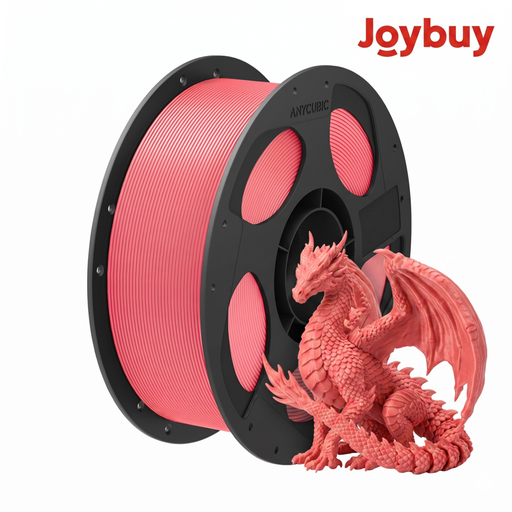
Why we chose it: This filament is an excellent starting point. Standard PLA is easy to master, and the Anycubic brand is known for its consistency, which reduces the variables when you're learning to calibrate your printer.
With a strict tolerance of ±0.02 mm, it counters the variable diameter pitfall, ensuring reliable extrusion and minimising the risk of clogging—a nightmare for beginners.
Unbeatable value and high reliability, allowing you to focus on learning 3D printing rather than troubleshooting your filament.
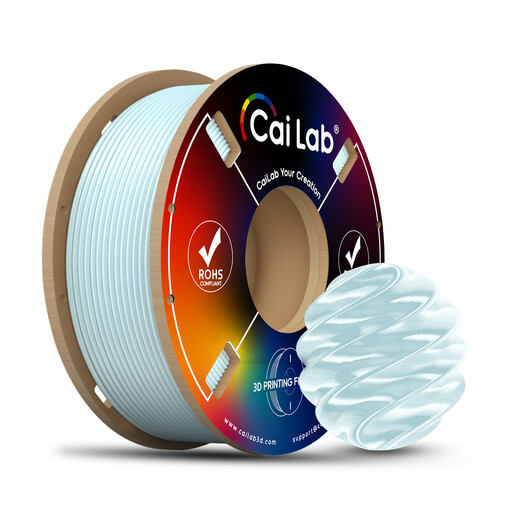
Why we chose it: For those who print decorative objects, vases, or figurines, the visual finish is paramount. The silk PLA filament offers a glossy, satin finish that hides layer lines and gives creations a high-end look.
It directly addresses the pitfall of disappointing finishes by delivering a unique and sought-after visual effect that transforms a simple object into a premium-looking piece.
A unique silky finish that plays with light for a smooth, professional result. Ideal for projects where aesthetics take precedence over mechanical strength.
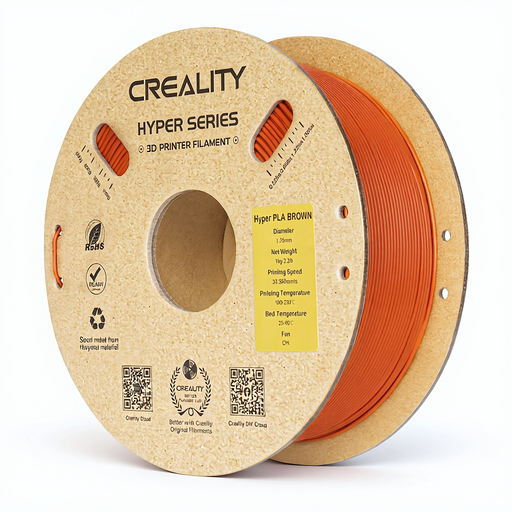
Why we chose it: Modern 3D printers are getting faster and faster. To unlock their full potential, a high-speed filament is essential. This PLA is specially formulated to melt and solidify more quickly without sacrificing surface quality.
It prevents the frustration of using a standard filament on a high-speed machine, which would cause severe under-extrusion. It is specifically designed to keep up.
Enables printing speeds up to 600 mm/s according to the manufacturer, drastically reducing wait times for prototypes and large parts while maintaining excellent layer adhesion.
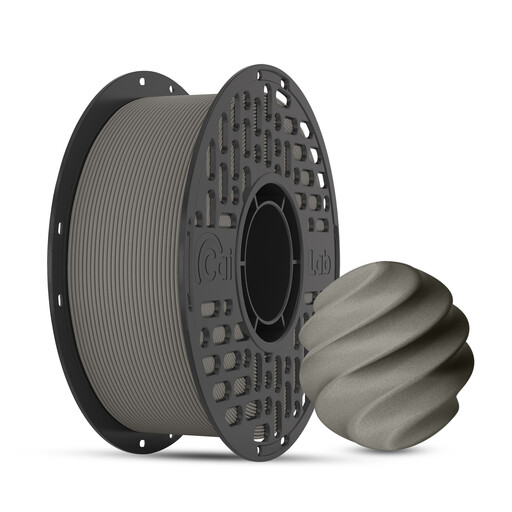
Why we chose it: When strength and rigidity are non-negotiable criteria (for functional parts, brackets, enclosures, etc.), PLA quickly shows its limits. Carbon fibre-reinforced PETG filament is an excellent alternative for parts designed to last.
It avoids the trap of using an unsuitable material (like PLA) for a mechanical application, which would lead to part failure. It offers vastly superior mechanical properties.
Significantly improved rigidity and tensile strength compared to standard PETG, with a very professional matte finish. Note: this abrasive material requires a hardened steel nozzle.
For even more creative projects, we've curated a selection of filaments with spectacular gradients, all of which meet our quality criteria.
When stored correctly, a spool of filament can last for several years. The key factor is humidity. A spool left in the open air in a humid room can become unusable in just a few months. To preserve it, keep it in an airtight bag with its desiccant packet, or better yet, in a dedicated storage box.
PLA is often described as "biodegradable," but this term needs clarification. Its degradation requires industrial composting conditions (high temperatures and humidity) that are never met in a home compost bin or in nature. It will not break down in a standard landfill either. It is therefore important to dispose of it according to local plastic recycling guidelines.
To reach the maximum speeds advertised by manufacturers (e.g., 600?mm/s), you do need a printer designed for it, typically a recent model equipped with firmware like Klipper. However, this type of filament can certainly be used on a standard printer at normal speeds, where it will still offer excellent flow.