
Livraison le jour même ou le lendemain

Qualité garantie

Débloquez vos offres de bienvenue: Livraison GRATUITE | Jusqu'à -80 % | 30 jours d'essai gratuits à JoyPlus
Téléchargez l'application
Are you looking for a PLA filament 1.75 mm 1 kg for your 3D printer and feeling unsure whether to go for PLA, PLA+ or PLA Silk? The diameter and weight of the spool alone aren't enough to guarantee consistent prints. Approximate compatibility, poorly stored filament or a speed that's too high can lead to uneven layers, clogs and repeated failures.
The Joybuy Product Recommendation Officer's selection is based on concrete criteria: compatibility with an FDM printer, ease of settings, intended use, colour finish and storage conditions.
Some spools of easy-to-print 3D filament boast an impressive maximum speed. In practice, the result also depends on the nozzle, volumetric flow rate, cooling, part geometry and print profile. So an advertised speed of up to 300 mm/s doesn't mean every printer will be able to reach it.
For a first spool, it's better to choose a forgiving formulation and start with the manufacturer's recommended settings. Fast filaments are interesting for prototyping, but they sometimes require a specific print profile.
The finish of a standard PLA, a PLA+ filament and a PLA Silk filament can vary enormously. PLA Silk offers a glossy, satin-like surface, but speed, temperature and cooling have a direct impact on the final appearance. Printing too fast, in particular, risks dulling the silky effect.
Metallic shades, such as silver, can also affect how visible the layer lines are. For a decorative piece, pay attention to the finish you're after. For a functional prototype, prioritise extrusion consistency and layer strength instead.
Even a good spool can produce stringing, bubbles or uneven extrusion after absorbing moisture. After each use, store it in an airtight bag with a desiccant agent. Also avoid leaving it near a window, a radiator or in a damp room.
The 1.75 mm diameter must match your FDM printer's extrusion system. A 2.85 mm spool won't work with a machine designed for 1.75 mm. Also check the nozzle type, the standard 0.4 mm diameter and the recommended temperature range on the product page.
Some products advertise a tolerance of ± 0.02 mm. This value indicates the maximum claimed variation in diameter and can help promote more consistent feeding. However, it doesn't remove the need to properly adjust the flow rate and temperature.
A 1 kg 3D filament spool offers a generous amount for batches of parts, prototypes and medium-sized objects. To compare prices, calculate the cost per kilogram and take into account waste from supports, test prints and purges.
For a functional part, don't choose a high-strength 3D filament based solely on its commercial name. Consult the technical data sheet, the claimed inter-layer adhesion and compatibility with your printing temperature. PLA remains sensitive to heat, so it's less suitable for objects exposed to high temperatures for long periods.
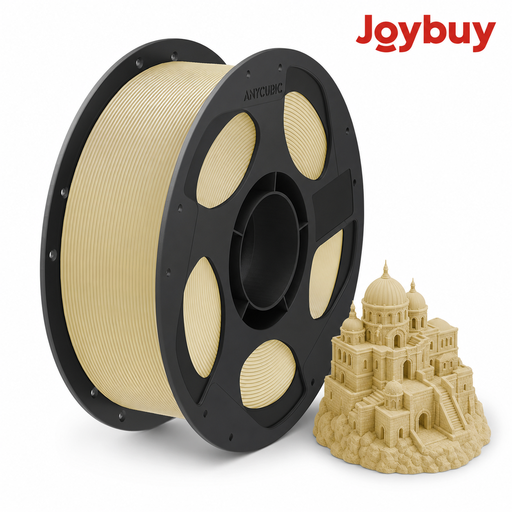
Why this choice suits this profile: Its 1.75 mm diameter, 1 kg packaging and easy-to-match beige colour make it a good foundation for first objects, models and simple prototypes.
The advertised tolerance of ± 0.02 mm provides a concrete benchmark, rather than relying solely on a promise of ease of printing.
A PLA presented as easy to print, with low warping and a 1 kg spool.
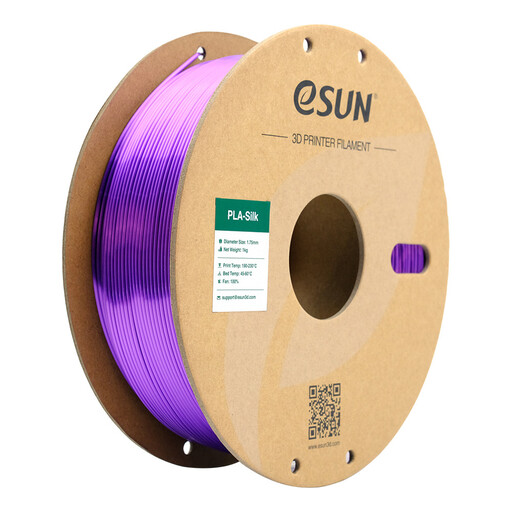
Why this choice suits this profile: Its glossy purple finish is aimed at creators of figurines, vases, decorative objects and artistic pieces.
The product page specifies that excessive speed can reduce the gloss, so you can adapt the profile to the desired finish.
A silky texture, vacuum-sealed packaging as stated, and a 1 kg pack.

Why this choice suits this profile: Its speed-oriented formulation suits frequent prototyping and creations that require many iterations.
The advertised flow rate and speed values are linked to specific conditions, notably using a 0.4 mm nozzle: treat them as benchmarks, not a universal guarantee.
A claimed flow rate of up to 35 mm³/s in certain configurations and a red shade suitable for accessories and scenery alike.
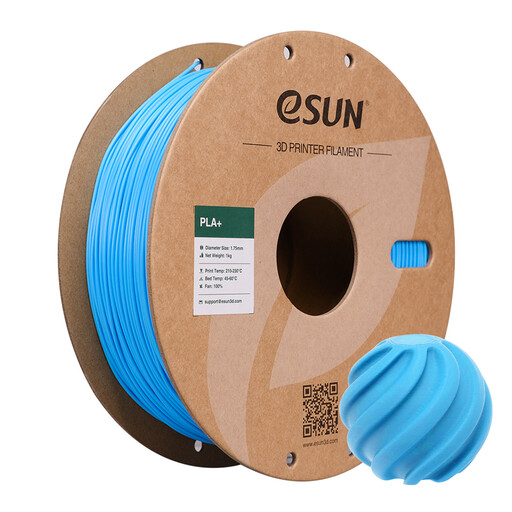
Why this choice suits this profile: According to the product description, this space blue PLA+ is aimed at prototypes, detailed models and objects that require more toughness than a standard PLA.
It doesn't rely solely on its colour: the product page mentions consistent extrusion, good inter-layer adhesion and limited warping.
A PLA+ formulation presented as tougher, a 1.75 mm diameter and a 1 kg spool.
We've put together a comprehensive, real-time updated selection of products that meet these demanding criteria as well as European safety requirements.
Before starting an important print, do a test with a small calibration piece. Gradually adjust:
Clean the nozzle when you change material or colour. A spool that is properly wound and protected from moisture also reduces the risk of print interruptions. For parts intended for mechanical use, consider the layer orientation and don't assume that PLA will withstand all thermal stresses.
No. It is intended for FDM printers equipped with a system compatible with 1.75 mm. Check the accepted diameter, nozzle temperature, bed temperature and your printer manufacturer's recommendations.
It depends mainly on storage conditions. Keep the spool in an airtight package with a desiccant, away from heat and moisture. If the filament becomes brittle or produces crackling sounds during extrusion, appropriate drying may be necessary.
Not necessarily. Compare the price per kilogram, the print failure rate, the amount of supports needed and the intended use. PLA+ can be a relevant choice for a part that is handled regularly, whereas a standard PLA will often suffice for a decorative model.