
Livraison le jour même ou le lendemain

Qualité garantie

Débloquez vos offres de bienvenue: Livraison GRATUITE | Jusqu'à -80 % | 30 jours d'essai gratuits à JoyPlus
Téléchargez l'application
Buying a PLA filament 1.75 mm, 1 kg for your 3D printer might seem straightforward. Yet a poorly chosen spool can lead to uneven prints, clogs, or a colour that's far from what you expected. Whether you're a beginner or a regular FDM printer user, a few simple checks are all it takes to avoid nasty surprises and unnecessary expense.
The 1.75 mm format works with most desktop FDM printers. However, it's still essential to check the diameter your extruder accepts. A machine designed for 2.85 mm filament won't be able to use a 1.75 mm spool, even if the material is PLA.
The stated tolerance also deserves your attention. A 1.75 mm 3D filament with minimal diameter variation promotes more consistent feeding. Several of the products featured here claim a tolerance of ±0.02 mm – a technical spec worth comparing, rather than just a promise of quality.
A silk or multicolour PLA filament can produce stunning results, but it doesn't behave exactly like standard PLA. Glossy filaments sometimes need a slower speed to preserve their surface finish. Cooling also needs careful adjustment on overhangs.
For your first spool, an easy-to-print PLA filament in a classic colour is often the simplest choice. Special finishes are better suited to decorative objects, figurines, vases, and projects where appearance matters as much as geometry.
PLA gradually absorbs moisture from the air. A spool left open in a damp workshop can cause popping sounds during extrusion, a less consistent surface, or reduced layer adhesion. After opening, store it in an airtight bag with a desiccant sachet, away from heat sources.
Check these three things before ordering:
A filament for an FDM printer must be guided smoothly from the spool to the nozzle. A poorly wound spool can tangle or jam, even when the filament diameter is correct. Products that mention consistent winding can help reduce this issue, but they don't replace a visual check on arrival.
PLA is generally easier to tune than materials that need a heated enclosure. However, nozzle temperature, flow rate, speed and cooling all depend on the filament's formulation and your printer. Start with the recommendations on the packaging, then adjust gradually.
Silk PLA filaments are particularly sensitive to print speed. Excessive speed can dull the surface shine. For technical parts, prioritise layer stability and dimensional accuracy first; for a decorative object, you can fine-tune the finish afterwards.
A 1 kg PLA spool is ideal for regular projects and saves you from having to change material too often. The actual amount you use depends on infill, layer height, and whether you use supports. A neutral colour like beige is practical for prototypes, mock-ups, or parts destined for painting. Blue, cyan, pink, orange, purple and gold are better suited to decorative creations.
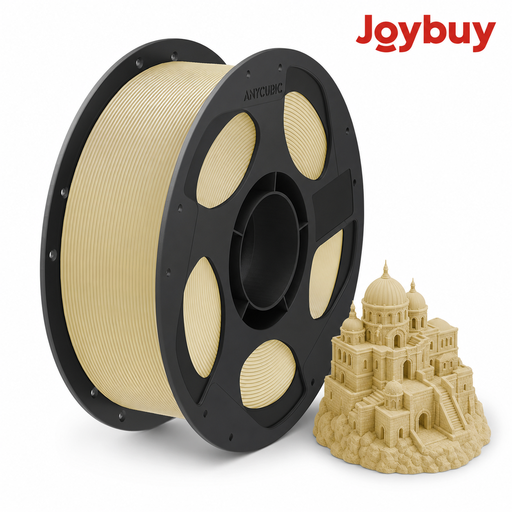
Why this choice suits this profile: Its 1 kg format and versatile beige colour make it ideal for first prints, prototypes and objects to be painted.
The 1.75 mm diameter and stated tolerance of ±0.02 mm provide precise benchmarks, rather than just a promise of versatility.
A PLA described as easy to print, with low warping according to the product description, in a 1 kg spool.
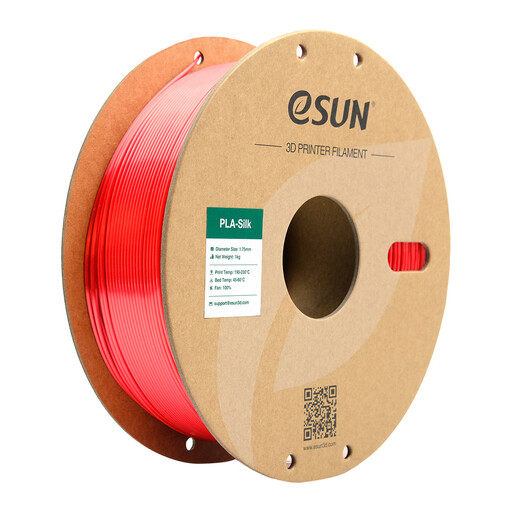
Why this choice suits this profile: Its glossy finish is aimed at artistic creations, vases and models where surface appearance is particularly important.
The product page states that speed can affect the gloss. So you know what to expect and can adjust your settings, rather than comparing this filament to a standard PLA.
A silk finish, 1 kg net weight and vacuum packaging with desiccant, according to the product description.

Why this choice suits this profile: This product targets users who print frequently and want to take advantage of a stated speed range of 30 to 600 mm/s, depending on their machine's configuration.
The stated speed isn't a universal guarantee – the nozzle, cooling and part geometry still play a decisive role.
A stated diameter of 1.75 mm, tolerance of ±0.02 mm and compatibility indicated with most FDM printers.
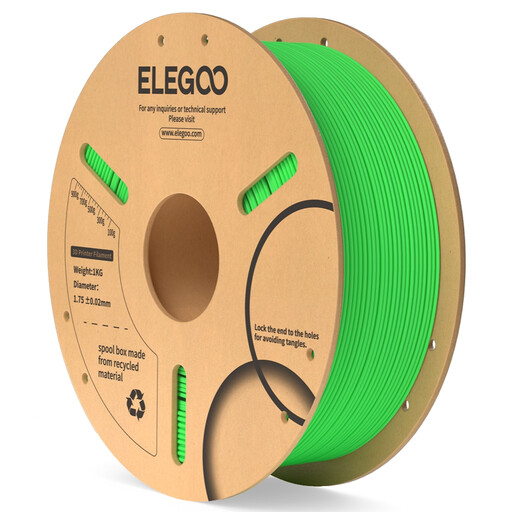
Why this choice suits this profile: Its paper spool and filament tracking marks suit workshops that want to monitor their usage while reducing plastic packaging.
The description mentions mechanical winding and manual inspection – two useful features for reducing the risk of tangles on the spool.
A paper spool, stated diameter of 1.75 mm, tolerance of ±0.02 mm and weight of 1 kg.
We've put together a comprehensive, real-time updated selection of products that meet these demanding criteria, in compliance with European safety regulations.
The temperature depends on the brand, colour, nozzle and print speed. First, check the range stated by the manufacturer, then print a small temperature tower. With a silk PLA filament, you may want to reduce the outer wall speed to preserve the finish.
An opened spool can remain usable for several months if protected from moisture. Store it in an airtight bag with a desiccant and avoid keeping it in a very hot place. PLA isn't designed for applications that are permanently exposed to high temperatures.
No. Check that your printer accepts 1.75 mm PLA filament, that its holder can accommodate the spool, and that its extrusion system is compatible. For an FDM printer, also check the recommended diameter, nozzle temperature and settings suggested in the user manual.