
Livraison le jour même ou le lendemain

Qualité garantie

Débloquez vos offres de bienvenue: Livraison GRATUITE | Jusqu'à -80 % | 30 jours d'essai gratuits à JoyPlus
Téléchargez l'application
The idea of a homemade pizza worthy of a trattoria, with its perfectly golden crust and gooey, melted cheese, is a dream for many food lovers. However, the pizza oven market is a jungle of marketing promises where it's easy to get lost and end up with a disappointing appliance. As the Head of the Home section at Joybuy, my mission is simple: to guide you through this maze to find the oven that will truly transform your evenings, without you falling for the advertising traps.
Before you dive in, watch out for these three common pitfalls:
To make the right choice, forget the marketing jargon and focus on the few technical criteria that truly make a difference.
The choice of energy is your starting point, as it determines where and how you will use your oven.
Good insulation is what separates a gadget from a true cooking tool. An oven with double-walled stainless steel or ceramic fibre insulation will retain heat much more effectively. The result: a stable temperature for even cooking, faster preheating, and controlled energy consumption. The shape of the dome (often rounded) also plays a key role in circulating hot air (convection) to brown the toppings evenly.
The quality of the pizza stone is non-negotiable. The most common materials are:
Rather than an endless list, here are options that cater to distinct user profiles, all while avoiding the pitfalls mentioned earlier.
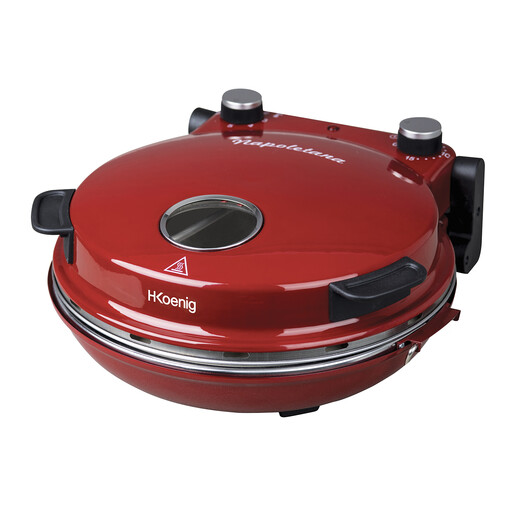
WHY IT'S A GREAT FIT: Perfect for getting started with homemade pizza without investing in complex equipment. This compact electric model sits on a countertop and is great for treating family and friends during fun pizza nights.
It avoids the "all-in-one" trap by focusing on a single mission: baking pizzas. Its design is optimised to reach 400°C (750°F), a temperature much higher than a standard home oven, ensuring a fast and successful bake.
Its ceramic stone cooking plate absorbs moisture for a perfectly crispy crust. Its simplicity and compact size make it an excellent gateway into the world of homemade pizza.
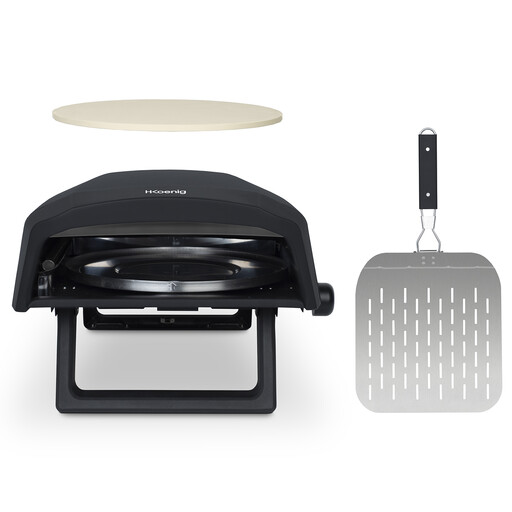
WHY IT'S A GREAT FIT: For those who want to turn their garden into a pizzeria annex. This gas pizza oven is built for outdoor performance, allowing you to cook professional-quality pizzas in minutes for large groups.
It sidesteps the trap of uneven cooking thanks to its rotating stone. This feature ensures even heat distribution, a common weakness in many ovens where you constantly have to turn the pizza with a peel.
It reaches 500°C (932°F) for an ultra-fast bake (1 to 3 minutes). The rotating stone radically simplifies the process and guarantees a professional result without the effort. It's a specialised appliance that excels at its job.
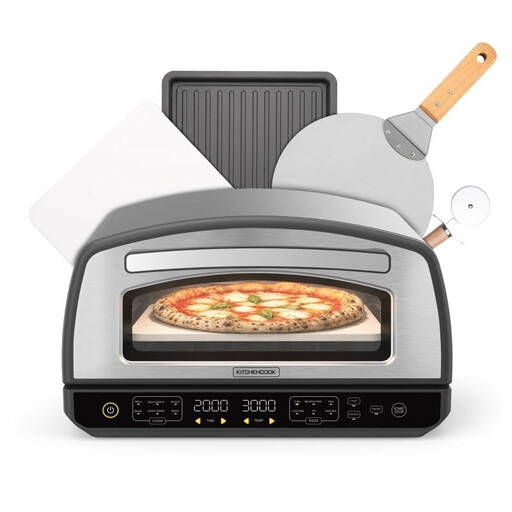
WHY IT'S A GREAT FIT: For those looking for a high-performance indoor electric pizza oven, but who also want an appliance capable of grilling, roasting, or even dehydrating. A true Swiss Army knife for the kitchen.
Unlike low-end multifunction ovens, this is first and foremost an excellent pizza oven. With 2000W of power and a temperature of 450°C (840°F), it doesn't sacrifice its primary function for the sake of versatility.
Its 12 programs and digital control panel make it very easy to operate. It comes with a complete set of pizza accessories (stone, peel, cutter), making it a turnkey solution.
We've selected a full range of products for you that meet our strict quality and safety standards.
A good quality cordierite stone can last for years with proper care. The golden rule is to avoid thermal shock: never run it under cold water when it's hot. For cleaning, let it cool down completely, then scrape off any residue with a brush or spatula. Never use soap, as the stone is porous and could absorb the detergent's taste. Black stains are normal: it's the patina of a well-used stone that has baked beautiful pizzas!
Setup is generally simple. It involves placing the oven on a stable, heat-resistant surface, then connecting the regulator and hose (often sold separately) to a propane or butane gas tank, following the manufacturer's instructions. Ensure all connections are tight and check for leaks (e.g., with soapy water) before each use. It must always be used outdoors or in a very well-ventilated area.
For an authentic Neapolitan pizza with a puffy, spotted crust (the famous "leoparding" effect), a temperature of at least 400°C (750°F) is recommended. This allows for a "flash bake" in 60 to 90 seconds. For other pizza styles (like the thicker New York-style), a slightly lower temperature (300-350°C / 570-660°F) and a slightly longer cooking time can yield better results. A conventional home oven, which maxes out at 250°C (480°F), simply cannot replicate this rapid searing effect.