
Livraison le jour même ou le lendemain

Qualité garantie

Débloquez vos offres de bienvenue: Livraison GRATUITE | Jusqu'à -80 % | 30 jours d'essai gratuits à JoyPlus
Téléchargez l'application
Buying a new pillow might seem straightforward. Yet, the market is saturated with marketing promises that often lead to disappointment: restless nights, neck pain, and support that collapses in just a few months. As product experts at Joybuy, our mission is to help you navigate the noise. Let's break down the common pitfalls to ensure your next pillow is finally the right one.
Before you even start comparing models, it's crucial to learn how to spot the marketing claims that often hide disappointing products.
To make the right choice, focus on three criteria that truly determine the comfort and lifespan of your pillow.
The choice of filling directly influences comfort, support, and maintenance.
Aligning your spine is key. The pillow's firmness should be chosen based on your primary sleeping position.
In France, the square 60x60?cm size is standard. However, other formats cater to very specific needs. An inflatable or compact foam travel pillow is essential for comfort on the go. For expectant mothers, a U-shaped or C-shaped pregnancy pillow offers full-body support, relieving pressure on the back and hips. Finally, let's not forget the decorative cushion, whose function is primarily aesthetic, but whose cover should still be high-quality.
To help you visualise how these criteria apply, here are a few options tailored to specific needs.
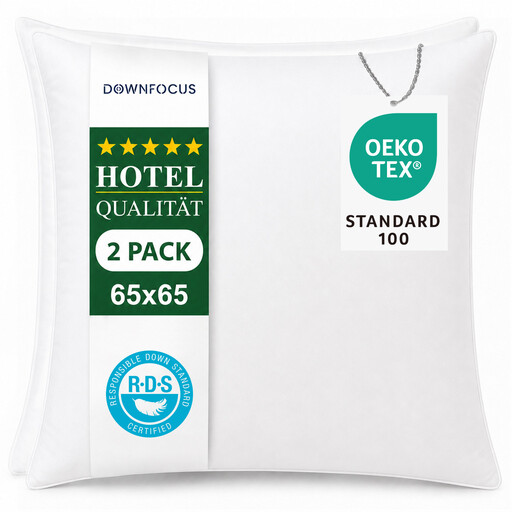
Why we love it: Ideal for those seeking the traditional, breathable feel of a feather pillow, offering firm yet comfortable support.
Far from the 'one-size-fits-all' myth, its 100% feather filling takes a clear stance on traditional comfort. The Oeko-Tex and RDS (Responsible Down Standard) certifications guarantee its quality and ethical sourcing.
The combination of a natural filling and a 100% cotton cover ensures excellent breathability, limiting heat and moisture build-up.
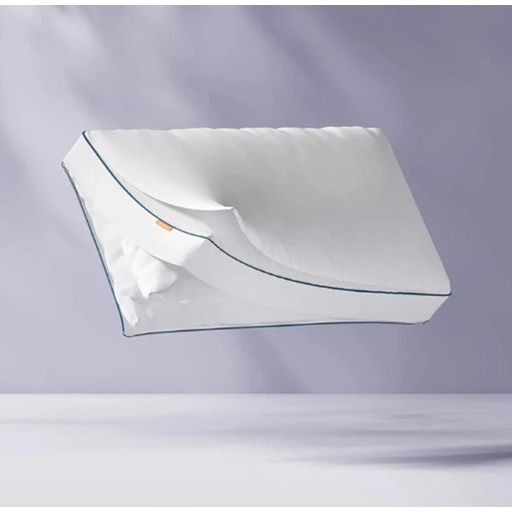
Why we love it: Designed for people who are sensitive to heat and want customisable comfort thanks to its adjustable filling.
It sidesteps the 'one-size-fits-all' trap with its modular design. You can remove part of the filling to adjust its height and firmness, tailoring it to your body type and sleeping position.
Its thermo-regulating and breathable cover helps wick away heat and moisture, promoting a cooler, deeper sleep. It is also hypoallergenic and fully washable.
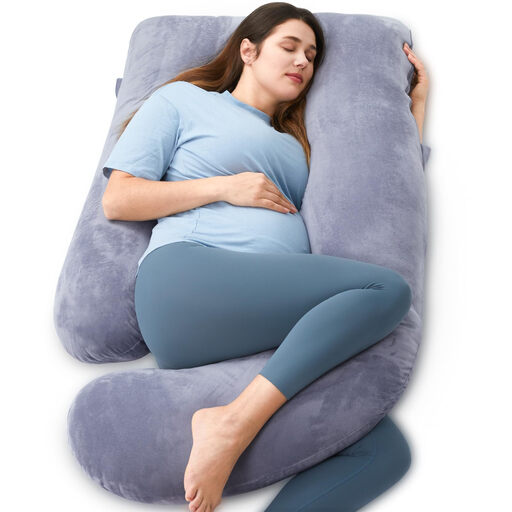
Why we love it: Full-body support is essential during pregnancy. This pillow is specifically designed to relieve pressure points and improve sleep quality.
It's the antithesis of the 'one-size-fits-all' pillow. Its U-shape is a targeted solution for a very specific need, offering simultaneous support for the head, back, belly, and legs.
Its versatility allows it to be used in various positions for sleeping, reading, or nursing. The removable and machine-washable velvet cover makes it incredibly easy to maintain.
Explore our complete selection, where every product meets our quality criteria and current safety standards.
1. What is the lifespan of a pillow and when should it be replaced? On average, it's recommended to replace your pillow every 2 to 3 years. A high-quality feather or down pillow can last longer, while an entry-level synthetic model may need replacing annually. If your pillow is flat, lumpy, or if you wake up with aches and pains, it's time for a change.
2. How do I choose a pillow based on my sleeping position? The golden rule: your head should remain aligned with your spine.
3. Is a hypoallergenic pillow really necessary? For those who suffer from allergies to dust mites, dust, or other allergens, a hypoallergenic pillow is essential. These pillows are typically made from synthetic materials like polyester or memory foam, which are less prone to dust mite growth than natural fillings. Additionally, they are often treated to be anti-dust mite and antibacterial.