
Livraison le jour même ou le lendemain

Qualité garantie

Débloquez vos offres de bienvenue: Livraison GRATUITE | Jusqu'à -80 % | 30 jours d'essai gratuits à JoyPlus
Téléchargez l'application
Taking several medicines, vitamins or supplements every day calls for clear, easy-to-follow organisation. A pill organiser helps reduce missed doses, prevents boxes from being scattered around and makes travelling less stressful. The key is choosing a model that suits your habits.
Before buying a pill box, keep three potential pitfalls in mind:
The right choice therefore depends on the number of doses, the size of your tablets, the user’s mobility and how long the medicines will be stored in the pill organiser.
A weekly pill organiser is suitable for people who want to prepare seven days’ worth of treatment. For two doses a day, a morning/evening model makes everything immediately clear. Formats with 21 or 28 compartments are better suited to organising doses taken at several times of day, over one or more weeks.
Check the actual capacity based on the tablets you usually take. Capsules, large vitamins and fish oil capsules take up considerably more space than a small tablet. A vitamin box with wide compartments may therefore be more practical than an ultra-compact model.
For occasional use, a pill organiser with three, four or six compartments is often sufficient. It slips easily into a handbag, pocket or washbag, without requiring you to carry the original boxes.
Labels such as ‘morning’, ‘midday’, ‘evening’ or the days of the week should remain visible and provide sufficient contrast. Engraved or long-lasting printed markings are less likely to fade, but it is still best to check their condition regularly.
If you have sensitive hands or reduced mobility, choose lids with gentle pressure closures, push buttons or sufficiently large opening areas. A mechanism that is too small can make filling the organiser and accessing the tablets frustrating in everyday use.
A tablet organiser should also be easy to clean. The compartments must be completely dry before filling, to prevent moisture becoming trapped with the medicines or supplements.
For travelling, choose a lid that stays closed inside a bag and a structure that will not open at the slightest knock. A compact travel pill organiser is suitable for a day or a few days, while a weekly model with removable trays can accompany you on a longer trip.
Claims such as ‘waterproof’ or ‘moisture-resistant’ should be treated as design features, not as a guarantee that the contents can be stored in water. Never submerge a pill organiser in liquid, and follow the instructions on the medicine packaging or those provided by your pharmacist.
Finally, a pill organiser does not replace the original packaging when it is needed to identify the medicine, check its expiry date or read the information leaflet. If you are unsure about the storage conditions for a treatment, ask a pharmacist for advice.
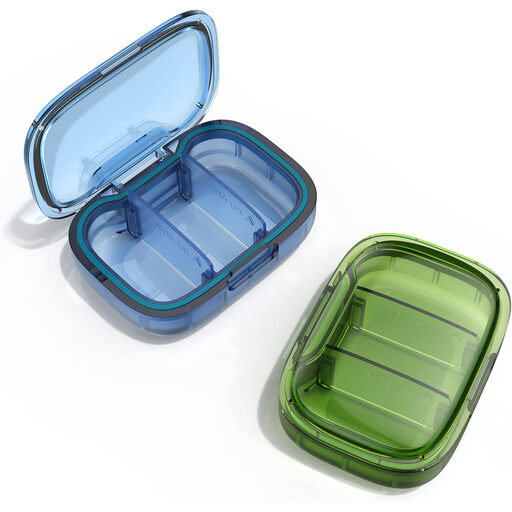
Why this choice suits this user profile : These two small boxes with three compartments each are suitable for occasional doses, supplements or organising one day according to different dosing times.
The compact format means you do not pay for unnecessary capacity. Moisture protection is mentioned in the description, but the box should still be stored in a dry place.
A set of two boxes, three compartments per model and a format that is easy to carry in a pocket or bag.
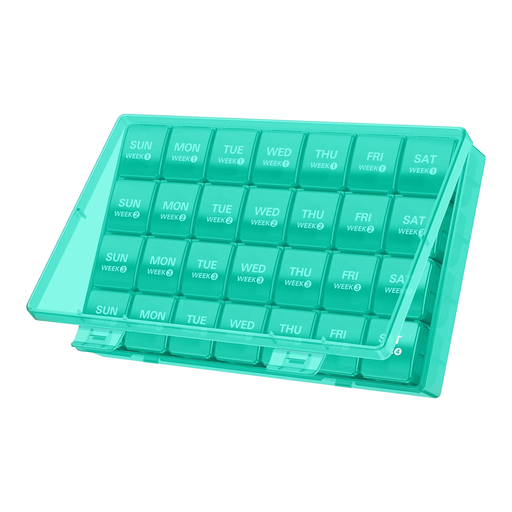
Why this choice suits this user profile : This monthly format is designed for users who prepare their treatment for four weeks and want to remove selected trays to travel light.
The 28 compartments reduce the risk of taking the wrong day’s medication, while the removable trays mean you do not have to carry the entire box.
Four weeks of organisation, morning/evening compartments, a dust-proof lid and a capacity described as suitable for large vitamins.
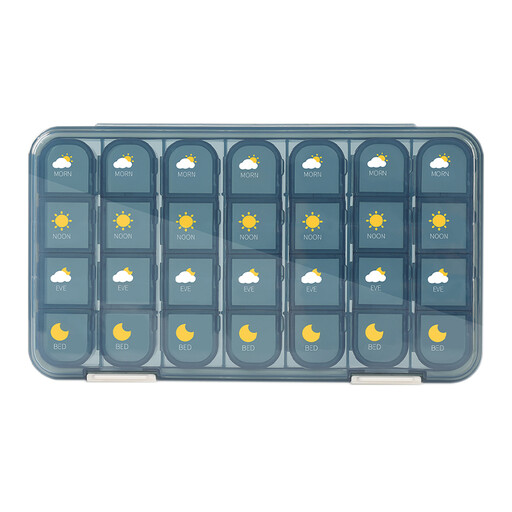
Why this choice suits this user profile : Carers and people taking several treatments throughout the day can view a week organised into four dosing times: morning, midday, evening and bedtime.
Each compartment has its own lid and the box features a dual closure system, helping to reduce the risk of the contents mixing during transport.
28 compartments, four daily dosing times and a silicone watertight seal, according to the product description.
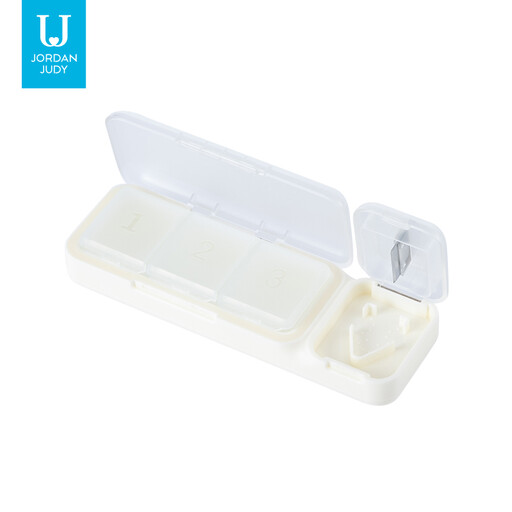
Why this choice suits this user profile : Measuring 13,8 × 4,5 × 2,4 cm, it is suitable for daily commutes, business travel and travellers who want to combine storage with a tablet cutter.
The snap-shut lid helps prevent spills. The integrated tablet cutter means you do not need to carry an extra accessory, but its blade must be handled with care.
ABS, PP, PC and SUS301 stainless steel, daily compartments and an integrated tablet cutter.
We have put together a complete, real-time updated list of products that meet these demanding selection criteria and European safety rules.
When filling a pill organiser, wash your hands, check the name and dosage of each medicine, then fill it one day or dosing time at a time. A written list can help you check the compartments before closing the box.
For one dose a day, seven compartments may be sufficient. If you take medicines or supplements at several times of day, choose 14, 21 or 28 compartments, depending on how you organise your doses. However, the size of the compartments matters just as much as their number.
Yes, for short-term transport, provided the medicine is suitable for this type of storage and its storage instructions allow it. For treatments that are sensitive to moisture, light or temperature, keep the original packaging and ask your pharmacist for advice.
This depends on the quality of the hinges, how often it is opened and how well it is maintained. Replace the pill organiser if a lid no longer closes properly, if an inscription becomes illegible, if the plastic cracks or if the seal is damaged. Regular checks help ensure reliable everyday storage.