For anyone who wants to choose how much sugar to add
Pure, unsweetened cocoa lets you decide how sweet your drink is. Compare its fibre and sugar values per 100 g, then consider the ingredients you’ll add.


If you’re looking to increase your fibre intake while keeping the sweetness under your control, compare pure, unsweetened cocoa powders such as Équador and Van Houten. If you’d rather have a sweetened powder that’s ready to mix, check both its fibre and sugar content: several recipes meet the ‘high in fibre’ threshold without being low in sugar. For a picnic, choose a product that suits the drink you plan to make, and keep the powder dry while you transport it.
Pure, unsweetened cocoa lets you decide how sweet your drink is. Compare its fibre and sugar values per 100 g, then consider the ingredients you’ll add.
A powder you mix yourself can make it easier to prepare drinks for several people. Just remember to check the sugar and fibre content, and the allergens, in the variant you buy.
If the tub is going in a picnic bag, portion some out into a dry, airtight food container. Follow the storage instructions on the product.
Start by comparing the information per 100 g of powder, then consider the portion size and drink used to make each serving. For a picnic, the flavour you’re after and how you’ll transport the powder matter too.
| What to consider | What to check | Who is it for? |
|---|---|---|
| Fibre content | Check the value per 100 g for the exact powder you’re buying. The cocoa percentage alone doesn’t tell you how much fibre it contains. | If fibre is my top priority, I want to be able to check the amount on the packaging before I choose. Around 36% of consumers prioritise this check. |
| Keeping sugar in check | Compare the sugar values per 100 g, then take into account how much powder you use and what you add to your drink. | If I want to decide how sweet my drink is, I opt for an unsweetened recipe. Around 29% of consumers put control over sugar ahead of other criteria. |
| Transport and preparation | Check the storage instructions and take a dry, sealed container, along with the drink you’ll need to make it. | When I’m making drinks away from home, I want to take the powder with me without exposing it to moisture. This is the main concern for around 21% of consumers. |
| Ready-made flavour | Check the ingredients, allergens, cocoa percentage and recommended serving size. | If several people are expecting a sweetened drink, I’d rather choose the recipe before setting off than sweeten each serving on the spot. Around 14% of consumers put this convenience first. |
The presence of cocoa or grains doesn’t prove that a powder can be described as ‘high in fibre’. EU rules on nutrition claims set a threshold of 6 g of fibre per 100 g, or 3 g per 100 kcal.
Check the ‘fibre’ entry for the variant you’re buying before describing it this way.
Auchan’s product information for Nesquik and Cao Kido, and Banania’s for Original, show fibre levels that meet the threshold, but also sugar levels of 75.1 g, 75 g and 69 g per 100 g of powder respectively.
If you want to control the sweetness yourself, compare these recipes with pure, unsweetened cocoa.
Santé publique France describes Nutri-Score labelling as voluntary. In France, the legislation published by Légifrance on the levy in question applies to drinks and liquid drink preparations sold at retail and ready to consume as they are, not to a dry powder simply because it is sold to consumers.
When choosing a powder, read its nutrition information, ingredients and storage instructions. Consider ready-to-drink beverages separately.
Heat and moisture are not in line with the storage conditions specified for several of the products featured here.
Take the amount you need in a clean, dry, sealed food container, and follow the instructions on the original packaging.
A chocolate drink mix. The 1 kg variant featured by Auchan lists 23% low-fat cocoa.
According to Chocolat Poulain, the Poulain 1848 recipe contains 50% low-fat cocoa powder.
Banania Original combines cocoa and grains in a chocolate powder.
Carrefour offers a Classic' powder and a Classic' Intense variant, which is advertised as containing at least 32% cocoa.
Équador is an unsweetened cocoa powder, so you can adjust the sweetness as you prepare it.
Cao Kido is a chocolate powder sold under the Auchan brand.
These chocolate granules and grain-based recipes are for anyone who wants a ready-made mix. If you’d rather control the sweetness yourself, compare them with pure, unsweetened cocoa.
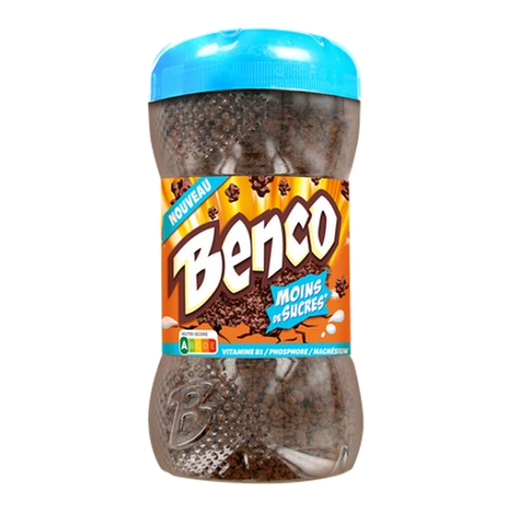 Image unavailable
Worth considering if you’re after a ready-made chocolate powder and want to compare its sugar content carefully. Information for this product lists 13 g of fibre and 50 g of sugar per 100 g, so ‘Less Sugar’ in the name doesn’t mean it’s unsweetened. Check that the container is properly sealed before taking it with you.
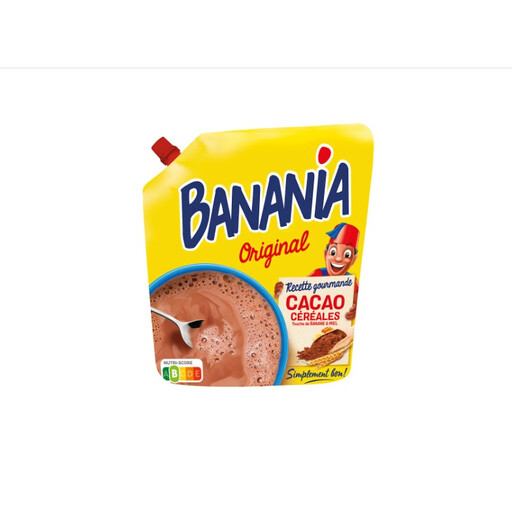 Image unavailable
A ready-sweetened grain-based recipe to consider if you’d prefer to portion out a pre-prepared powder. Information for this variant lists 6.7 g of fibre and 69 g of sugar per 100 g, as well as wheat and barley. Check the label if these ingredients are a concern for you. For a picnic, take it in a dry, sealed container.
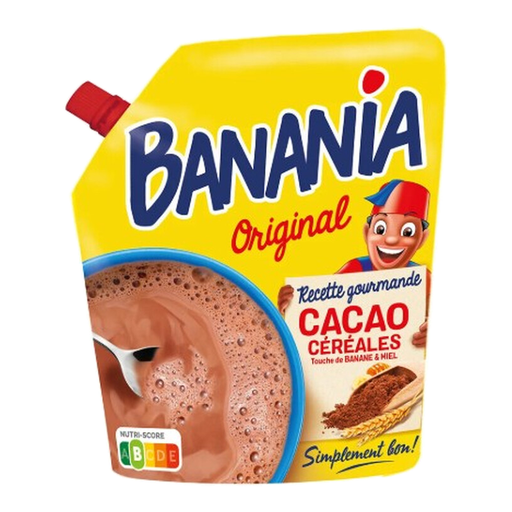 Image unavailable
This size of the ready-sweetened grain-based recipe may suit you if you want to take an amount that’s right for your group. Information for this variant lists 6.7 g of fibre and 69 g of sugar per 100 g, and the recipe contains wheat and barley. Check the preparation instructions and keep the powder away from moisture.
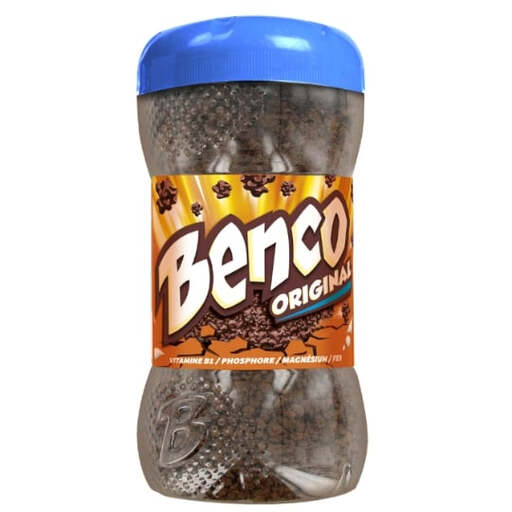 Image unavailable
A granulated powder to consider if you’re looking for a ready-made chocolate recipe. Information for this product lists 6.7 g of fibre, but also 78 g of sugar per 100 g, so bear in mind how much you use per serving. Keep it dry while you’re on the move.
EU rules on nutrition claims require at least 6 g of fibre per 100 g, or 3 g per 100 kcal. Check the value and basis of calculation given for the exact variant; the cocoa content alone isn’t enough to tell you.
Start with the values per 100 g of powder to compare recipes on a like-for-like basis. Then consider the amount you actually use and the nutrition information for any milk or plant-based drink you add. The values for a prepared drink aren’t the same as those for the powder alone.
No. Santé publique France says that producers display Nutri-Score voluntarily. If it appears on the packaging, you can consider it alongside the nutrition information. If it’s absent, you should still check the sugar and fibre content and the ingredients.
Not simply because you buy a dry powder. The French legislation published by Légifrance applies to drinks and liquid drink preparations packaged for retail sale and ready to consume as they are. A ready-to-drink liquid should be considered separately against these conditions.
Follow the storage instructions for the product you’ve bought and carry the amount you need in a clean, dry, airtight food container. Remember to take the drink you plan to mix it with as well.