
Livraison le jour même ou le lendemain

Qualité garantie

Débloquez vos offres de bienvenue: Livraison GRATUITE | Jusqu'à -80 % | 30 jours d'essai gratuits à JoyPlus
Téléchargez l'application
Every cyclist knows: light conditions can change in an instant. A ride might start under bright sunshine, pass through a dense forest, and end under an overcast sky—your vision has to adapt constantly. Juggling multiple pairs of glasses or interchangeable lenses is often a hassle. This is where photochromic and polarised cycling glasses come in: an all-in-one solution that guarantees optimal visual clarity and protection, whatever the conditions.
In this guide, we'll break down the essential criteria and present our top picks to help you make the right choice, without drowning you in marketing jargon.
Before you set your sights on a pair, it's important to get an overview of the technologies and materials involved. These are what will make all the difference on the road or the trails.
Two technologies, two distinct yet perfectly complementary functions.
The combination of both offers formidable versatility for all your sporting activities.
A good pair of sports glasses should go unnoticed. To achieve this, two elements are crucial:
Beyond visual comfort, protection is a key concern.
Here are a few models that caught our eye for their technical specs and real-world performance.
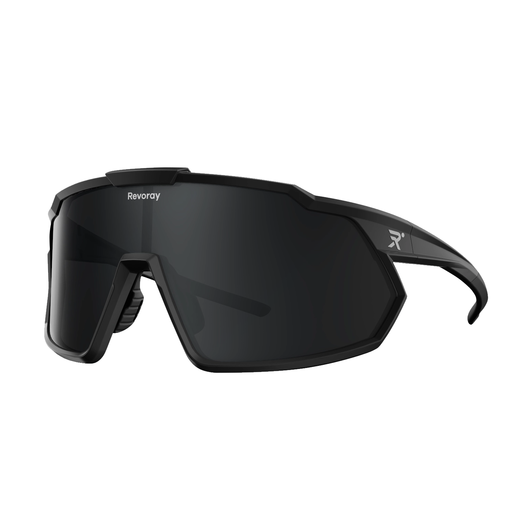
What sets them apart?: These glasses focus entirely on optical clarity and robustness. Their HD TAC polarised lenses filter out glare with remarkable efficiency. Their compliance with the ANSI Z87.1 standard is a guarantee of impact resistance, which is essential for outdoor sports.
Key features?:
Who are they for? For cyclists (road and MTB) seeking a reliable and robust polarised pair that offers impeccable visual clarity in sunny weather.
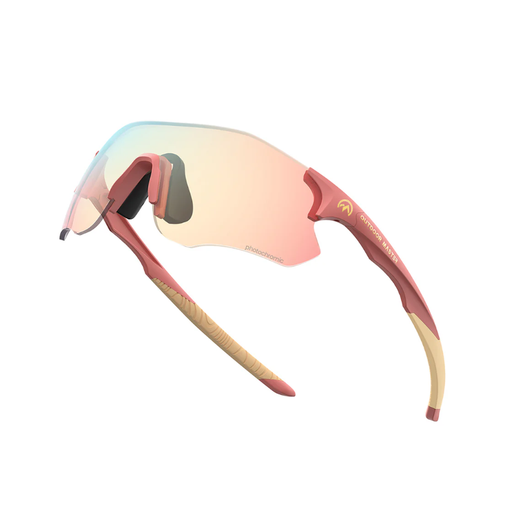
What sets them apart?: The strength of this model is the extreme versatility of its photochromic lenses. Capable of transitioning from Category 0 (clear) to Category 3 (dark), they cover a huge range of light conditions, from dawn to dusk.
Key features?:
Who are they for? For multi-sport athletes and cyclists who face sudden light changes (forests, tunnels, dawn or dusk rides) and want a single pair to do it all.

What sets them apart?: This model combines the best of both worlds: it is both photochromic and polarized. It's the ultimate all-in-one solution. The icing on the cake? It's extremely lightweight and includes an optical insert for prescription glasses wearers.
Key features?:
Who are they for? For the demanding cyclist seeking absolute visual performance, as well as for prescription glasses wearers who want a lightweight, high-performance, integrated solution.
Not convinced by our selection? Working with a tighter budget? Don't worry, there are plenty of other models available. To explore a wider range of glasses suitable for all uses and every budget, feel free to browse our catalogue.
Discover our full range of affordable glasses to find the perfect pair for you.
What is the actual difference between photochromic and polarised lenses? To put it simply: photochromic lenses react to light intensity (they darken in the sun), while polarised lenses combat glare caused by reflections on flat surfaces (roads, water). The former manages the amount of light, while the latter manages its quality.
Can I use these cycling glasses for other sports? Absolutely. Their features (lightweight, secure fit, UV protection, durability) make them excellent companions for other outdoor activities like running, hiking, trail running, or even water sports, where glare reduction is a major asset.
Are TR90 frames really durable? Yes, TR90 is a highly valued material in sports thanks to its great flexibility and shape memory. It can withstand significant twisting and bending without breaking, making it far more resistant to everyday hazards (like being dropped or hastily tossed in a bag) than a standard plastic frame.