
Livraison le jour même ou le lendemain

Qualité garantie

Débloquez vos offres de bienvenue: Livraison GRATUITE | Jusqu'à -80 % | 30 jours d'essai gratuits à JoyPlus
Téléchargez l'application
For a cyclist, perfect vision is as crucial as their bike's performance. Whether you're riding at dawn, under a scorching sun, or on forest trails, light conditions change constantly, straining the eyes and potentially compromising safety. This is where photochromic cycling glasses come in?: a versatile solution that automatically adapts to ambient light.
This guide is designed to provide you with clear, practical information, free from marketing jargon, to help you find the perfect pair for your rides. We will break down the essential technologies and present a selection of standout models to guide you in your choice.
Before diving into specific models, it's essential to understand the criteria that make a great pair of sports glasses.
The choice of lenses is critical for your visual comfort.
An uncomfortable frame can ruin a ride. Here are the points to check?:
Your eyes deserve flawless protection. Check that the glasses feature the UV400 protection standard, which guarantees a 100% block of harmful UVA and UVB rays. For a sport like cycling, excellent impact resistance is also a significant safety feature in case of flying debris or a fall.
We have selected a few models that stand out for their technical specifications and relevance for dedicated cyclists.
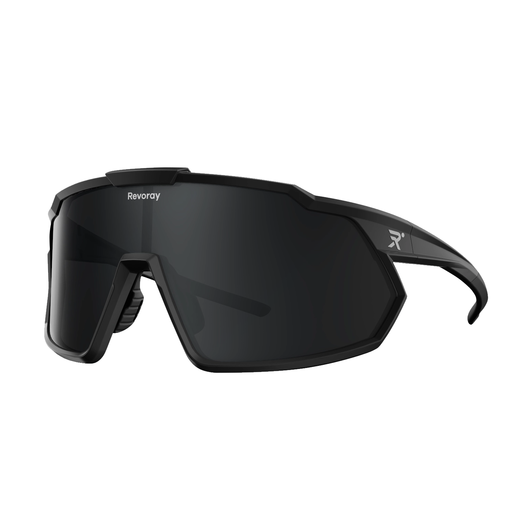
What sets them apart
This model focuses on visual clarity and glare reduction thanks to its HD TAC polarised lenses. Its ANSI Z87.1 certification attests to an impact resistance designed for sports use.
Key Features?:
Who is it for??
For the road cyclist or mountain biker who often rides in bright conditions and primarily seeks to eliminate glare for more relaxed and precise vision.

What sets them apart
Engineered for performance, these glasses are distinguished by their aerodynamic design and their large, single-piece polycarbonate (PC) lens. The focus is on lightness, stability at high speed, and a panoramic, completely unobstructed field of view.
Key Features?:
Who is it for??
For the cyclist seeking speed and performance, whether on the road or for MTB, who demands a maximum field of view, foolproof protection, and minimal weight.

What sets them apart
This model brings together the best of both worlds?: lenses that are both photochromic and polarised. They offer absolute versatility, adapting to light while filtering out glare, all in a stunningly lightweight frame.
Key Features?:
Who is it for??
For the all-rounder cyclist who faces highly varied light conditions. Ideal for long treks, routes alternating between forest and open plains, and for anyone who refuses to choose between light adaptation and glare suppression.
Our selection focuses on technical performance. If you are looking for a particular design or simply want to explore a wider range of models, other options are available to you.
To discover an extensive range of men's sports glasses and various frames, take a look at our dedicated category?: Men's Designer Glasses - Frames.
1. What is the difference between photochromic and polarised lenses??
Simply put?: photochromic lenses adapt their tint to the light (the more sun, the darker they get). Polarised lenses, on the other hand, have a fixed tint but are designed to block blinding glare from surfaces like the road or water. The former manages brightness, while the latter combats reflection to improve visual comfort.
2. Do photochromic cycling glasses work in a car??
Generally, no. Photochromic technology reacts to ultraviolet (UV) rays. However, modern car windshields block almost all of these UV rays. As a result, the lenses will darken very little, if at all, inside the vehicle.
3. How should I care for my cycling glasses??
To preserve the clarity and longevity of your lenses, a good habit is to rinse them with clean water after each ride to remove dust and sweat. Then, dry them gently with the provided microfibre cloth. Most importantly, never use alcohol-based cleaners or harsh chemicals. When you're not wearing them, always store them in their hard case to protect them from scratches and impacts.