
Livraison le jour même ou le lendemain

Qualité garantie

Débloquez vos offres de bienvenue: Livraison GRATUITE | Jusqu'à -80 % | 30 jours d'essai gratuits à JoyPlus
Téléchargez l'application
Sun-drenched roads, a sudden dive into the woods, an overcast sky... When you're cycling, light conditions can be incredibly fickle. And juggling multiple pairs of glasses mid-ride is not only tedious but also dangerous. That's where photochromic cycling glasses come in: the all-in-one solution.
As the Head of Product Curation at Joybuy, my mission is to do the legwork for you. This guide breaks down the essential criteria and showcases the models that stand out from the pack for your bike rides, running sessions, or any other outdoor activity.
To make the right choice, you first need to understand the technology behind the lenses and frames. Here are the points to put under the microscope.
They are often confused, yet these two technologies serve entirely different purposes.
In any case, demand UV400 protection, which blocks 100% of UVA and UVB rays. This is non-negotiable.
A good pair of sports glasses should go unnoticed. The choice of material is therefore crucial. TR90 has established itself as the benchmark material: this thermoplastic ticks all the boxes with its lightness, flexibility, and excellent impact resistance.
Also, pay close attention to the nose pads and the temple tips. Made of silicone or rubber, they are the key to a rock-solid fit. This guarantees your glasses won't slip, even when you're sweating heavily or on chaotic MTB trails. On long rides, lightweight cycling glasses make all the difference.
The shape of the glasses isn't just a matter of aesthetics. A large, wraparound design is your best shield against wind, dust, and insects. It also ensures a panoramic, distortion-free field of view—an essential safety feature for both running and cycling.
Let's get down to business with three models that caught our attention for their spec sheets and sport-focused design.
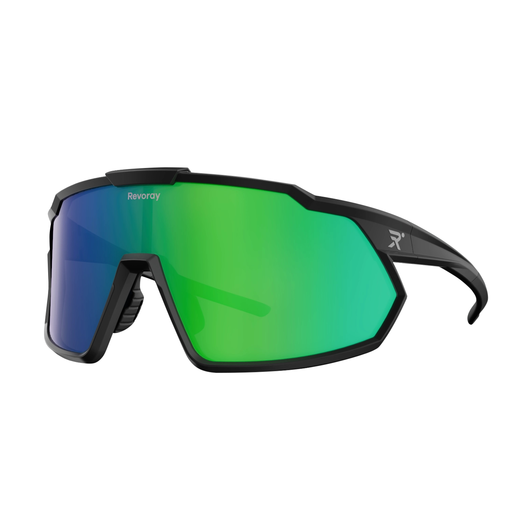
What makes them stand out? Here, the focus is on impeccable visual clarity and relentless glare reduction, thanks to the HD polarised lenses. Certified ANSI Z87.1, they guarantee high impact resistance. A real bonus for safety in high-intensity sports.
Key Features:
Who are they for? For cyclists and athletes who most often ride in bright sun (seaside, mountain roads) and for whom eliminating glare is the top priority.
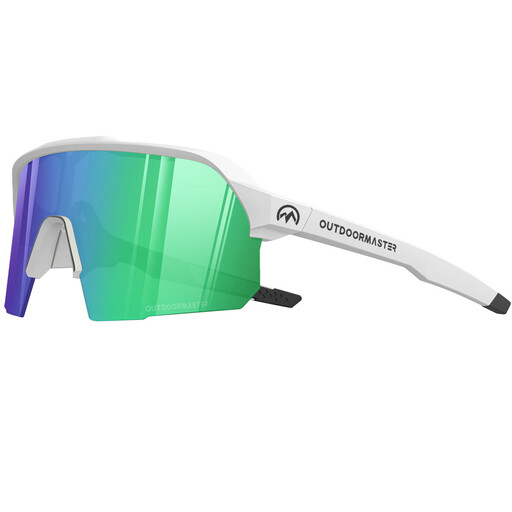
What makes them stand out? The name of the game here is versatility. Supplied with a second, clear lens, they allow you to manually switch to adapt to low-light conditions, such as late-day rides or very overcast weather.
Key Features:
Who are they for? For all-round athletes (cycling, baseball, golf, sailing) who want to be able to adapt their glasses to their sport and the day's weather.
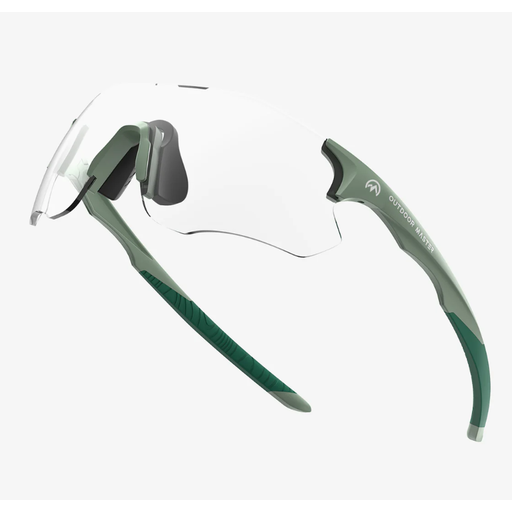
What makes them stand out? This model is the ultimate solution to the headache of changing light. Thanks to their photochromic technology, the lenses adapt to ambient light in the blink of an eye, shifting from Category 0 (clear) to 3 (dark) for perfect vision, effortlessly.
Key Features:
Who are they for? For road cyclists, mountain bikers, and runners looking for the ultimate "zero-fuss" solution: a single pair of glasses for all outings, from morning to night.
If the design of these frames caught your eye, feel free to browse our collection of green glasses to unearth other gems and complete your kit.
To put it simply: photochromic lenses adapt to light (they darken or lighten with UV exposure), while polarised lenses have a fixed tint and specialise in blocking glare. Some lenses combine both technologies, but this is less common and often more expensive in sports models.
Generally, no. Photochromic lenses react to UV rays. However, modern car windscreens filter out almost all UV light. As a result, the lenses won't darken, or will only darken very slightly, inside a car.
The best practice is to simply rinse them with clean water after each outing to remove sweat and dust. Then, gently dry them with the provided microfibre cloth. Most importantly, avoid harsh chemicals! And to prevent scratches, always store them in their rigid case.