
Livraison le jour même ou le lendemain

Qualité garantie

Débloquez vos offres de bienvenue: Livraison GRATUITE | Jusqu'à -80 % | 30 jours d'essai gratuits à JoyPlus
Téléchargez l'application
An underpowered charger, a dying cable, a jungle of wires on your desk… Choosing a new phone charger seems simple, but it's often a real headache. Between marketing promises and technical jargon, it's easy to end up with buyer's remorse. As a product expert at Joybuy, my mission is to help you cut through the noise and find the charger you need, without falling for marketing traps.
Before you rush into a purchase, let's break down the 3 most common pitfalls that will cost you time and money.
To avoid these nasty surprises, you just need to keep an eye on a few key points. Far from being insider jargon, these are your best allies for judging the performance and safety of your future charger.
Power in watts (W) isn't everything. For efficient charging, the charger and the phone must speak the same language—that's the role of charging protocols. The two main ones on the market are:
For truly fast charging, make sure the charger's power output (e.g., 20W, 30W, 65W) and its protocol (PD or QC) are compatible with what your smartphone accepts. You can find this information in your device's technical specifications or on the manufacturer's website.
It all depends on your daily tech arsenal.
A good charger must be safe. Always look for the CE marking, which guarantees the product meets European safety standards. Integrated protections against overcharging, overheating, and short circuits are also essential to protect your precious devices. Finally, a car charger must be stable and securely fitted in the cigarette lighter to avoid disconnections at the first pothole.
Forget endless spec sheets. To help you make the right choice, we've matched each charger to a specific user profile. Find yours!
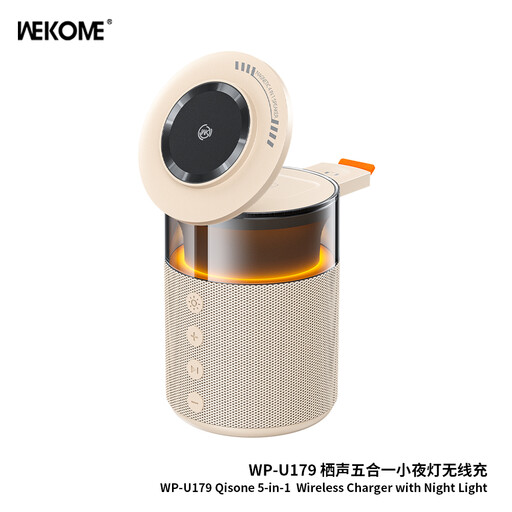
Your profile? You dream of an uncluttered nightstand (or desk) where your phone, earbuds, and watch all charge in one place, complete with a built-in night light and clock.
Unlike a standard multi-port charger that splits its power, this station has dedicated zones (Qi induction, watch connector) to power each device optimally and simultaneously.
A true all-in-one: charger, clock, and night light. Offers fast wireless charging up to 15W (requires a PD/QC power adapter, not included).
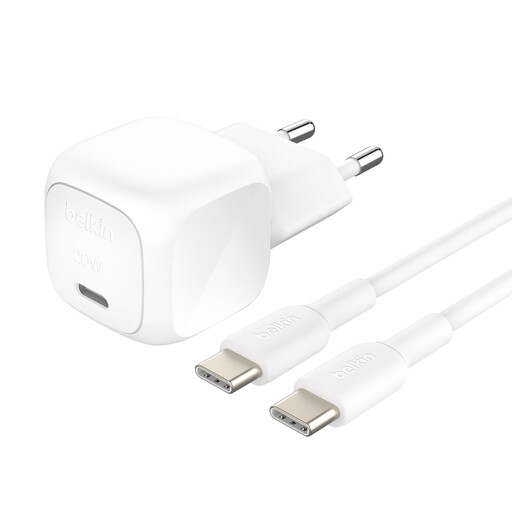
Your profile? You need a single, compact, and reliable charger that can quickly power up your smartphone, whether you're at the office, at home, or on the other side of the world.
No vague marketing here. This charger delivers a certified output of 20W via the Power Delivery 3.1 protocol. A clear spec sheet that ensures fast and safe charging for compatible devices, like the latest iPhones.
USB-C PD 3.1 certified for maximum compatibility. Ultra-compact design, perfect for travel. Bonus: a 1m USB-C to USB-C cable is included.
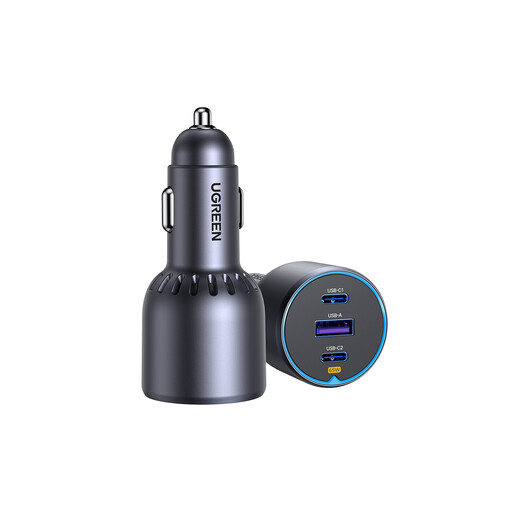
Your profile? Your car is your second office. You need to keep your work phone, personal phone, tablet, and sometimes even your laptop powered up, without ever running out of battery and without compromising on speed.
More than just a multi-port charger, this car model boasts a colossal total output of 75W. Crucially, it details the power per port (up to 65W on a single USB-C port), guaranteeing express-speed charging even with multiple devices connected.
XXL power for a cigarette lighter charger. Highly versatile thanks to its 2 USB-C ports and 1 USB-A port. Equipped with all essential safety protections.
Discover our full selection of chargers, all rigorously tested to meet our performance criteria and European safety standards.
No, as long as you use a certified charger. A modern smartphone is "smart": it communicates with the charger to "request" only the power it can safely handle. So, plugging an iPhone (which accepts 20W) into a 65W USB-C PD charger poses no risk. The phone will automatically limit the charge to 20W.
USB-C is the modern connector: it's smaller, reversible (no more fumbling to plug it in the right way!), and most importantly, it's the vehicle for the Power Delivery (PD) protocol. This is what allows for very high charging speeds, far beyond what the older USB-A port can deliver. Today, USB-C is simply the standard for fast charging.
For a recent iPhone, look for a USB-C Power Delivery (PD) charger of at least 20W to take advantage of fast charging. For a Samsung smartphone, check its compatibility with Quick Charge (QC) or Super Fast Charging (Samsung's proprietary version of PD). When in doubt, a USB-C PD charger remains the safest and most versatile choice.