
Livraison le jour même ou le lendemain

Qualité garantie

Débloquez vos offres de bienvenue: Livraison GRATUITE | Jusqu'à -80 % | 30 jours d'essai gratuits à JoyPlus
Téléchargez l'application
An adhesive may seem simple to choose… until a box opens in transit, a decoration pulls paint off the wall or a fixing comes unstuck after just a few days. To avoid unpleasant surprises, it’s worth comparing the surface, the weight, how long you’ll need it and the conditions for applying it, rather than relying solely on claims such as ‘extra strong’ or ‘multi-purpose’.
This guide is for individuals, families, students, teachers, DIY enthusiasts and professionals looking for the right adhesives and stickers to repair, pack, decorate, organise or complete a creative project.
A tape can stick very firmly to a surface without being able to hold a heavy object. An adhesive pad measuring 22 × 22 mm and rated for 1.5 kg won’t meet the same need as wall-mounting strips designed for a picture frame or whiteboard. The maximum load also depends on how many fixing points you use, the contact area and how the weight is distributed across the fixing.
Dust, grease, damp, fresh paint, wallpaper or an uneven wall can significantly reduce adhesion. Some products are designed for smooth, painted surfaces, metal, glass or plastic, but aren’t suitable for porous or delicate materials. So even when a product promises to come off ‘cleanly’, there’s no guarantee it will do so on every surface.
For seasonal decorations or a rented home, repositionable or removable adhesive is often a better choice than permanent glue. By contrast, packing tape needs to keep a box closed throughout handling. The intended use should guide your choice, well before price or appearance.
‘Water-resistant’ doesn’t necessarily mean a product can withstand permanent immersion or prolonged outdoor exposure.
A wide strip makes it easier to seal a box, while a smaller size is more practical for stationery. For a fixing, the bonded area needs to be large enough and spread evenly. Never exceed the stated capacity, particularly when hanging a frame, mirror or board.
For example, Command picture-hanging strips are available in several sizes, with stated capacities of 5.4 kg, 7 kg or more, depending on the product. These ratings don’t replace the manufacturer’s instructions: the surface must be clean, dry and smooth enough.
For an even bond:
DIY accessories, such as a manual tape dispenser, can also improve accuracy and reduce waste.
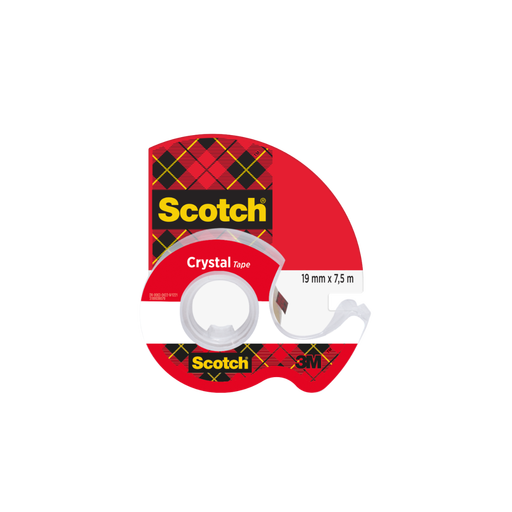
Why it suits this need : Its compact size is ideal for homework, the office, gift wrapping and everyday minor repairs.
The built-in dispenser gives you a neat cut and helps prevent tape being wasted on lighter tasks.
A 19 mm × 7,5 m clear tape, supplied with a manual dispenser that you can use with one hand.
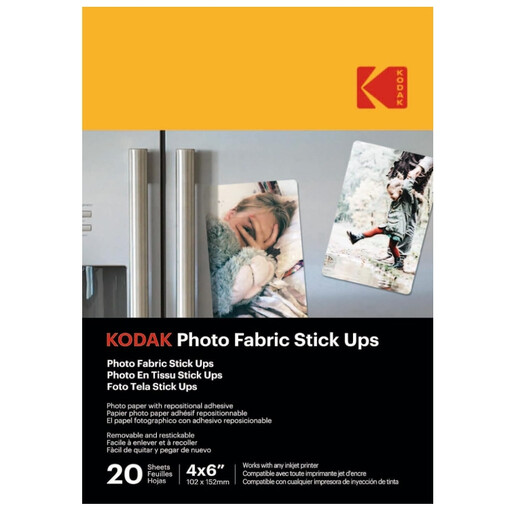
Why it suits this need : This self-adhesive photo paper is for anyone looking to create collages, albums or personalised decorations with a polished finish.
The repositionable backing lets you adjust the placement, unlike a permanent sticker that can be difficult to peel off.
20 A6 sheets measuring 10 × 15 cm, with a textured surface and stated compatibility with most inkjet printers.
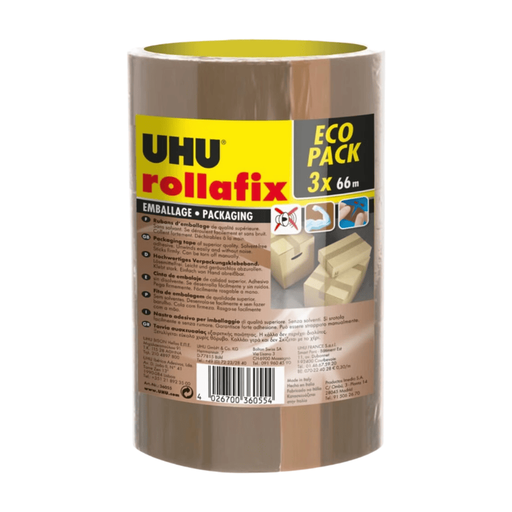
Why it suits this need : This three-roll pack is ideal for moving house, regular posting and long-term storage.
At 50 mm wide, it covers box flaps properly and helps you avoid seals that are too narrow or uneven.
Three 66 m rolls, solvent-free adhesive as stated by the manufacturer, and quiet unwinding. The tape can also be torn by hand.
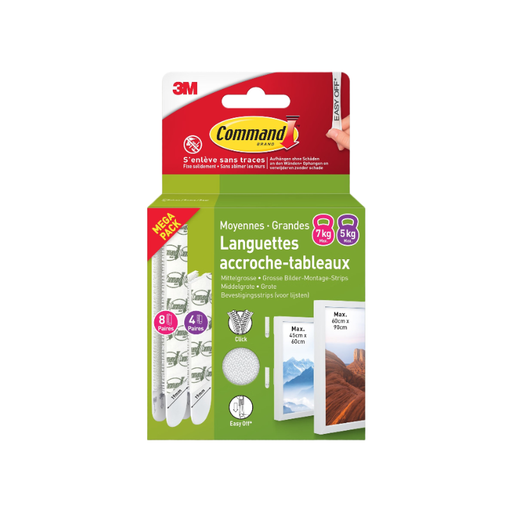
Why it suits this need : This mix of sizes is suitable for frames, decorations and boards at home, in the office or in the classroom.
Separate capacities of 5 kg and 7 kg make it easier to choose the right size for each object, rather than using the same fixing for every load.
The pack contains 4 medium pairs and 8 large pairs. The strips are stated to remove without holes or residue from compatible surfaces.
We’ve put together a comprehensive list, updated in real time, of products that meet these demanding selection criteria and European safety standards.
Yes, provided the wall is smooth, clean, dry and properly painted. Avoid freshly painted, porous or damp surfaces, and wallpaper, unless the manufacturer says otherwise. Always test on an inconspicuous area before applying.
It depends on the material, exposure to heat or damp, the pressure applied and the surface. Packing tape stored in a dry place and applied to a clean box won’t age in the same way as anti-slip tape fitted in a high-traffic area.
Choose a high-temperature contact adhesive based on its stated maximum temperature, the materials it’s suitable for and the ventilation instructions. Pattex Contact Neoprene High Temperature is stated to withstand temperatures of up to 120 °C, but it isn’t suitable for all plastics. Always follow the precautions on the packaging.