
Same-day & Next-day Delivery

Quality Guaranteed

Unlock Your Welcome Offers: FREE Delivery | Up to 80% OFF | Free 30-day JoyPlus trial
Download the APP
A Philips Hue Lily 24 V connected outdoor spotlight can enhance a tree, patio or façade while integrating seamlessly with your smart home. But buying one involves more than simply choosing a light colour. Several technical details can complicate installation, increase the cost or make the product incompatible with your existing equipment.
Before ordering a Philips Hue garden spotlight, check which components are included or sold separately, whether the accessories are compatible and what constraints apply to your outdoor space.
The product you are considering may be a connected outdoor spotlight base, rather than a complete, ready-to-install spotlight. The Philips Hue WCA Lily Outdoor Spot Light Base 24V accommodates Lily range light heads, which are sold separately. On its own, it is therefore not a complete installation.
Before placing your order, make sure you have all the necessary components:
A 24 V low-voltage light cannot be connected to just any transformer. Use only a 24 V outdoor model and accessories compatible with the Philips Hue Lily system. An unsuitable power supply can cause malfunctions and may even compromise the safety of the installation.
For a permanent connection, it is best to have the installation carried out by a qualified electrician. Cables must also be protected from foot traffic, gardening tools and sharp edges.
RGBW outdoor lighting can produce different colours as well as several adjustable shades of white. However, the final effect also depends on the beam direction, the distance between the spotlight and the area being lit, and any obstacles in the way.
To illuminate a façade, tree or pathway, start by deciding where to place the spotlight and which angle to use. The colour effects can then complete the overall design.
The Philips Hue Lily system runs on a 24 V low-voltage power supply. This makes it easier to create a network of spotlights in a garden or around a patio, provided you respect the transformer’s capacity and the connection instructions.
If you are planning several light points, calculate the installation’s total load before buying. The combined power of the various components must remain compatible with the transformer’s capacity. This check helps prevent unexpected shutdowns and installations that cannot be extended.
The Philips Hue WCA Lily Outdoor Spot Light Base 24V is designed to accommodate Lily series light heads. Do not assume that a head from another range or another brand will fit it.
A smart garden spotlight must also be compatible with the control method you want to use. The model featured can be controlled via the Philips Hue app when paired with a Hue Bridge, sold separately. Voice control and smart home integration also depend on the equipment you already have installed at home.
The base features an aluminium housing, a glass lens and electronic components protected for outdoor use. This design is suitable for LED landscape lighting exposed to changes in temperature, dust and rain, provided that the installation is carried out correctly.
Inspect the seals, cables and connections regularly. Clean the housing with a soft, slightly damp cloth, without abrasive products or a pressure washer. As the LED light source cannot be replaced, even minor damage may require the entire light unit to be replaced.
The products below are among the selection available on Joybuy. The Philips Hue base is the only reference directly associated with Lily 24 V outdoor lighting. The other two products meet very different needs and must not be considered compatible replacements.
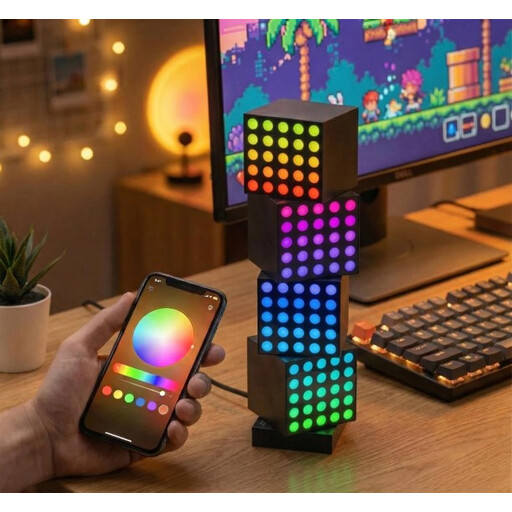
Why this choice suits this profile: This product could be a good way to discover connected indoor lighting, whether on a desk or in a room dedicated to leisure activities. It is not a replacement for Philips Hue Lily 24 V outdoor lighting.
Its clearly distinct presentation reduces the risk of confusing an ambient smart lamp with low-voltage outdoor equipment.
A compact format designed for decorative connected indoor lighting.
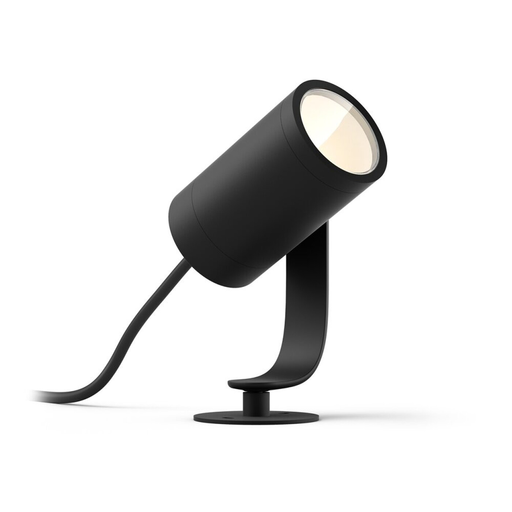
Why this choice suits this profile: This base is designed for anyone looking to create connected façade lighting or a customisable landscape lighting scheme within the Philips Hue ecosystem.
The product details clearly state which components must be purchased separately: a Lily light head, 24 V transformer and Hue Bridge, depending on your intended use.
An aluminium construction, glass lens, 24 V power supply and compatibility with Philips Hue Lily light heads sold separately.
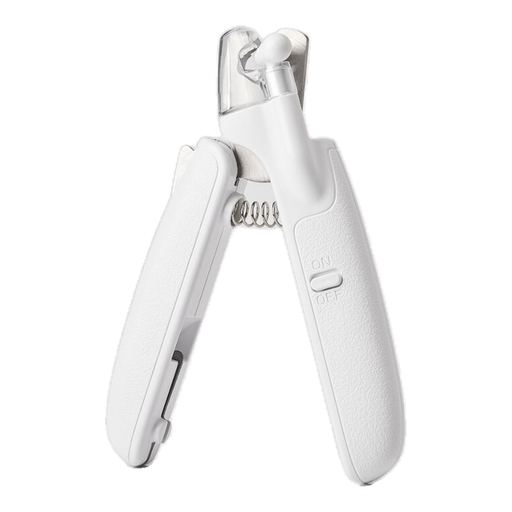
Why this choice suits this profile: This is an LED tool designed for pet care, not a smart garden spotlight. The distinction is worth highlighting to help you avoid buying the wrong product when searching for connected lighting.
The LED function is clearly intended for nail clipping, so it must not be confused with weatherproof LED landscape lighting.
Integrated lighting, stainless steel blades and a collection compartment for grooming.
We have put together a comprehensive, real-time updated selection of products that fully meet these demanding criteria and European safety regulations.
Install the spotlight in a flower bed, near a tree trunk or in front of a façade, then secure the base firmly in the ground or on a hard surface. Point the Lily head towards the area you want to highlight before finishing the cable routing.
To estimate running costs, note the system’s total power consumption and how long it is switched on each day. The calculation is simple: power in kilowatts × usage time × price per kilowatt-hour. Automatic scheduling via the app can help prevent you from forgetting to switch the lights off and stop them staying on continuously.
The base may require a Hue Bridge for control via the Philips Hue app, access to scenes and schedules, and certain smart home integrations. The Bridge is sold separately. Check the configuration you need before placing your order.
The product details state that the 24 V outdoor transformer is sold separately. Check the package contents and the power required for all the spotlights before installation.
The product is presented as resistant to outdoor conditions, but its lifespan depends on the quality of the installation and the condition of the seals, cables and connections. Avoid immersion, high-pressure jets and inadequately protected connections. Regular inspections will help preserve the installation.