
Livraison le jour même ou le lendemain

Qualité garantie

Débloquez vos offres de bienvenue: Livraison GRATUITE | Jusqu'à -80 % | 30 jours d'essai gratuits à JoyPlus
Téléchargez l'application
With health concerns at the forefront of home cooking, choosing a new frying pan has become a complex decision. Between "PFOA-free" labels, promises of durability, and sometimes vague marketing claims, it's hard to know what to believe. Our editors break down fact from fiction and guide you to the healthy, high-performance, and durable pan that will serve you for years to come.
To ensure you don't regret your purchase, here are the 3 common pitfalls to avoid.
To avoid these disappointments, let's focus on the features that truly matter.
The safety of your pan depends directly on its coating.
A good pan must heat up quickly and evenly. Everything depends on the quality of its base.
Design details make all the difference in daily use.
Rather than looking for a one-size-fits-all model, it's better to find the one that truly matches your cooking habits.
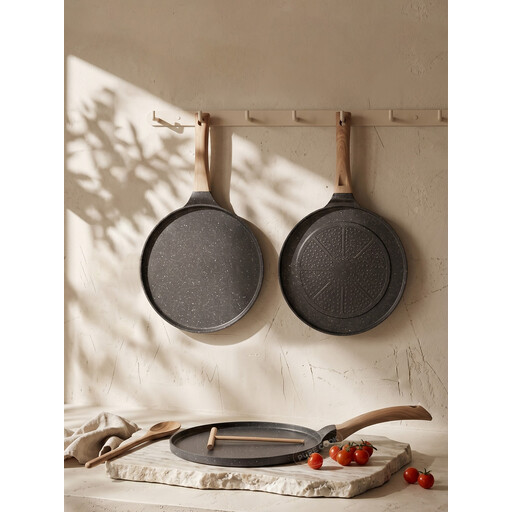
Why we chose it: Ideal for everyday meals. Its light weight and easy cleaning make it the perfect tool for quick preparations. Its 26 cm diameter is versatile, suitable for a single person as well as a couple.
Its coating is designed for daily use without degrading prematurely. No unpleasant surprises: compatibility with all cooktops, including induction, is clearly indicated and reliable.
An excellent balance of practicality and price. Its aluminum body makes it very light and easy to handle, while its wooden handle always stays cool during cooking.
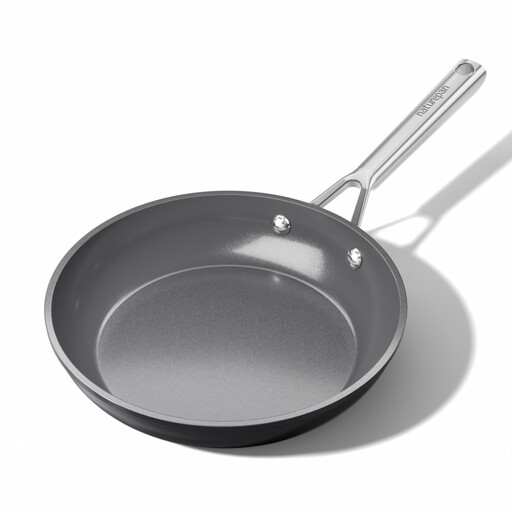
Why we chose it: Perfect for those who like to sear meat on the cooktop and then finish cooking in the oven. Its resistance to high temperatures (up to 260°C) and its stainless steel handle offer maximum flexibility.
It goes beyond "PFOA-free" by being explicitly PTFE/PFOA/PFAS-free. Its ceramic coating, reinforced with titanium and diamond, promises much greater durability than conventional coatings.
Its cooktop-to-oven versatility and healthy composition. The optimized base ensures fast and uniform heat distribution, which eliminates frustrating hot spots.
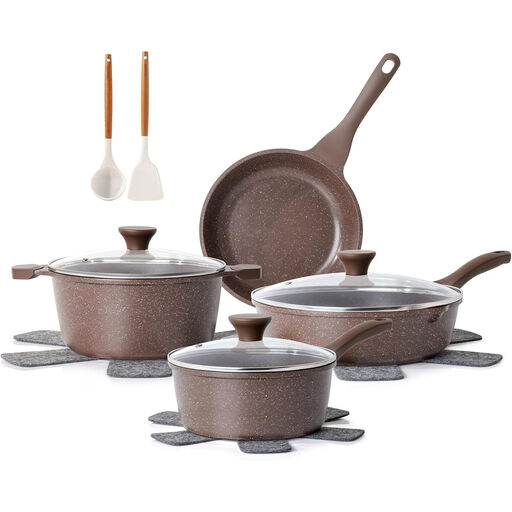
Why we chose it: This complete set of pots and pans allows you to outfit or upgrade an entire kitchen at once with healthy utensils, guaranteed free of PFOA, PFOS, lead, and cadmium, for total peace of mind.
It offers a complete and cohesive solution, which avoids the headache of having to find healthy and compatible pieces one by one. The granite coating is renowned for its durability.
An all-in-one healthy cookware set. The set includes lids, suitable silicone utensils, and pan protectors for impeccable storage.
Our editors have selected a full range of pans that meet our selection criteria and current regulations.
Its longevity depends primarily on the quality of its coating and your maintenance. A high-quality ceramic pan or one with a reinforced coating, used over medium heat with wooden or silicone utensils, can retain its non-stick properties for several years. Entry-level models, on the other hand, may show signs of wear after just the first year of intensive use.
A few simple steps can significantly extend the life of your pan:
Yes. Ceramic coatings are considered a very healthy option because they are made from natural materials (sand and clay) and contain no PFAS, PFOA, lead, or cadmium. They allow you to cook with very little fat and do not risk releasing controversial substances, even in case of accidental overheating. This makes it an excellent choice when building a healthy cookware set.