
Livraison le jour même ou le lendemain

Qualité garantie

Débloquez vos offres de bienvenue: Livraison GRATUITE | Jusqu'à -80 % | 30 jours d'essai gratuits à JoyPlus
Téléchargez l'application
The push to eliminate PFAS (per- and polyfluoroalkyl substances) is intensifying, and our kitchens are at the heart of this change. More and more of you are looking to move away from traditional non-stick coatings to ensure healthy cooking. But with an overwhelming number of options, how do you make the right choice?
This guide is here to help. We've broken down the materials, labels, and models that deliver on their promises, without the confusing marketing jargon.
Before we get to our top picks, let's review the key points for making a smart purchase.
The secret to a non-toxic pot? Its material. Forget Teflon (which is part of the PFAS family); several reliable alternatives exist:
A good piece of cookware must also be practical for daily use. Check its compatibility with your hobs (gas, electric, ceramic, and especially induction). Also consider ergonomics: a stay-cool handle, a perfectly fitting lid, and a manageable weight are details that make a huge difference in the long run.
These acronyms refer to chemical compounds from the perfluorinated family:
Choosing a product labelled “PFAS-free” is therefore the most comprehensive guarantee to avoid this entire family of compounds.
After analysing the market, here are the models that caught our eye for their quality materials, design, and commitment to healthy cooking.
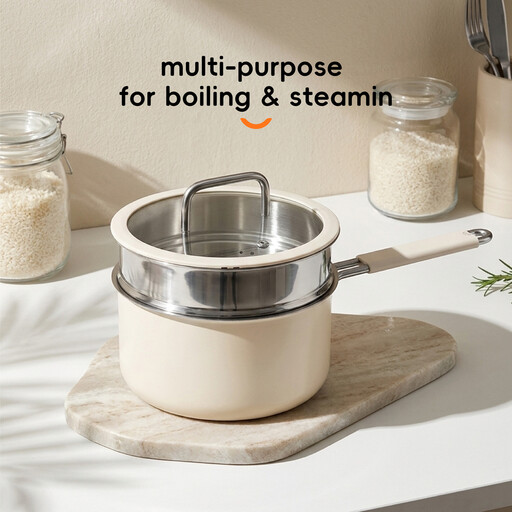
The Editor's Verdict
This PURE COOK pan offers the best of both worlds: the durability of 316 stainless steel on the inside and the thermal efficiency of a ceramic coating on the outside. This hybrid design ensures rapid heating and excellent corrosion resistance. We love its silicone-wrapped handle, which provides a secure grip and great heat insulation.
Highlights:
Who is it for? Ideal for parents preparing baby food, single individuals, or couples looking for a small, versatile pan for sauces, milk, or single servings.
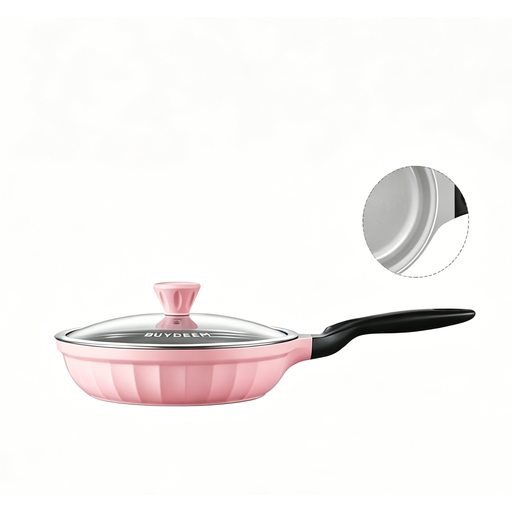
The Editor's Verdict
This PFOA-free Dutch oven relies on cast aluminium, a material that guarantees express heating and uniform heat distribution. Its Swiss ceramic coating, explicitly formulated to be free of PFAS, PFOS, and PFOA, has proven its effectiveness. Its versatility is a major asset: it works on all hobs, including induction.
Highlights:
Who is it for? The ideal multi-purpose Dutch oven for families, perfect for simmering as well as searing. An excellent choice for those with induction hobs.
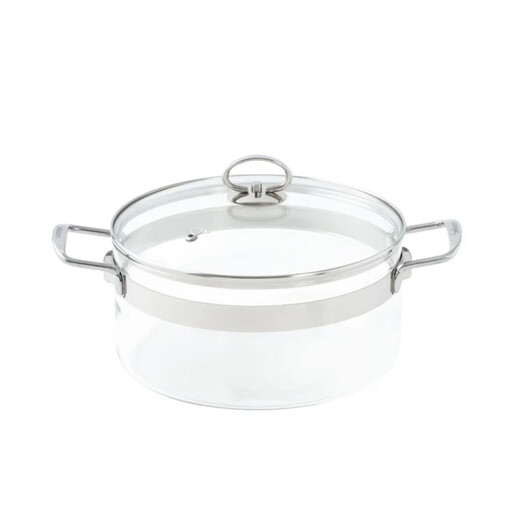
The Editor's Verdict
This non-toxic pot takes a radical approach: it is made entirely of borosilicate glass. This 100% inert material means zero coating, and therefore zero risk of chemical migration. Its transparency is a real bonus, allowing you to monitor cooking without lifting the lid, thus preserving heat and flavours.
Highlights:
Who is it for? For healthy cooking purists who swear by raw, inert materials. A must-have for broths, soups, and anyone who likes to keep an eye on their dishes.
Tempted by its health benefits and transparency? A variety of models are available to suit all your needs.
? Discover our complete collection of glass pots to find the perfect size for you.
PFAS are a vast family of thousands of chemical substances. PFOA and PTFE are part of this family. PFOA is a processing aid whose use is now highly regulated in Europe, while PTFE is the polymer that makes up many well-known non-stick coatings. Opting for a “PFAS-free” label is the safest approach to avoid all of these compounds.
Yes, a ceramic coating is an excellent alternative to Teflon. It offers very good non-stick performance without using PFAS. However, it does require some care (avoiding metal utensils and abrasive sponges) to maintain its effectiveness over the long term.
For models with a ceramic coating, hand washing with a soft sponge and a neutral detergent is recommended. Avoid thermal shock (running a hot pan under cold water). For stainless steel and glass, care is simpler, but a non-abrasive sponge is still advisable to prevent micro-scratches. Proper maintenance is the key to your cookware's longevity and performance.