
Livraison le jour même ou le lendemain

Qualité garantie

Débloquez vos offres de bienvenue: Livraison GRATUITE | Jusqu'à -80 % | 30 jours d'essai gratuits à JoyPlus
Téléchargez l'application
With growing distrust of traditional non-stick coatings, more and more of you are looking for healthy and durable alternatives. The quest for the perfect PFAS-free pan is a top priority for many families concerned about their health and the environment. As product experts at Joybuy, we've analysed the market to help you navigate the options.
This guide has a simple mission: to break down the different materials, present our selection of the best models, and give you the keys to making an informed choice—all without unnecessary marketing jargon.
Before you start, review a few essential criteria to ensure your new utensil will be a perfect fit for your cooking habits.
The "PFAS-free" label covers several types of Teflon-free cookware. The two most common alternatives are:
To make your investment worthwhile, make sure your future pan is compatible with your equipment.
After analysing technical specifications and user feedback, here are the models that caught our eye.
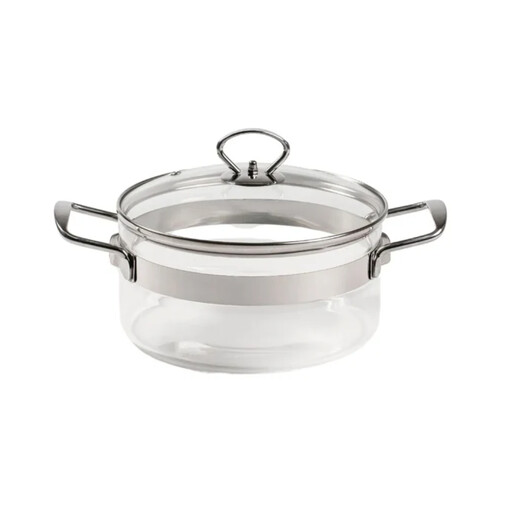
Why it stands out: This Dutch oven stands out from the crowd thanks to its unique material: borosilicate glass. It's the choice for absolute purity, with no coating whatsoever. Its key feature? Total transparency that lets you monitor your cooking at a glance, without lifting the lid and losing heat or flavour.
Advantages:
Who is it for? For those who prefer pure, natural materials and are looking for the healthiest possible solution for their stews, soups, and other slow-cooked dishes.
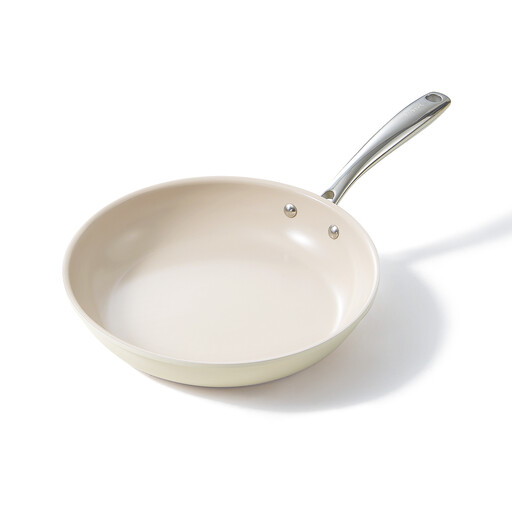
Why it stands out: This model combines a forged aluminium body, for perfect heat distribution, with a triple-layer ceramic coating. But its real strength is its outstanding heat resistance, making it an oven-safe pan at temperatures few competitors can match.
Advantages:
Who is it for? For versatile home chefs who love to sear meat, sauté vegetables, and then seamlessly transition to the oven to brown a dish or finish cooking.
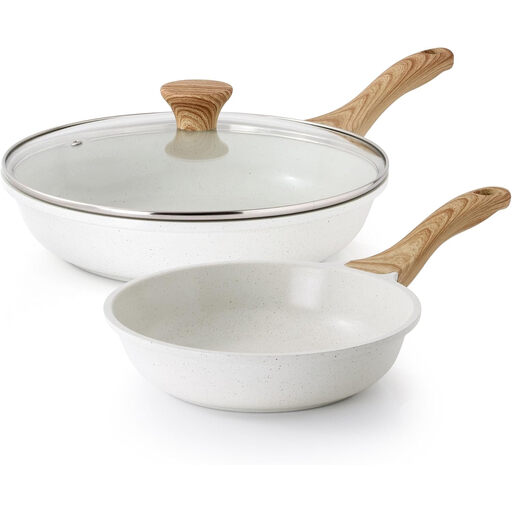
Why it stands out: This is the perfect starter set for an affordable way to build a healthy kitchen. It includes two ultra-practical pan sizes for daily use, both featuring a ceramic coating guaranteed to be free of PFAS, PTFE, and other unwanted compounds.
Advantages:
Who is it for? A turnkey solution for anyone who wants to equip their kitchen with healthy and effective basic cookware that can handle 90% of everyday cooking needs.
Our selection is just a glimpse of the possibilities offered by ceramic cookware. Sauté pans, woks, stockpots... If you're looking for other sizes or specific features, feel free to explore our full range.
Discover our full range of ceramic cookware
PFOA (perfluorooctanoic acid) is just one compound in the large family of PFAS (per- and polyfluoroalkyl substances), which includes thousands of chemicals. A pan labelled "PFOA-free" does not guarantee the absence of other PFAS. Choosing a PFAS-free pan is a much more comprehensive guarantee that the coating is free from this entire family of pollutants.
The durability of a ceramic pan depends primarily on its care. To preserve its non-stick properties for as long as possible, follow a few golden rules: avoid metal utensils (opt for wood or silicone), never overheat it while empty, and always let it cool down before cleaning. Washing by hand with a soft sponge is the best way to extend the life of its coating.
Whether it's ceramic or glass, a few simple steps will help preserve it: