Found everywhere in our daily lives, per- and polyfluoroalkyl substances (PFAS) are a growing concern, especially in our kitchens. In response, many of you are looking to switch to healthier cookware. Need to replace your old pan? This guide is here to help you choose the best PFAS-free pan, cutting through the marketing jargon and empty promises.
The Healthy Pan: Key Criteria for Making the Right Choice
The market is flooded with alternatives to conventional coatings. To help you navigate the options, here are the essential points to check before you buy.
1. The Coating: The Heart of the Matter
For a healthy non-stick pan, it all comes down to the coating. The most common PFAS-free alternatives are:
- Ceramic: A ceramic pan features a coating made from a sand-based material (silicon), guaranteed to be free of PFAS, PFOA, and PTFE (the famous component of Teflon). It offers excellent non-stick performance, ideal for cooking with little to no oil or fat.
- Textured Stainless Steel: Some models, particularly woks, feature a honeycomb pattern etched directly into the steel. This texture creates a physical barrier that prevents food from sticking, without any chemical coating. It's an ultra-durable and scratch-resistant solution.
2. Hob Compatibility
It's a basic but crucial step: always check for compatibility. A pan compatible with all hobs, including induction, is the most versatile choice that will work in any kitchen. To be induction-compatible, the base of the pan must contain a magnetic material (usually stainless steel). This information is always indicated by a pictogram on the packaging or product page.
3. Material, Shape, and Use: A Pan for Every Need
The material of the pan's body plays a crucial role in heat distribution and durability. Die-cast aluminium is valued for its light weight and quick, even heating. Stainless steel, on the other hand, is renowned for its unbeatable durability.
Also, consider your cooking habits. A non-stick wok is perfect for stir-fried vegetables, while a small rectangular pan is ideal for specific recipes like Japanese omelettes (tamagoyaki). A set of multiple sizes will cover most everyday needs.
PFAS-Free Pan Recommendations
Our editors have sifted through numerous models to select only the best. Here are products that meet our criteria for healthy cooking, each with its own strengths.
1. Mastrad Japanese Omelette Pan – For Lovers of World Cuisine
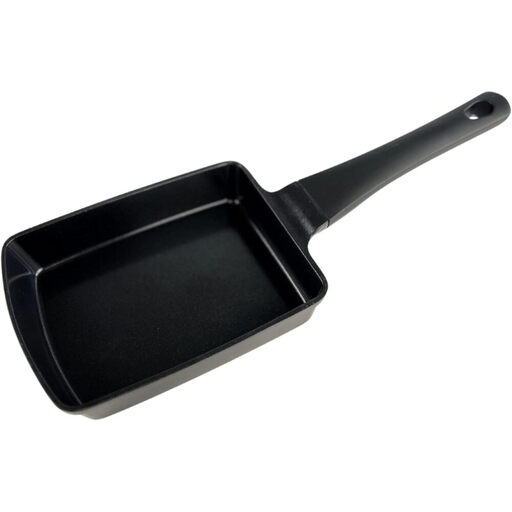
- Its unique appeal: Its special rectangular shape, designed specifically for making the famous Japanese rolled omelettes, tamagoyaki. Its compact size makes it an ideal PFOA- and PTFE-free cooking utensil for small-batch cooking.
- Key Features:
- Non-stick ceramic coating, free of PFAS and PTFE.
- Includes a wooden spatula, perfectly suited for rolling the omelette.
- Compatible with all hobs, including induction.
- Versatile enough for pancakes, sandwiches, or small cuts of meat.
- Who is it for? Fans of Japanese cuisine, or anyone looking for a unique and healthy small pan for precision cooking.
2. PURECOOK 32 cm Non-Stick Wok – For Large Meals and Family Dinners
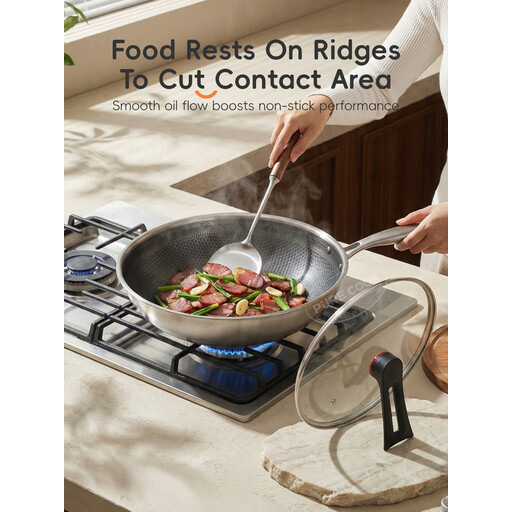
- What makes it special: This non-stick wok does away with chemical coatings entirely. Its secret? An interior honeycomb texture etched onto a three-ply 304 stainless steel structure. This etching creates a purely physical non-stick effect. A sustainable and guaranteed Teflon-free approach.
- Key Features:
- Robust stainless steel construction for fast, even heating.
- Scratch-resistant surface, compatible with metal utensils.
- Large capacity (32 cm) with a glass lid to keep an eye on your cooking.
- Compatible with gas, induction, and electric hobs.
- Who is it for? Ideal for families and those who love to cook in large quantities. Its durability and versatility make it a go-to for stir-fries, stews, and Asian cuisine in general.
3. SENSARTE Ceramic Pan Set – To Get Fully Equipped in One Go
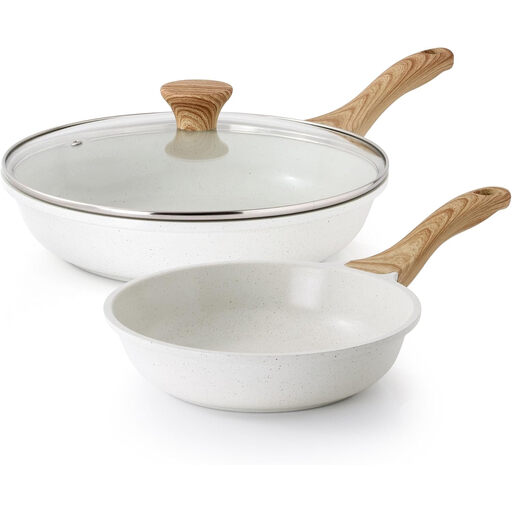
- Its main advantage: A set of two ultra-practical sizes (20 cm and 28 cm with lid) to handle any daily cooking task. The white natural ceramic coating is guaranteed free of PFAS, PFOA, lead, and cadmium.
- Key Features:
- Die-cast aluminium body for excellent conductivity.
- Highly magnetic stainless steel base for perfect compatibility with all hobs, including induction.
- Bakelite handle that stays cool to the touch (cool-touch effect).
- Oven-safe up to 280°C.
- Who is it for? The perfect option for upgrading your cookware with a versatile, healthy, and high-performance set for everyday use.
Looking for Other Great Finds?
If these models aren't exactly what you're looking for, feel free to explore our complete collection of cooking tools to find that perfect item.
PFAS-Free Pans: Your Questions, Answered
1. PFAS, PFOA, Teflon: What's the Difference?
To put it simply, PFAS refers to a huge family of chemical compounds. PFOA is one of them, now highly regulated in Europe for health and environmental reasons. Teflon, meanwhile, is the brand name for PTFE, a coating that also belongs to the PFAS family. A pan labelled "PFAS-free" is therefore guaranteed to be free of any compound from this large chemical family.
2. Is a Ceramic Pan as Effective as a Conventional One?
A ceramic pan offers excellent non-stick performance, especially when new. It's perfect for cooking with little to no oil or fat. In return, to maintain its properties over time, it requires meticulous care: avoid metal utensils and abrasive sponges, and opt for gentle hand washing.
3. How Do I Care for My PFAS-Free Pan to Make It Last Longer?
Regardless of the model, a few best practices can extend the life of your pan:
- Hand wash: A soft sponge and soapy water are all you need.
- Avoid thermal shock: Always let the pan cool down before running it under cold water.
- Use the right utensils: Choose wood, silicone, or nylon to avoid scratching the coating (except for textured stainless steel, which is metal-safe).
- Cook over moderate heat: Excessive heat is often unnecessary and can damage coatings in the long run.


