
Livraison le jour même ou le lendemain

Qualité garantie

Débloquez vos offres de bienvenue: Livraison GRATUITE | Jusqu'à -80 % | 30 jours d'essai gratuits à JoyPlus
Téléchargez l'application
PFAS, the infamous "forever chemicals," are a growing topic in health and environmental discussions. And our kitchens are no exception. Faced with this rising concern, more and more foodies and families are seeking healthy alternatives to their old pans. Choosing a PFAS-free ceramic pan is no longer just about cookware; it's a commitment to your health and the planet. But with a market flooded with options, how do you separate the best from the rest?
Our mission is simple: to sort through the noise for you. We've scrutinised spec sheets and manufacturer claims to bring you a buying guide and a selection of pans that truly deliver. Safety, performance, durability... here's everything you need to know to cook with complete peace of mind.
Before diving into our top picks, let's review the key factors to consider to find the pan that perfectly suits your cooking style.
For a pan designed for healthy use, the absence of controversial chemicals isn't an option—it's the number one criterion. But healthy shouldn't mean fragile. For unbeatable durability, opt for a titanium ceramic coating. The addition of titanium or diamond particles effectively fortifies the surface, making it far more scratch-resistant and able to withstand daily wear and tear. A healthy pan free of PFOA, PTFE, and other PFAS is good, but a pan that lasts is even better. Make sure the coating's composition is clearly specified by the manufacturer.
A great pan should do it all. Always check its compatibility with your stovetop. An all-stovetop, including induction, pan has become the standard, but be careful—it's not always a given! Compatibility depends on a ferromagnetic base. The other major advantage? An oven-safe pan. It vastly expands your cooking options: sear meat on high heat before finishing it in the oven, gratinate a dish... Remember to check the maximum temperature the pan and its handle can withstand.
Proper cooking depends above all on even heat distribution. A thick aluminium body is ideal: it heats up quickly and evenly across the entire surface, preventing hot spots that burn food in one area while leaving it raw in another. For induction, a thick stainless steel base is the hallmark of a quality non-stick pan, ensuring perfect compatibility and excellent stability on the stovetop.
After our analysis, here are three models that stand out from the crowd, each catering to the specific needs of health-conscious and performance-driven cooks.
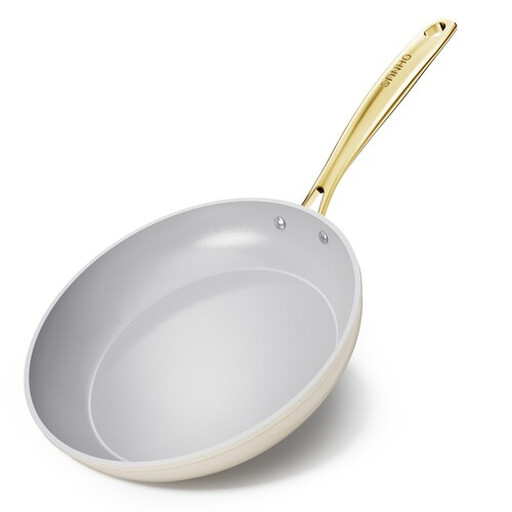
Why it stands out: The Sanho pan ticks all the boxes for the perfect everyday tool. It offers an excellent balance of performance, safety, and ease of use. Its diamond-titanium coating is built for heavy-duty use, and its 26 cm diameter is ideal for daily cooking tasks.
Key features:
Who is it for? Singles, couples, or small families who want a reliable, high-performance, do-it-all pan for everyday meals, from fried eggs to fish fillets.
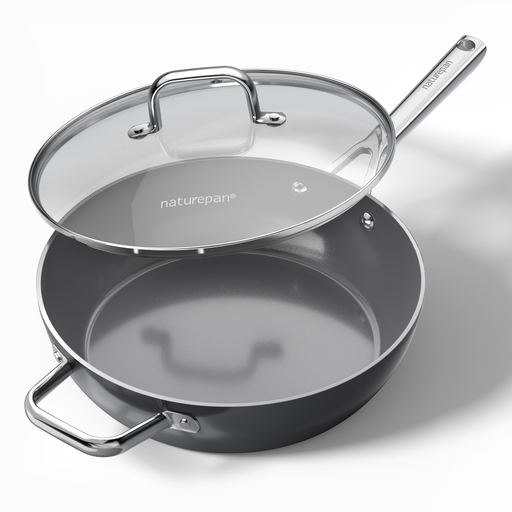
Why it stands out: Much more than just a frying pan! With its high sides and included lid, this 28 cm model doubles as a sauté pan or a small Dutch oven. It's perfect for saucy dishes, slow-cooking, or braising vegetables.
Key features:
Who is it for? Cooks who love making generous, saucy dishes, stews, or large vegetable sautés. Its capacity and lid make it the perfect tool for families and fans of "all-in-one" meals.
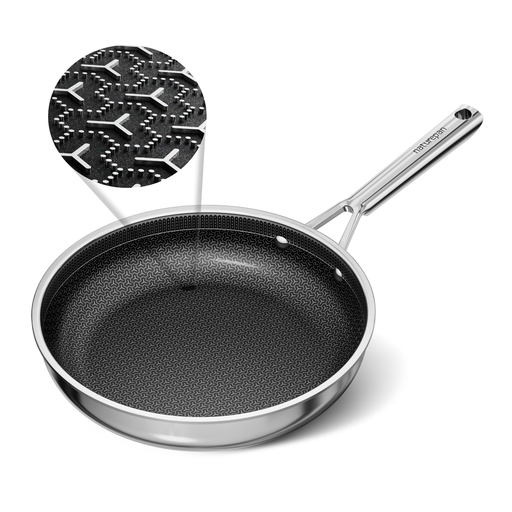
Why it stands out: This hybrid model ends the debate between stainless steel and non-stick. Its unique hexagonal pattern is a small revolution: stainless steel ridges for a professional-grade sear, and valleys coated with a titanium ceramic coating to ensure nothing sticks.
Key features:
Who is it for? Demanding cooks who want both the searing power of stainless steel and the convenience of non-stick. Ideal for prime cuts of meat, fish with crispy skin, or meals for 4 to 6 people.
Our selection highlights three flagship models, but the world of high-performance cookware is much broader. Different sizes, matching saucepans, woks... there's a product out there that's perfect for you.
? Explore our complete collection of diamond cookware to find the tool that will elevate your cooking.
Yes, when it comes to the coating. A quality ceramic pan is made without PFAS (PFOA, PTFE, etc.). In practical terms, this means that under normal use, it won't risk releasing these chemical substances into your food. It's a real plus for anyone mindful of what's on their plate.
To make it last as long as possible, adopt a few good habits. Use wooden, silicone, or plastic utensils to avoid scratching the surface. Cook over medium heat; ceramic coatings conduct heat so well that high heat is unnecessary and can damage them in the long run. Finally, even if it's dishwasher-safe, a quick hand wash with a soft sponge is still the best way to preserve its non-stick properties.
No, and this is a crucial point to watch for. Induction compatibility doesn't depend on the coating but on the pan's base. To work, the base must contain a ferromagnetic material (like steel). That's why it's essential to always check for the "all stovetops, including induction" label or the small coil-shaped icon before you buy.