
Livraison le jour même ou le lendemain

Qualité garantie

Débloquez vos offres de bienvenue: Livraison GRATUITE | Jusqu'à -80 % | 30 jours d'essai gratuits à JoyPlus
Téléchargez l'application
Finding the perfect healthy non-stick pan has become a top priority in our kitchens. Faced with growing concerns about PFAS (per- and polyfluoroalkyl substances), the PFAS-free ceramic pan has emerged as the go-to alternative. However, the market is flooded with promises that aren't always kept. As the Head of Product Recommendations at Joybuy, my role is to help you navigate this crowded market to make an informed, durable choice that truly fits your needs.
But before you take the plunge, watch out for these 3 common pitfalls that can quickly turn a good investment into a disappointment:
To avoid these setbacks, let's focus on a few key technical specifications. Here are the points to check before you head to the checkout.
The term "ceramic" alone doesn't tell the whole story. The most robust coatings are often reinforced to better resist scratches and wear over time.
A good pan should adapt to your equipment and your cooking habits.
Design details can make life in the kitchen much simpler.
Rather than an endless list, here are targeted options for different profiles, selected for their excellent value and their adherence to the criteria we've just discussed.
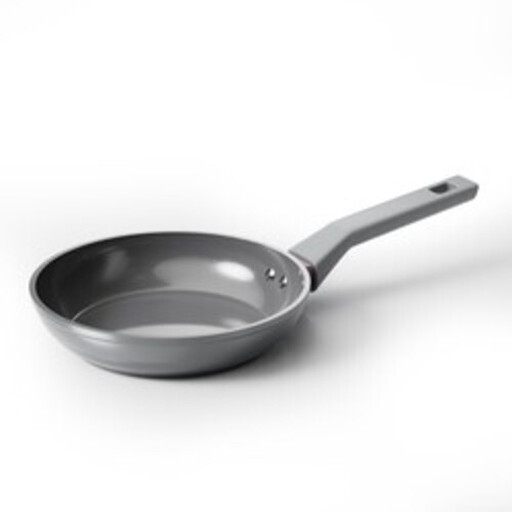
Why this choice? Ideal for everyday meals, omelettes, or small portions. Its compact 20cm (8-inch) size is perfect for one or two people and avoids heating a large pan unnecessarily. It's induction-compatible and cleans up in a flash.
Its coating is clearly reinforced with diamond and titanium. This goes far beyond basic ceramic coatings that lose their effectiveness in a few months.
All-hob compatibility (including induction) and express cleanup: perfect for hassle-free daily use.
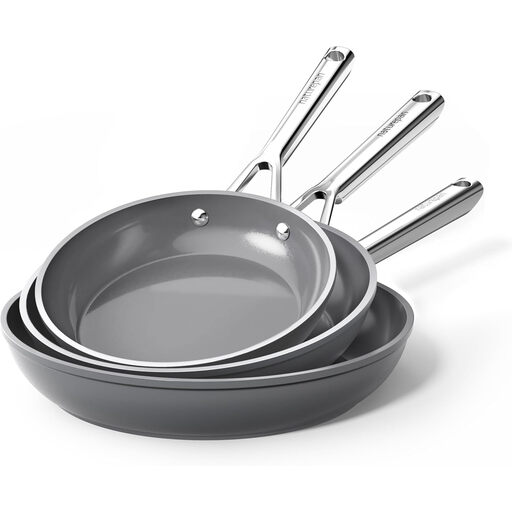
Why this choice? This set covers all of a family's needs, from a fried egg in the morning to a simmered dish for four. It offers maximum versatility thanks to the three sizes and oven compatibility, allowing you to finish cooking or keep a dish warm.
It tackles the incompatibility pitfall head-on: these pans are compatible with all hobs (including induction) and their stainless steel handles allow them to go in the oven up to 260°C (500°F). A rare level of versatility at this price point.
A complete and durable set (titanium coating) for an unbeatable price-to-versatility ratio.
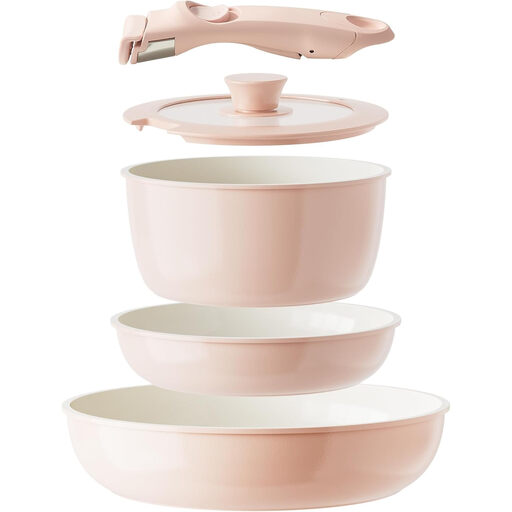
Why this choice? The dream solution for small kitchens, camper vans, or anyone who loves an organised space. The single handle clips on and off, allowing the pans and saucepan to be stacked for spectacular space savings. The perfect blend of practicality and performance.
It solves the storage puzzle without sacrificing quality. The removable handle system is robust and ensures total versatility: from the hob to the oven, then directly to the table or into the fridge.
Saves up to 75% of cupboard space thanks to its stackable design and detachable handle.
We have curated a complete, up-to-date selection of products that meet our strict selection criteria and current safety standards.
1. What is the lifespan of a ceramic coating? It all depends on the quality of the coating and its maintenance. An entry-level model can lose its non-stick properties in less than a year. Conversely, a titanium ceramic or reinforced coating, used with wooden or silicone utensils and never overheated while empty, can retain its properties for several years.
2. How do I maintain my ceramic pan to preserve the coating?
3. Is a ceramic pan really healthier? Yes. A pan certified free of PFAS, PFOA, and PTFE ensures healthy cooking and true peace of mind. Unlike some older-generation coatings, it won't risk releasing toxic compounds, even in case of accidental overheating. Its non-stick properties also allow you to cook with very little or no fat, which is a bonus for a healthier daily diet.