
Livraison le jour même ou le lendemain

Qualité garantie

Débloquez vos offres de bienvenue: Livraison GRATUITE | Jusqu'à -80 % | 30 jours d'essai gratuits à JoyPlus
Téléchargez l'application
With growing concerns about PFAS (the infamous "forever chemicals"), many of you are looking for healthier cooking alternatives. The PFAS-free ceramic pan has emerged as the clear choice. But be warned: between vague marketing promises and wildly varying quality, it's easy to get lost. Our editorial mission is to help you see clearly and make the right choice, cutting through the greenwashing and misleading advertising claims.
Before you dive in, it's essential to know the most common pitfalls to avoid a disappointing purchase.
To make the right choice, forget the marketing and focus on objective technical criteria. This is where the true marks of quality and durability are found.
A healthy pan must, above all, have a robust coating. The most durable options go beyond a simple ceramic layer.
Your pan should adapt to your kitchen and cooking style, not the other way around.
To illustrate these criteria in action, here is our selection of models that tick all the right boxes and avoid the common traps.
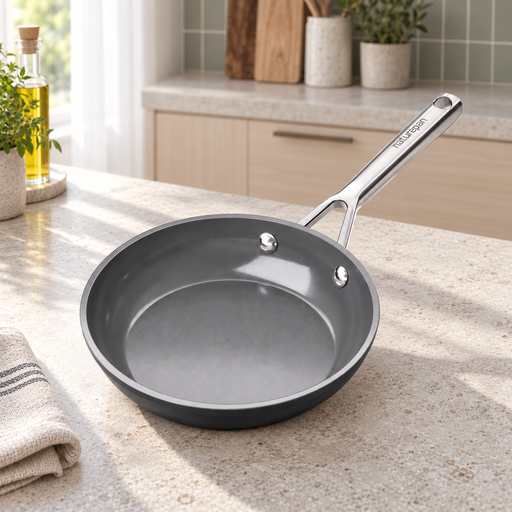
The Editor's Verdict: Ideal for omelettes, fried eggs, or small portions. Its compact size is perfect for small kitchens and for quick, daily use.
Its coating is clearly labelled PFAS, PFOA, and PTFE free and reinforced with titanium and diamond. This is a far cry from entry-level ceramics. Its stainless steel handle allows it to go in the oven up to 260 °C, a rare versatility for this size.
Maximum versatility in a compact size: compatible with all stovetops including induction, high-temperature oven use, and easy cleaning (dishwasher-safe).
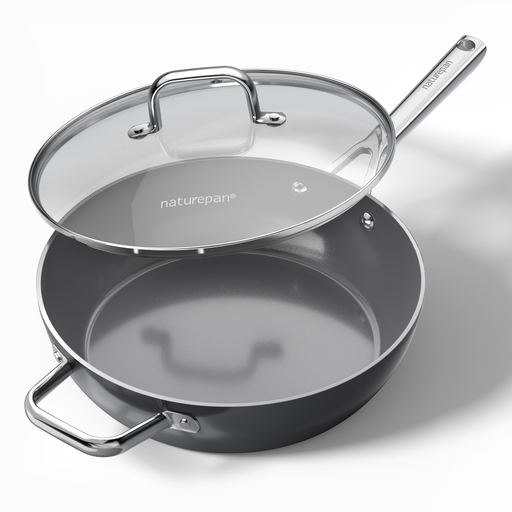
The Editor's Verdict: Perfect for families or anyone who loves to prepare saucy dishes, braised meats, or generous vegetable stir-fries. Its high sides and lid transform it into an ultra-versatile sauté pan.
It's more than just a large frying pan. Its design as a sauté pan with a lid avoids the disappointment of a pan that's too shallow for simmered dishes. The reinforced coating and oven compatibility up to 260 °C make it a true all-in-one cooking tool.
Large capacity and high, anti-splatter sides. The included lid is a major advantage for simmering, steaming, and retaining heat.
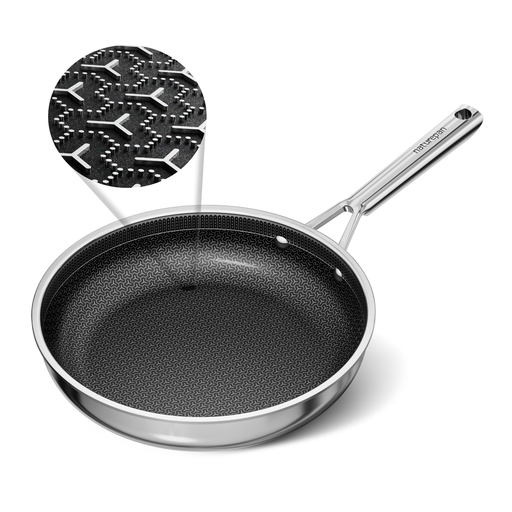
The Editor's Verdict: For those who want the best of both worlds: the perfect sear of stainless steel and the benefits of a non-stick coating. Ideal for searing steaks, chicken, or fish while ensuring easy food release.
It solves the dilemma between searing performance and non-stick convenience. The raised hexagonal stainless steel pattern allows for excellent browning, while the ceramic coating in the valleys prevents food from sticking. It's the perfect answer for those who complain that 100% ceramic pans don't "sear" meats well enough.
5-layer hybrid technology with a hexagonal pattern for a stainless steel-worthy sear and enhanced durability. The tri-ply stainless steel body ensures exceptional heat distribution.
Discover other pans and sauté pans that meet our quality standards: PFAS-free, durable, and high-performance.
A few simple steps are all it takes, but they are essential. Even if it's dishwasher-safe, prefer hand washing with a soft sponge. Avoid metal utensils and opt for wood, silicone, or nylon. Finally, there's no need to crank up the heat to maximum: a good pan heats up quickly and evenly on medium heat. Excessively high and prolonged heat will only damage the coating in the long run.
Yes, provided it is certified PFAS-free. Classic PTFE (Teflon) coatings can release toxic compounds if overheated or scratched. A ceramic model guaranteed to be free of PFAS, PFOA, and PTFE completely eliminates this risk. You can be sure that no controversial substances will leach into your food, even if the pan accidentally overheats.
Absolutely not, and this is a classic trap! To work on an induction hob, the bottom of the pan must contain a ferromagnetic material. Always look for the coil-shaped icon or the explicit mention "All Stovetops Including Induction" on the packaging or product sheet. Models with an encapsulated stainless steel base generally offer the best performance on this type of hob.