Parents starting weaning away from home
You want to spot an age recommendation on the packaging, rather than assume a product is suitable from 6 months based on its aisle or brand.


To quickly identify a dairy dessert for a child aged 6 months and over, choose a recipe labelled for that age and check the ingredients. According to Manger Bouger, a plain, unflavoured petit suisse may also be suitable, but you’ll need to check a few more things. When staying in rented accommodation, follow each product’s storage instructions. If it needs to be kept refrigerated, you’ll need to transport it chilled and have a fridge available when you arrive.
You want to spot an age recommendation on the packaging, rather than assume a product is suitable from 6 months based on its aisle or brand.
You’re thinking of bringing fresh products with you or buying them locally, and need to plan how to transport them and get them into the fridge quickly, in line with advice from the DGCCRF and Anses.
You prefer a plain recipe and want to check the label rather than choose based on the name “petit suisse” alone. Manger Bouger lists unsweetened petits suisses among the foods that may be introduced at the start of weaning.
When staying in rented accommodation, first check how each product should be stored before opening and during your journey. Then compare the age recommendation, recipe and number of pots you’ll be able to use.
| Criterion | What to check | Who is this for? |
|---|---|---|
| Age and recipe | Look for the words “from 6 months” if you want a clear guide. For a classic petit suisse, check in particular that it is plain, unflavoured and made without raw milk. | If I’m looking at the products available near my holiday accommodation, I want to find a recipe whose age recommendation and ingredients match my choice. Around 30% of consumers are thought to prioritise this. |
| Storage | Read the instructions for before and after opening. If the product needs to be kept chilled, take an insulated bag for the journey and make sure there’s a fridge when you arrive. | Before buying fresh pots for my stay, I want to be sure I can transport them and keep them chilled. Storage is thought to be the priority for around 50% of consumers. |
| Pack size and buying locally | Compare the number and weight of the pots with the length of your stay, then check that the product is available at your chosen shop. | To cut down on shopping without building up a pile of pots in my accommodation, I’m looking for a pack size that suits my stay. Around 20% of consumers are thought to prioritise this criterion. |
The aisle or the look of the packaging is no substitute for checking the age recommendation and recipe. Manger Bouger includes petits suisses in its guidance on weaning, but you’ll need to check each classic product individually.
If you choose a classic petit suisse, check that it is plain and unflavoured. Avoid raw milk, as well as 0%, skimmed or semi-skimmed versions for children under 3.
A product that needs to be refrigerated is only suitable for the journey if you can keep it chilled and put it away promptly. The DGCCRF and Anses recommend transporting fresh products in an insulated bag, among other things.
Check the accommodation has the right facilities before you buy, and pick up fresh products last. If you can’t keep them chilled during the journey, wait until you arrive to buy them.
If you can’t store them as directed on the label, pots bought in advance may have to be thrown away.
These claims don’t mean the same thing: a recipe with no added sugars may still contain sugars that occur naturally in milk or fruit.
As well as checking the age recommendation and allergens, read the ingredients and nutrition information for the exact recipe.
An option to consider if you’re looking at a classic plain petit suisse rather than a baby dairy dessert.
Danone describes Gervita as a range of whipped fromage frais, a category distinct from petits suisses.
Carrefour lists baby dairy desserts from this range labelled “from 6 months”.
E.Leclerc lists a plain Bio Village brassé labelled “from 6 months”, among other products.
This retailer lets you compare listings for classic petits suisses and baby dairy desserts.
These products are for anyone looking for a dairy dessert labelled as suitable from 6 months. Before setting off for your holiday accommodation, check the storage instructions on each pack, both before and after opening. These will tell you whether the product needs to be transported chilled.
 Image unavailable
A plain recipe to consider if you’re looking for a dairy dessert labelled as suitable from 6 months. The product listing says to refrigerate the pot after opening and use it within 48 hours. Check the allergens on the packaging.
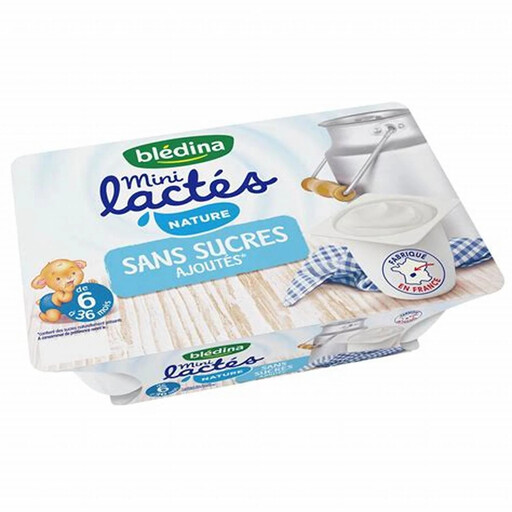 Image unavailable
Compare the 55 g pots with the amount your child is likely to eat during your stay. The product listing says to throw away any portion left uneaten after a meal. Check the allergens on the packaging too.
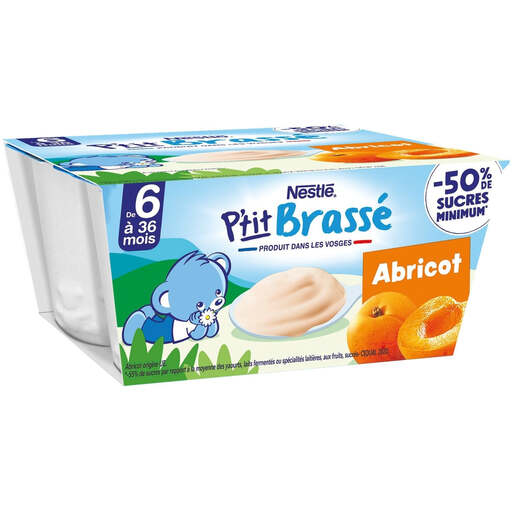 Image unavailable
Compare this apricot recipe with plain options if ingredients are a key part of your choice. The ingredients listed include added sugar. The product listing says to refrigerate after opening and use within 48 hours. Check the allergens on the packaging too.
Yes. Manger Bouger lists unsweetened petits suisses among the dairy products that may be introduced at the start of weaning, alongside breast milk or infant formula. For a classic product, check that it is plain, unflavoured and made without raw milk. Avoid 0%, skimmed or semi-skimmed versions before the age of 3.
No. A classic petit suisse that meets the criteria for weaning may also be an option. However, an age recommendation makes it easier to identify a baby dairy dessert; you’ll still need to check the ingredients and allergens.
For products that need to be kept refrigerated, pick them up last when you’re shopping, transport them in an insulated bag and put them in the fridge as soon as you arrive, following advice from the DGCCRF and Anses. If you can’t keep them chilled as required, buy them after you arrive rather than bringing them with you.
An age recommendation is no substitute for checking the allergens in the recipe you choose. Manger Bouger advises asking your GP or PMI for guidance if there are allergies in the family.