For a baby who has started weaning at around 6 months, Manger Bouger says that unsweetened petit-suisse can be offered alongside breast milk or infant formula. A dairy dessert with a clear age recommendation also makes it easy to see who it is intended for on the packaging. When shopping with diabetes in mind, compare the ingredients, carbohydrates and serving size, and don’t confuse ‘no added sugars’ with ‘sugar-free’. If the baby has diabetes, follow their healthcare team’s advice on choosing a product and serving size.
Who are these choices for?
Parents of a baby starting to wean
You’re looking to tell the difference between unsweetened petit-suisse and a dessert labelled as suitable for babies from 6 months. Manger Bouger reminds parents that dairy offered at this stage complements breast milk or infant formula; it doesn’t replace it.
People comparing sugars and carbohydrates
If an adult in your household has diabetes, you can compare ingredients and relate the nutritional information to the amount eaten, as recommended by Assurance Maladie for adults with diabetes. This guidance does not define the diet of a baby with diabetes.
Parents who prefer a plain recipe
You want to check the ingredients in plain petit-suisse and confirm that it is pasteurised, without assuming that the word ‘plain’ alone means it is suitable from 6 months.
What should you check?
Start with the age recommendation and the role of dairy during weaning, then compare the ingredients and serving size. A baby dessert, plain petit-suisse and fruit dessert for older children may not carry the same guidance.
| What to check |
Look for |
Who is it for? |
| Age and role of the dairy product |
Check the age recommendation for the specific product and keep breast milk or infant formula as the basis of your baby’s diet, in line with guidance from Manger Bouger and Assurance Maladie. |
When my baby starts weaning, I want to know whether this dairy product is intended for them, without replacing breastfeeds or bottles. Around 50% of shoppers rank this as their top priority. |
| Sugars and serving size |
Read the ingredients list and the carbohydrate figures per 100 g, then relate them to the portion served. ‘No added sugars’ does not mean ‘sugar-free’. |
If we’re shopping with diabetes in mind, I need to distinguish added sugar from the carbohydrates eaten, without applying advice for adults to my baby. This is the main priority for around 30% of shoppers. |
| Recipe and format |
Check the pasteurisation, ingredients, pot size and storage instructions for the exact product. |
To organise mealtimes, I prefer a plain recipe or a format that’s easy to serve, but I first check that it’s suitable for my child’s age. Around 20% of shoppers prioritise this. |
Common pitfalls to avoid
-
Assuming a fruit dessert for children is suitable for babies
Being stocked in the children’s aisle doesn’t tell you what age a product is for. Carrefour France’s product listing for Danonino with fruit states that the ingredients contain 6.2% sugar on average, but does not say it is suitable from 6 months.
Check the age recommendation for the exact product, then read its ingredients list and nutritional information.
-
Replacing a breastfeed or bottle with petit-suisse
According to Manger Bouger and Assurance Maladie, dairy remains a complement during weaning: breast milk or infant formula continues to be the basis of a baby’s diet.
Offer dairy alongside breastfeeds or bottles, following the guidance that’s right for your child.
-
Reading ‘no added sugars’ as ‘sugar-free’
Carrefour France’s product listing for Naturnes P'tit Brassé Mini Banane says both ‘no added sugars’ and that it contains naturally occurring sugars. This claim also doesn’t establish whether the product is suitable for a baby with diabetes.
Compare the carbohydrates with the portion actually served. If your baby has diabetes, follow their healthcare team’s advice on the product and serving size.
-
Assuming the features of one product apply to the whole brand
An age recommendation, plain recipe or claim about sugars applies to the product carrying it, not every dessert in the range.
Check the packaging of the product you’re buying, especially if you’re choosing a different recipe or format.
Brands and products to know
These examples help you distinguish between product types. The features described apply to each specific product, not to the brand as a whole.
Naturnes (Nestlé)
According to Carrefour France’s product listing, P'tit Brassé Mini Banane is a dairy dessert labelled as suitable for babies from 6 months, in 50 g pots.
- This product is labelled ‘no added sugars’.
- It still contains naturally occurring sugars; this claim does not describe the whole Naturnes range.
Danone
Carrefour France lists a 60 g pot of plain Danone petit-suisse and fruit products for children under the Danonino name.
- The listing for the plain petit-suisse specifies skimmed milk, pasteurised cream and lactic cultures.
- This product is not labelled as suitable ‘from 6 months’. The Danonino fruit listing states that the ingredients contain 6.2% sugar on average, so the two recipes should not be confused.
Carrefour Classic'
Carrefour France lists a pack of 12 × 60 g pots of plain Carrefour Classic' petit-suisse.
- The product name and pack size make it easy to identify the product you want to compare.
- Before choosing it for a 6-month-old baby, check the ingredients, pasteurisation and age guidance on the packaging.
Petit Yoplait
Carrefour France’s product listing describes a 60 g plain petit-suisse made with fresh cheese from pasteurised semi-skimmed milk.
- The plain recipe and pasteurisation are specified for this product.
- The product details do not say it is suitable from 6 months. Check the exact product before choosing it for a baby.
Baby dairy desserts available on Joybuy
These products carry an age recommendation from 6 months. They are dairy desserts or drinks to consider during weaning, not products identified as petit-suisse. Compare their labels if sugars or pasteurisation matter to your choice.
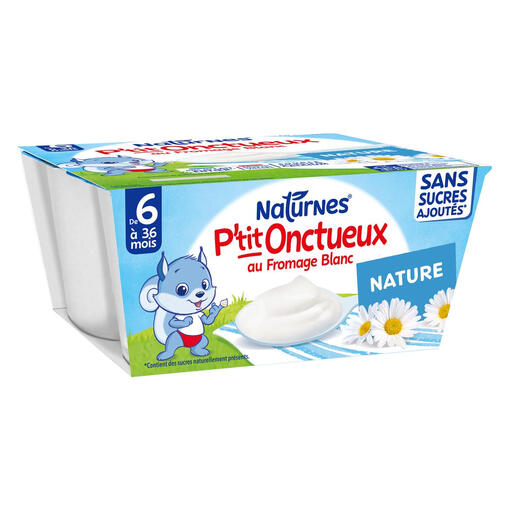 Image unavailable
Nestlé P'Tit Smooth With Plain Fromage Blanc 6+ Months, 4 × 90 g
This fromage blanc product is worth considering if you’re looking for a dairy dessert labelled as suitable from 6 months. The pack contains 4 × 90 g pots. Check the packaging for pasteurisation details and the sugars and carbohydrates in the portion served. It does not replace breast milk or infant formula.
View on Joybuy
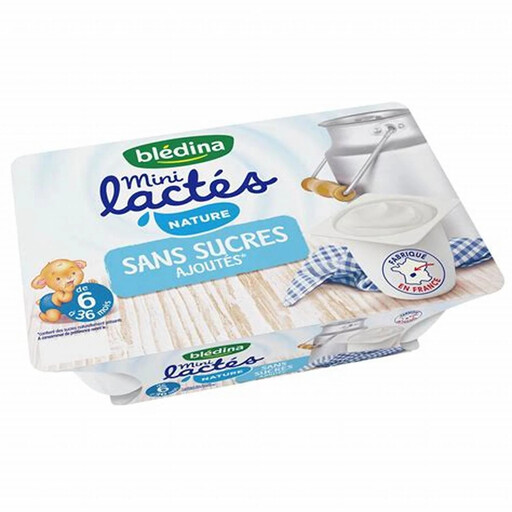 Image unavailable
BLEDINA Desserts Nat SS 6M, 6 × 55 g
This dessert, labelled as suitable from 6 months, can be compared with other dairy products offered during weaning. The pack contains 6 × 55 g pots. Check the packaging for pasteurisation details and nutritional information per serving. This dessert remains a complement to breast milk or infant formula.
View on Joybuy
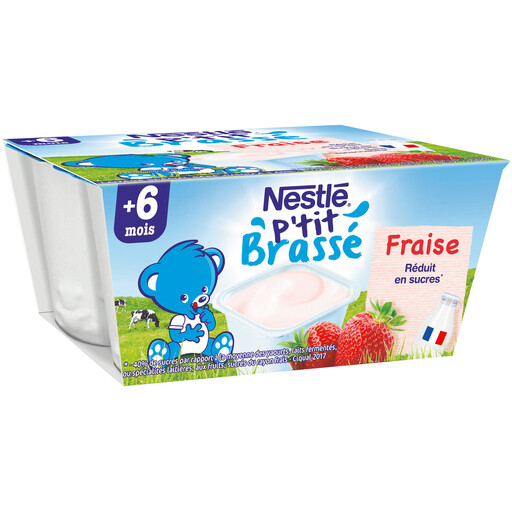 Image unavailable
Nestlé P'Tit Brassé Milk Drinks 6+ Months, 4 × 100 g
This product is labelled as suitable from 6 months. If you want to avoid added sugar, take a close look at the recipe. The pack contains 4 × 100 g portions. Check the ingredients list, pasteurisation details and carbohydrates per serving before choosing it. It does not replace breast milk or infant formula.
View on Joybuy
Frequently asked questions
Can you offer petit-suisse to a baby from 6 months?
Yes, if your baby has started weaning. Manger Bouger lists unsweetened petit-suisse among the dairy products that can be offered from the start of weaning, alongside breastfeeding or bottle-feeding. For a specific product, check its recipe and any age recommendation on the packaging.
Can petit-suisse replace breast milk or infant formula?
No. Manger Bouger’s weaning guidance presents dairy as an option that does not replace breast milk or second-age infant formula. Assurance Maladie also reminds parents that milk remains the basis of a baby’s diet.
Does a dessert labelled ‘no added sugars’ contain no sugars?
No. Carrefour France’s listing for Naturnes P'tit Brassé Mini Banane states both that it has no added sugars and that it contains naturally occurring sugars. To find out how much the portion provides, check the carbohydrates per 100 g and calculate them for the serving size.
How should you take diabetes into account when shopping?
If an adult in your household has diabetes, Assurance Maladie’s advice includes reading nutritional information in relation to the amount eaten. It does not specify a product or serving size for a baby with diabetes. In that case, follow the plan provided by your baby’s healthcare team.


